Remembering Bertrice Small, pt 1: As a Reader

I’ve spent some time thinking about how I could encapsulate the influence Bertrice Small has had on me as a reader, writer and human being in general, into one post, and what I came up with was that I couldn’t, so I’m not going to try.  One post is going to be three.
i1035 FW1.1

I read my first Bertrice Small novel, which was also the first Bertrice Small novel, The Kadin, at the tender age of eleven, but I’d known about it long before. Bertrice’s husband, George, and my dad, had been in the army together, one of those friendships that was so close, it was a shock when I figured out they weren’t biologically related. So, it was normal to have grown up with mentions of “Aunt Sunny’s book.” A story fiend from day one, I remember asking a lot of questions about it, most of which were creatively evaded, and I remember being in the local Caldor with my mother, combing the paperback racks on one fateful day when The Kadin was a brand new release from a new author. Could I read it? No, my mom said, I was too young, but I wouldn’t be put off. Something about the cover called to me. I pestered and pestered and pestered her for at least a rough outline of the plot.

At last, my mom bowed to the inevitable and gave in. A sixteenth century Scottish girl got sold into slavery and spent forty years in a harem and then came home because her daughter in law didn’t like her. I remember the words rushing out of my mother’s mouth all in one go, and the way her eyes darted as if looking for a better answer. I also remember the insistent voice in the back of my head that whispered an insistent, “sold!” I stole the book from her nightstand shortly after that, knew, within the very first few pages, that I had found what I wanted to read and write for the rest of my life. Mom caught me reading The Kadin under the bed in the guest bedroom, by flashlight, during a thunderstorm that knocked out the power. She confiscated the book. I stole it back. I also wrote a book report on it. To her credit, my teacher, Mrs. Potter, did not contact my parents and gave me an A. She also took me aside and talked to me about becoming a writer myself someday. Good spotting, Mrs. P.

By the time the second book, Love Wild and Fair, a title which I was and am rapturously in love with, came out, I was still too young, but I did it again. Stole that book, saw exactly why Aunt Sunny was as in love with Bothwell as Catriona was, and I fell as hard for Scotland as I had for Ottoman Turkey in the previous book. It all filled my mind to overflowing. Not the sex scenes at that point, but the history, the drama, the descriptions and relationships, all lush and full and vivid as life. I got caught again, got a lecture from my mother again, got steered again toward more appropriate reading, which fell flat for the reasons above. I also got a stern talking to from Aunt Sunny herself.

By the time her third book, Adora, came out, I received my own autographed copy as a gift, along with a promotional poster. I have no idea where that poster is now (hopefully in storage, where it can be retrieved and displayed) but I still have my much-loved copy of the book, signed, this time, to me. I’ve acquired a few more signed copies since then, by the same and other authors, but none will ever match that thrill of seeing the very first book a favorite author signed with their very own hand.

I remember exactly where I was when I first read the opening pages of Skye O’Malley (the book, not the kitty) and not wanting to get out of the car to follow my father to the yard sale that was apparently more important than me diving into this book. My mother had passed away by that point, and she and Aunt Sunny had agreed, when Adora came out, that I was going to steal the book anyway, so I may as well have my own copies in the future, no matter my age. When I first met Skye, the fictional character, my life changed. Strong, smart, headstrong heroines, who could be adventurous, leaders, survivors, history-makers, beautiful inside and out, make mistakes -even huge ones- and still come out on top? Oh yes, please. Give me that. Teach me how to make that.

I soaked it up like a sponge, and was unspeakably thankful to have someone as knowledegable as the author herself to help me counter my father’s argument that romance was “all soft porn” with facts and definitions. Her recommendations of other amazing books in the genre – The Outlaw Hearts by Rebecca Brandewyne and The Spanish Rose by Shirlee Busbee stand out, and, boy, was she right. She recommended other authors I might like if I liked her: Cynthia Wright, Virginia Henley, Morgan Llewellyn, and a man named Jennifer (Wilde, aka Tom E. Huff.)

Bertrice Small opened a whole new world for me, one where love stories were worthy of history, and in some cases, sprang directly from it. For a kid who had honestly thought that the only options for me were hard science fiction and mystery, neither of which caught spark with me, no matter how hard I tried, it was a revelation. In historical romance, I found my reader heart set free, and I knew, deep down in the marrow of my bones, that this was what I was meant to write, as well. I will always, always be thankful to Bertrice Small for that.
Tools of the Trade

The more I tried to force it, the less it worked, until in the end I hit a wall of creative exhaustion.
Julia Ross

Today’s quote comes from this post by author Julia Ross, whom I am afraid to read. Not that I don’t want to; I have several of her books (alas, in storage, but there’s the library and ebooks, so not an excuse there) and I’ve peeked into them and closed the covers and put them back on the touch with a reverent pet. I’m sure I’m going to love these books when I do read  them, but the giant question mark hanging over the possibility of there being more books from this author in the near or far future -her post was written in 2007, after all, about when my own wandering in the woods started, would require me to read them through splayed fingers. What if I love her and there aren’t any more, ever?

It’s happened before. I love, love, love Valerie Sherwood, aka Jeanne Hines, aka Rosamund Royal, one of the first wave of historical romance writers in the late seventies and early eighties. Grand adventures, bold heroines, intriguing heroes, vivid historical detail, heartfelt author’s notes, etcetera, etcetera. Most readers have those authors who get an “oh, yes!” from the very first page and never want the stream to stop. Sometimes, however, it does. After Ms. Sherwood’s last published work, Lisbon, she let fans know she was going to spend as much time as she could with her beloved husband, Eddie, who had fallen ill. She never came back. I can’t blame her. The illness of a spouse can overshadow everything else, and I can’t even imagine the impact a loss would have. When authors disappear for reasons like this, we understand. We don’t blame them.

The sort of creative paralyisis that affects writers in Ms. Ross’s situation, that I understand all too well. Those ideas that should work, but don’t, the yen to try something new but still stay true to who we are as writers, the shifting demands of the market, all of those together, compounded with the desire not to let people down, that’s a lot of balls (and sometimes chainsaws) to juggle at one time. There’s guilt. Frustration. Downright shame. This should work. It worked for Big Name Author. It worked for Writer Friend. It worked for Critique Partner. Why doesn’ t it work for meeeeeeee? Well, because it doesn’t.

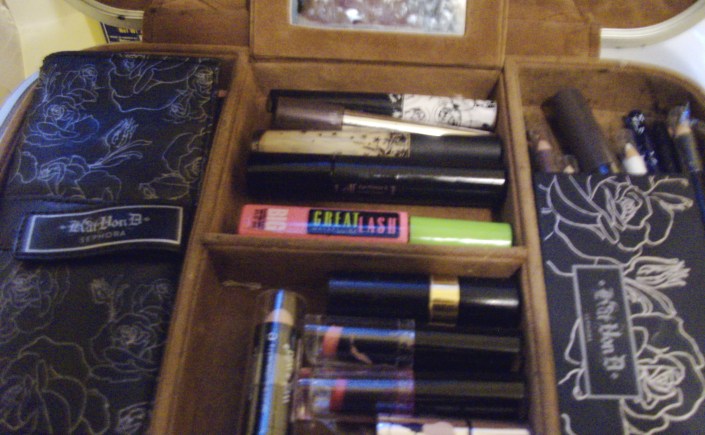
(Makeup) case in point: today’s picture. This is part of my daily routine. I love makeup. I love makeup like I love historical romance. I’ve got Kat von D. I’ve got Wet’n’Wild. They are usually on my face at the same time. There’s primers and color correction and a pleasing balance of neutrals and brights, accumulated from a lot of trial and error. Makeup is natural for me. I like it. It’s playtime. It’s not a mask, it’s art on my face. It’s part of me. Some women don’t wear makeup. Some men do. Yay for all of us, as long as the face we see in the mirror reflects the person behind it, I’m good with that. If I were to run errands or meet friends in jeans and tshirt and no makeup, I’d feel…awkward. Uncomfortable. Not ugly, just not-me. I spent too much time being not-me to willingly go back there again.

So it is with writing. All that striving and trying and bashing my head against the keyboard and shoving what I naturally want to do into a box because “real writers” do this or do that didn’t get me anywhere good. I’ve spoken before about writer friends, however well-meaning, who think I “really should” write their favorite genre instead of my own, or what’s popular or what’s hot or the next big thing. Stop. Just stop. If I wanted to, I would. I’ve tried genres that are not-me, and know what? They’re not-me. I’m me. I wear makeup. I write romance.

Creative exhaustion is something nobody plans on, but sometimes it happens. It’s not fun. It’s frustrating and annoying and something I wouldn’t wish on my worst enemy. It does, however, have the potential to be a useful tool. It teaches us what we don’t want to do. What doesn’t work. When we know what doesn’t work, we can turn in the opposite direction and go in the other way. Forcing writing very seldom works, and if it does, it’s not the same as writing that comes from a natural place. It’s easy to say “relax, it will come” and for those in the throes of creative exhaustion, that can make the pressure seize up all the more.

I’m not an expert, by any means. I still seize up at times over the fact that my most recent novel release isn’t all that recent :runs around in circles, screaming.: Must get new novel out now now now now now! Accio manuscript! :taps foot: Nothing? Guess I’ll have to do it the old fashioned way. Which is fine, because it can be a wondrous adventure.

Fumbling Toward Storytown

You should walk towards yourself as a writer, not away.
Chuck Wendig

Writer Friends: What are you working on right now?

Me: :shifty eyes: Um, :mumble mumble: New historical :mumble mumble: Georgian. :mumble mumble: Something about a love triangle. :mumble mumble: Canada.  :mumble mumble: Hey, look, a kitty.

Even if there’s no kitty. Really, all I want is to change the subject. Current Project doesn’t want to be talked about yet. Odd for me, since extrovert me really does want to talk to Everybody about pretty much All The Things, though I’ve tried really really hard to hold myself back on that. Sometimes too much. There has to be a happy medium, and sometimes it’s tricky to find. On the other hand, there is such a thing as talking too much about a story, so much so that A) It’s all talked out and now no longer needs to be written, and/or B) there’s so much input from so many different sources that outside voices drown out the voices of the characters. In either event, nothing gets done, and the characters sit around in the author’s brain, all crabby because they were all set to have this awesome adventure and now nobody’s doing anything and what are they even here for?

Imagine various couples dressed in garb from various historical eras, drumming their fingers on various tables, sighing loudly and looking out the windows because they are sooooo booooored. Not with being historical people (except for Anthony and Christine, whom I tried to shove into a Regency setting where neither they nor I are at all  happy, because Regency sells, but my heart wasn’t in it. We’ll give this a rest and try again in a different era when they are speaking to me again.) or with being couples, but with being stuck in stories that weren’t working because I was so determined to do things the way they “should” be done that I couldn’t have shipwrecked them worse if I tried.

Can they be rescued? Sure, most of them. We need some time to let the dust settle, these would-be books and I. Others will shake hands (or bow and curtsy as the case may be) and go our separate ways, glad to have been in each other’s lives for the good times we had. Time plus distance equals perspective, and taking a step back from a story-that-won’t is often the key to making it into a story-that-will, and eventually a story-that-did.

The story I’d thought I could maybe possibly have done and dusted, at least to the halfway mark, if I did do NaNo merely laughed at me. It didn’t want to be plotted with charts or GMC’d into marching order. No, these two have banded together and want to play with me. They’ll tell me this much, but I have to figure out this other thing before they’ll say anything else, but when I do, they have something special for me. I haven’t had a hero and heroine do this to me before, but that’s kind of the whole point, having those characters find me while I’m still wandering around in the woods at night, bumping into trees and getting my foot caught in decayed logs. One of them will help me sit on some boulder I never noticed before and the other one will calmly disengage my foot from the rotted log, chase off whatever wildlife was inside said log (because there usually is) and then we’ll have a talk. They’ll tell me their story and I will write it down.

Because that’s what it’s all about for me. The hero, the heroine, their story. All the rest, word counts and GMC and plot and historical versimilitude (far better than historical accuracy, but that’s another post altogether) and character charts and all the rest, those come secondary. Listening to too many voices has resulted in the past with me stomping about in the woods at night, during a rainstorm, with both feet in rotten logs and a bucket stuck in my head, and I’m over all that, thankyouverymuch. Here’s this couple (even when they unite to make me their plaything, but I’m not minding much, really; it’s fun for me, too.) and here’s me and we’re going on an adventure. Feels about right.

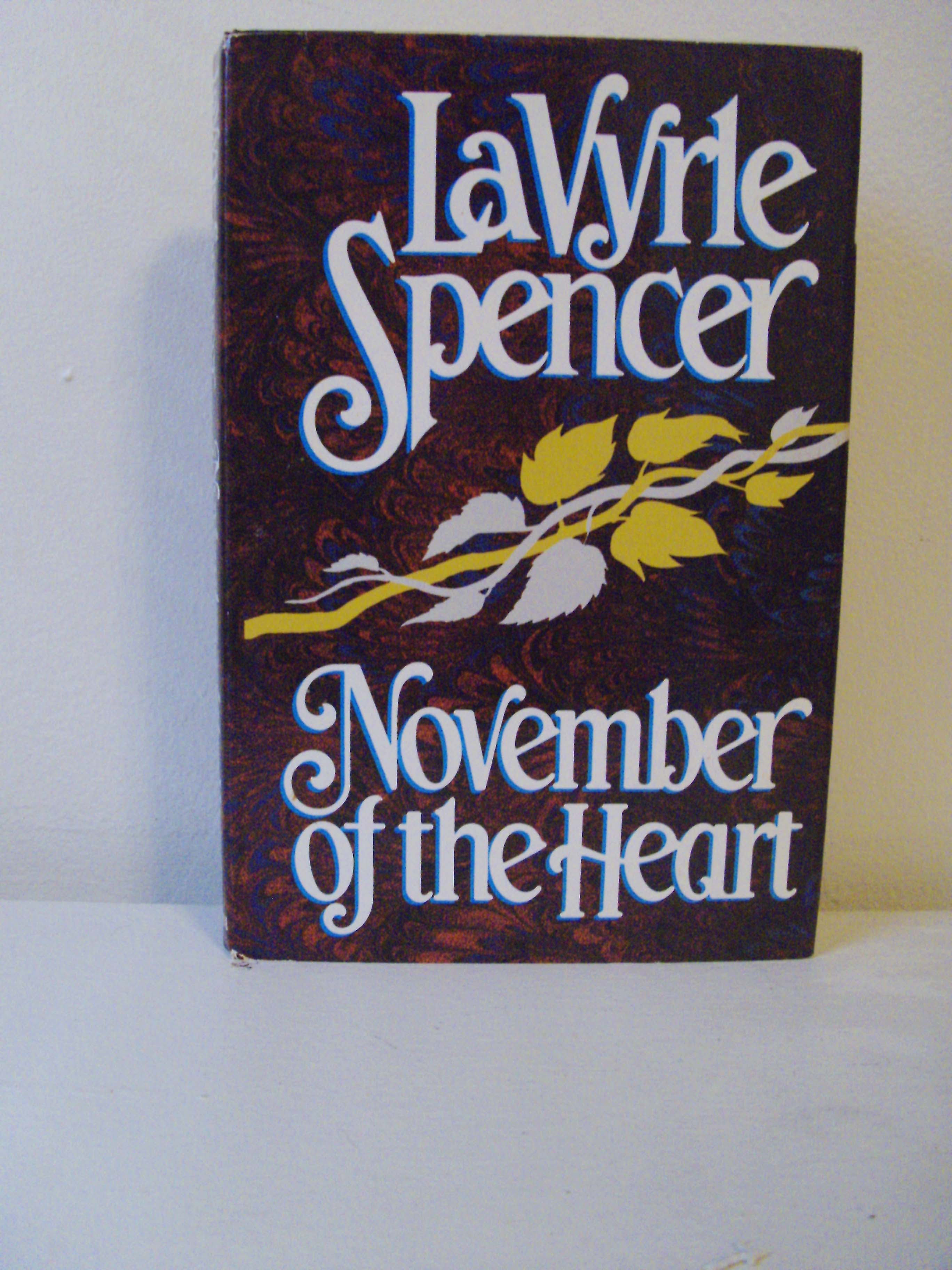
Throwback Thursday, Historical Romance Division: November of the Heart by LaVyrle Spencer

i1035 FW1.1

Out of all of LaVyrle Spencer’s books, and I have loved all of them that I’ve read, all of the historicals, and even dipped my toes into one contemporary, Separate Beds, November of the Heart is the one that sticks with me the most. That’s saying a lot. I have to confess, in the interest of full disclosure, that I have had more than one friend (two, at my best recollection) yell at me via email, because they didn’t know this book was going to have so many feelings. That’s why I love it.

One friend even said the title was “too sad” for her, but again, the title sold me right away. I love November, the month of coziness and deliciousness and giving thanks and  world full of color and scent and the holidays only a glimmer away. Turn of the century Minnesota is not an overplowed field in the historical romance world, and the all important annual regatta means everything to both the wealthy father of heroine Lorna and Jens, a boatbuilder pressed into service as a waiter. Slipping plans for a prize winning boat into one’s employer’s dessert is a recipie for disaster, but it also opens the door for a grand and glorious love that defies class barriers.

Lorna and Jens are star crossed lovers, Lorna drawn to Jens and his boat, their connection -it goes beyond attraction- gets tried by class, by time, by life, but when Jens and Lorna finally say the hell with everything that keeps them apart, I want to take a victory lap and toss confetti.  If LaVyrle Spencer ever wants to come out of retirement, I am leaving the porch light on for  her. If not, what she’s left us with is still magnificient.

Throwback Thursday, Historical Romance Division

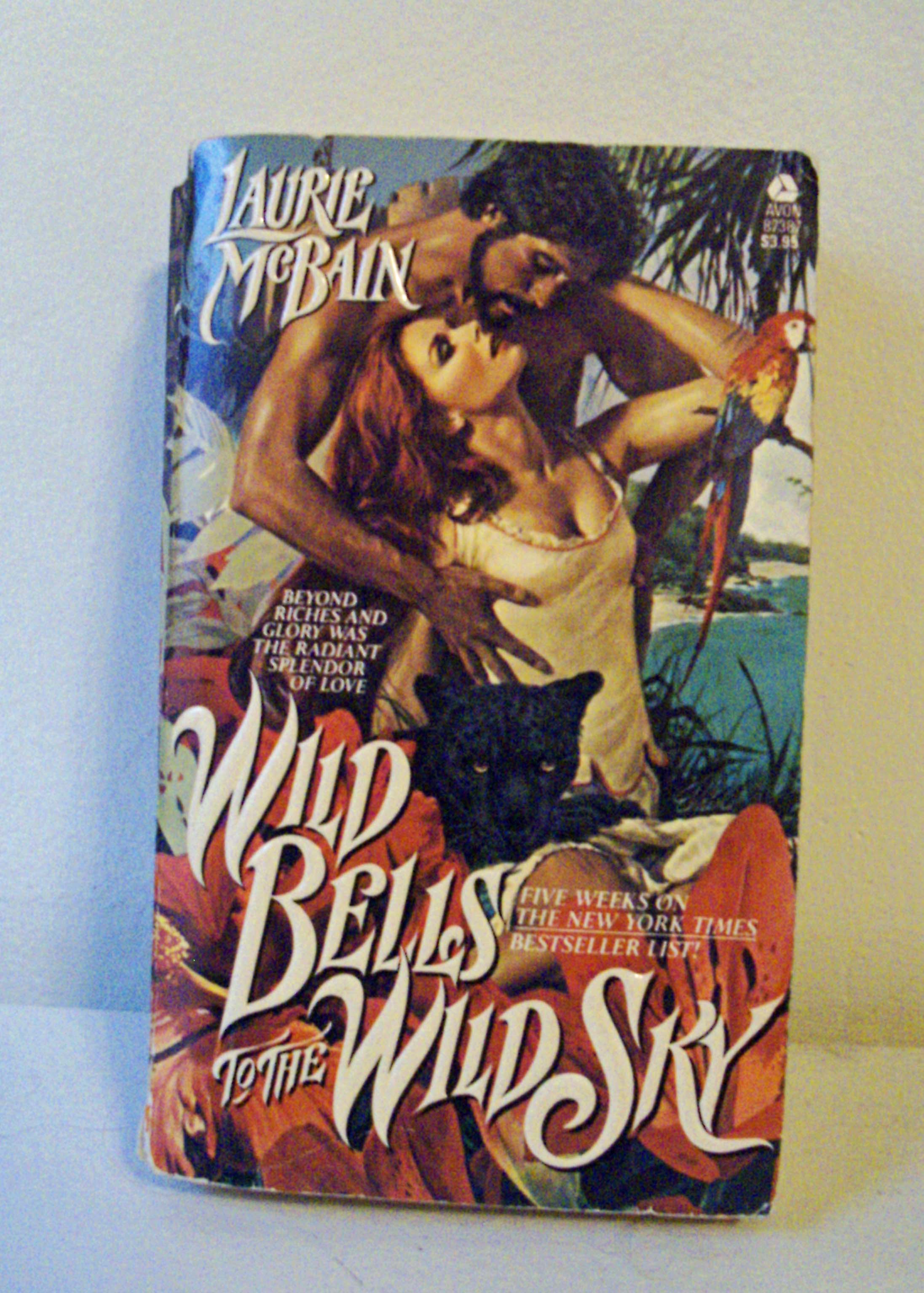
Wild Bells to the Wild Sky by Laurie McBain

Wild Bells to the Wild Sky by Laurie McBain

It’s that time again.  Wild Bells to the Wild Sky, by Laurie McBain, is one of those books. The all time favorites, the ones where I have only to hear the names of the hero and heroine -in this case, Lily Christian and Valentine Whitelaw, how perfect are those?- to immediately reimmerse myself in their romance and adventure. 

This book has huge servings of both. Set in the Elizabethan era, largely on a deserted island, Lily and her brother grow up wild and in seclusion. Lily, her mother, and a family friend are the sole survivors of a shipwreck, the sole inhabitants of the island…until mother and friend produce Lily’s brother, that is. Ahem. Then fever takes the parents, and Queen Elizabeth sends courtier Valentine Whitelaw in search of the missing party, and then things really get interesting. 

History, intrigue, romance, fabulous locations, a clever heroine and dashing hero, gorgeous descriptions, and one of my top five historical romance endings of all time make this book one I go back to time and again. 

Since we’re waxing nostalgic on Thursdays, here are a few recent things I’ve been up to: 

Guest Post at Savvy Authors: From a Certain Perspective, It’s All Fan Fiction: From Fan Fiction to Fantastic Fiction begins on September 1st, so I’m delighted to get to blabber about the useful tools we can find in the books, movies, tv and music we already love. Drop by and try a fun exercise to combine old favorites in new ways. 

Outlander “Sassenach” recap at Heroes and Heartbreakers: Cue incomprehensible squeeing, Jamie and Claire are now on the small screen, and I’ll be recapping each new episode as it airs. How cool is that, I get to watch Outlander and say I’m working. 

 1 Line Wednesday on Twitter, always a highlight of my week. 


What are you reading? 

Ten Questions With E. Catherine Tobler

 ecatherinetobler10 Questions With E. Catherine Tobler

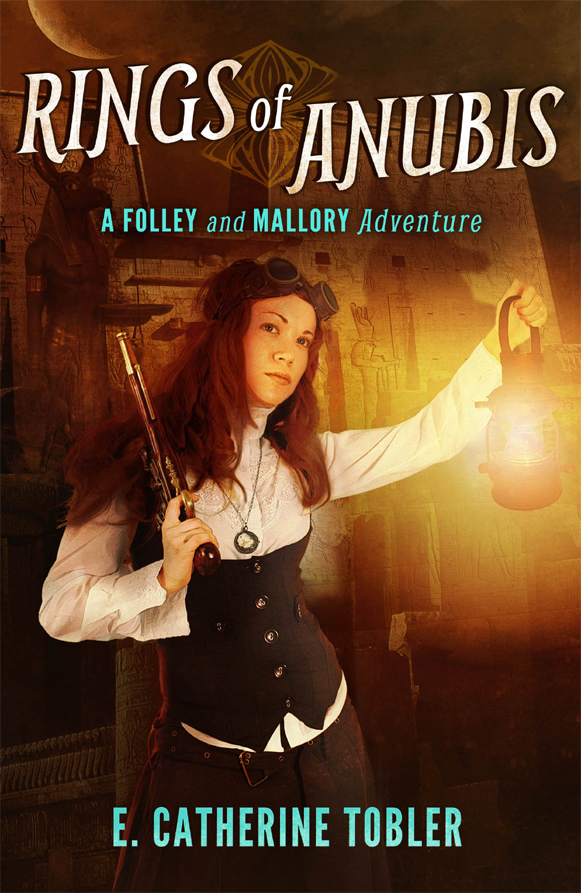
 I first met E. Catherine Tobler in another life, or so it seems. We bonded,via paper letters, in a prior century, over a love of Star Trek: The Next Generation, Highlander, historical romance, and writing. Both at the time aspiring novelists, we encouraged, supported, and critiqued each other, and if we haven’t scared each other off by now, we probably aren’t going to, which is a good thing, because I love her work, especially today’s new release, Rings of Anubis, which Kirkus reviews dubs “deliciously fun.” 

Rings of Anubis combines several great tastes that taste great together: history, romance, intrigue, fantasy, adventure, steampunk, mythology, faith, addiction, recovery, a wounded hero and determined heroine with a past of her own. I am delighted and honored to have read this in manuscript form, and now the rest of the world gets to come along for the ride because this fantastic tale is now available in a bookstore near you. Pull up a comfy chair, pour your beverage of choice and let’s play a round of Ten Questions with the author who made this amazing tale possible. 

  • When did you first know you were a writer?

There was no moment on the mountaintop where sunlight broke rainbow-bright through clouds and I was spinning about, saying “Yeeees.” I can remember experimenting with short fiction for the first time in high school (though I wrote a novelette in middle school–“The Metal Zone,” which involved my bestie getting sucked into The Metal Zone, aka The Twilight Zone, where she met a hot guy, ha!)

But, in high school, I was behind in my history class, and got assigned a story for extra credit, which I dearly needed. I wrote a short story that completely freaked the teacher out and I appreciated that reaction to something I’d created. I sent one of my early attempts to Marion Zimmer Bradley’s Fantasy, and that entire process–printing the manuscript, mailing it, waiting for a reply–certainly had me feeling like something of a writer.


anubis_paper

  • How did Rings of Anubis first come to be?

In the beginning, it started as a highly misguided distant future piece, wherein Eleanor and Virgil traveled from a Blade Runner-like world to ancient Egypt. Balancing the distant future with the distant past ended up being something I was not a) skilled at or b) just not ready for. I examined the parts I really loved and wanted to keep and then looked at how I could make them work; turns out, the late 19th century was a perfect fit, given technologies I wanted to play with, archaeological discoveries that had and had not happened, and well, airships. I wanted things that fly.

  • What are the best and worst pieces of writing advice you’ve ever heard?

For me, “write every day” was disastrous advice. It’s not how my creative brain is wired; I have a brain that fills itself up, explodes on the page, and then needs refilling before it’s ready to explode again. Writing just doesn’t happen every day if I’m refilling–through research, brainstorming, artwork. Once I stopped trying to hit X pages or words a day, I was a much happier and productive writer.

I think the best advice is still out there and will contain the phrase “eat gelato.”

  • Why are romance and speculative fiction two great tastes that taste great together?

Who doesn’t love a mash up? It’s fun to take two seemingly unrelated things and press them together until you have something entirely new.

  • How would you define steampunk to someone who has never heard of the term?

Is there such a person left in the world? (There’s a story in that.) We should meet and have a fantastic tea! Simply put, steampunk is a genre within SFF that features steam-powered machinery. Think H.G. Wells, Mary Shelley, Jules Verne. Wild, Wild West, Metropolis.

  • Let’s talk about Virgil and Eleanor for a moment, a couple that is very dear to me. What makes them perfect for each other, and what’s the biggest obstacle standing in their way?

I’d say Eleanor and Virgil are very much not perfect for each other. They’re both stubborn and independent and selfish. They discover they’re each the means to an end–but also something more in the long run; Eleanor is exploring something her father has asked her to leave behind while Virgil is trying to unravel the puzzle of his late wife. I’d say the biggest obstacle is the pyramids at Giza (one of which they get to climb), but it’s probably Anubis, who embodies the unknown, trust, and the need to be exactly who (or what) they are.

  • Then there’s Cleo and Auberon. Will we be seeing more of this fascinating secondary couple’s love story?

As you know, Bob, I have written another book set in this universe, which involves Cleo and Auberon. It goes into Cleo’s history, she of the mechanical arms, and pushes Eleanor and Virgil against some boundaries they first discovered in Rings of Anubis. Like RoA, the book moves in a couple of different directions at once, and this time includes a correspondence between Cleo and Auberon, helping to tell the past and future of their relationship.

  • Though Rings of Anubis is your first published novel, (or novels, for those who read the e-release as Gold & Glass and Silver & Steam) you’ve also written short stories and novellas, and been nominated for a Sturgeon Award. What are some similarities and differences in writing short and long fiction?

Obviously a bigger canvas gives you more space to expand characters and plots; sometimes you want that, sometimes you don’t, so learning how to tell how much room your story wants is an important trick in any writer’s bag. I’ve seen countless stories in Shimmer submissions where a writer tries to pack a novel into a two-thousand word short. Some stories need to breathe; others like being tied up like a guest star in Fifty Shades.

  • What is the most important thing you’ve learned about your own writing from editing Shimmer magazine?


Whatever story you’re telling, it starts on page one. No matter how long the work, a good deal of the overall story is right on page one. Page one needs to pull your reader in, needs to anchor them in the adventure you’re about to take them on. Start at the beginning, don’t introduce your people or conflict on page thirty (or page three for a shorter work).

  • Finally, what can readers look forward to next? Is that some faery sparkle I see in the distance?

September will indeed bring Watermark from Masque Books, a story set in the fictional Colorado town Peak. We meet young fairy Pip, who has been expelled from her homeland for Reasons She Can’t Quite Remember. (Funny, me writing an amnesia story, as it’s a trope I don’t tend to enjoy!)

Short fiction on the horizon includes my first story in Lightspeed Magazine, “A Box, a Pocket, a Spaceman.” A novella set in my traveling circus universe will be out next summer…but I’m not sure if I can say where yet! Suspense!

Thanks, E, and do drop in again in September to talk Watermark. Fans of inventive urban fantasy with romance, baked goods, and a touch of faery magic won’t want to miss this one. How about you, dear readers? Do you like a thread of fantasy mixed with your romance? What’s your favorite flavor? 

Throwback Thursday: Historical Romance Edition

Inspired by Zeee at Buried Under Romance, my historical romance offering for Throwback Thursday: Lovesong by Valerie Sherwood

The year was 1985. The place was Montpelier, Vermont. The book was Lovesong by Valerie Sherwood, and my friend, Karen, had chased me across campus to physically put the book in my hand. When I asked her why she’d gone to all that trouble when we lived in the same dorm and she could have waited for me to come down the hall, she replied she wanted to be the one to give it to me, as it was going to be my new favorite book.

She was right. After many years and many books, the story of Carolina Lightfoot, the Tidewater planter’s daughter who became the fabled Silver Wench of the seas, and the dashing privateer, Kells, aka Rye Evistock, still remains a strong favorite. There were two more books, Windsong and Nightsong, about Carolina and Kells, and through this book, I found one of my all time favorite authors in Valerie Sherwood, aka Jeanne Hines, aka Rosamund Royal, and fell head over heels in love with the seventeenth century as well as the illustrations of cover artist Elaine Duillo. 

So, Karen, wherever you are, thanks. It was worth the chase. Seriously.