Typing With Wet Claws: Story Brain Edition

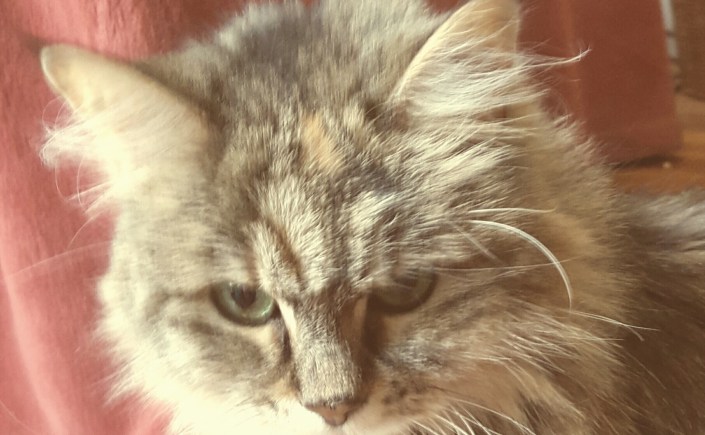
Hello, all. Skye here, for another Feline Friday. Anty did not tell me what to write about today, so I am going to have to wing it, or, in my case, paw it. I do not have any wings, because I am a kitty; only paws. I use them for walking.  Only birdies have wings. Also bats, and some insects. Maybe also Pegasus (I do not know the plural form of that word, but it is a horsey with wings. I am not sure if they are real or fictional, but I do not want to find out by meeting one. They sound scary.)  I think Anty letting me say whatever I want today shows a great deal of trust. I will try to show her she did the right thing.

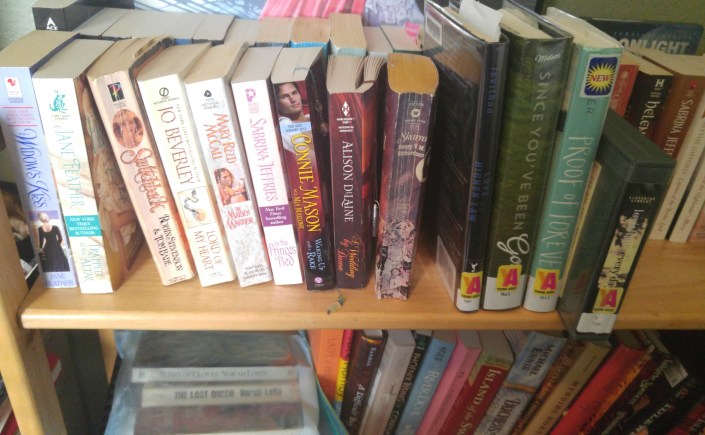
Most of this week can be divided into domestic tornado management and writing. Anty also found time to get to the library, along with Mama, and bring home a bunch of books. Eight of them, which is a lot, even though Anty says it is a reasonable amount. These are the books:

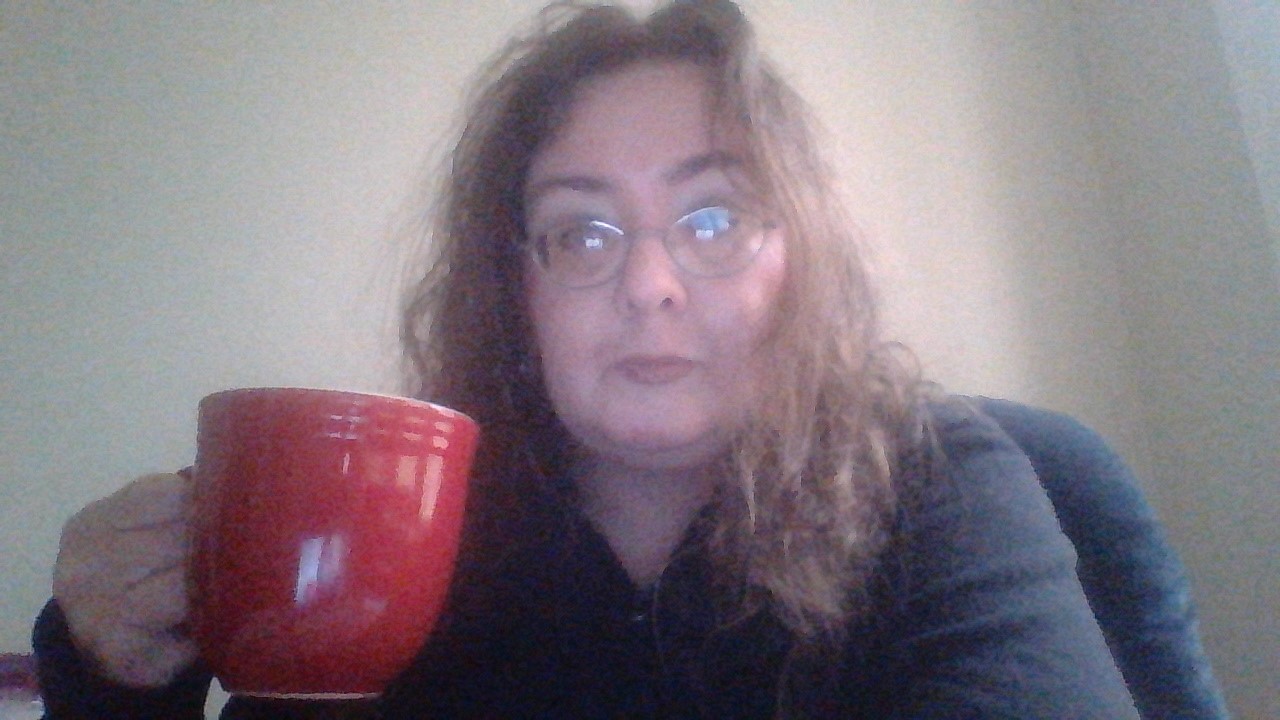
Anty picked them all. Mama did not find any books she especially wanted to read, but she wants to read some of the books Anty picked, when Anty is done reading them. So far, Anty is close to mostly through one. One. Anty needs more reading time. I would suggest that Anty try using some of the awake-in-the-middle-of-the-night time for reading, but the last time I did that, she looked at me like this:
ROBINDAGGERS - WIN_20150811_110539

That is not something I want to go through again, so that was the last time I will make that suggestion. Anty is doing laundry at least once tomorrow, so that is two hours of potential reading time right there. If it does not turn into writing time, that is. Which it might.  One important thing to know if you have a writer in your life is that pretty much any time can turn into writing time. That comes with the territory, and does not only happen when they are in front of a computer or have a notebook at hand (although Anty usually does have at least one notebook within reach.) Many writers, including my Anty, do not have an off switch. Sometimes, it would be useful if they did, but they do not. At least mine does not.

We do not have any pictures of the Anty Has Story Brain look, and that is probably a good thing. Mama and Uncle and I have learned to recognize it, though, and I think some of the humans who work at the coffee house. Twice, this week, Anty has had a coffee house human remind her that her tea is right in front of her and she can sit down now.  Some of them know it because they are writers, too, and give the gentle prompt as a matter of professional courtesy. The best way I can describe that look is sort of blank, staring off into some place that is not there.  Maybe I should say it is something non-writers cannot see, because merely because something happens inside a writer’s mind does not mean it is not real. Making things in their heads become real is a big part of writers’ jobs, so it is no surprise that it happens when it happens. Sometimes, often in the car, Mama will notice Anty is too quiet, and ask “are you writing?” Almost always, Anty says that she is. Once, Mama asked, “How are Hero and Heroine?” Anty laughed, because that was where her story brain had gone.
2016-01-15 14.35.56_resized

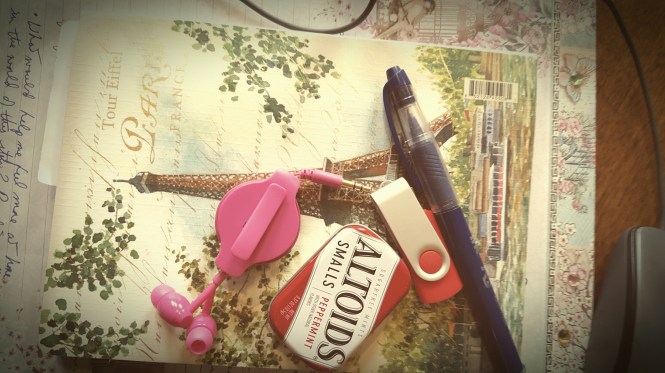
a very small portion of story brain


Anty says that, at least for her, story brain is a sign that she is on the right track, and the characters are doing their parts. It is like a movie in her head that plays itself and she has to get it all down. Maybe it is somewhat like recapping TV shows, except that there is no remote to pause things and she has to do it all in her head. I think the inside of Anty’s head is probably very messy, filled with pictures and sounds and bits of movies and snippets of songs, remembered smells and parts of ideas that started out as something else, but took on their own form after they swam around with all the other stuff for a while. I can imagine it is very easy to get lost in there at times, and that is why it takes Anty a little while to come back from it when she has to do things like go to the grocery store or figure out where Uncle’s sweater went.

Story brain is a lot better than lack-of-story-brain. Anty wrestled with that for a long while, and it was not pretty.  I am not sure that story brain is that much prettier, as her office looks like a tornado hit it. More books are coming out of boxes and going into her bookshelves, moving around so books she wants easiest access to, like the library haul, above, are the ones she can get to fastest, and books she never ever looks at can get ready to go to new homes. Right now, she needs books that will help  keep her moving forward in telling Hero and Heroine’s story, and those that don’t, need to go away. She says I can share pictures when she gets things neat again, but not right now.

Right now, Anty needs the computer back so that she can write more about Hero and Heroine, so that is about it for this week. Until next time, I remain very truly yours,

i1035 FW1.1

Until next week…

Skye O’Malley Hart-Bowling
(the kitty, not the book)
Midweek Rambles and New Book, Take Two

I dwell on love stories, on characters who struggle hard to become the best people they can be, who defy the odds to grab the brass ring of honor, and earn their way to a committed, healthy, loving relationship.

–Grace Burrowes

This isn’t the blog post I set out to write. I thought it was going to be, as my now-weekly Tuesday morning meeting with local writer friend, whom we shall call N for now, lit a spark, and when she asked if I knew what I wanted my writing focus to be this year, I didn’t even have to think about it. Her Last First Kiss, duh. I haven’t loved a story like this in a long time, and haven’t felt confidence in my own writing in longer than that. I was going to write about focus and purpose, and then I put fingers on keyboard and it all fizzled.

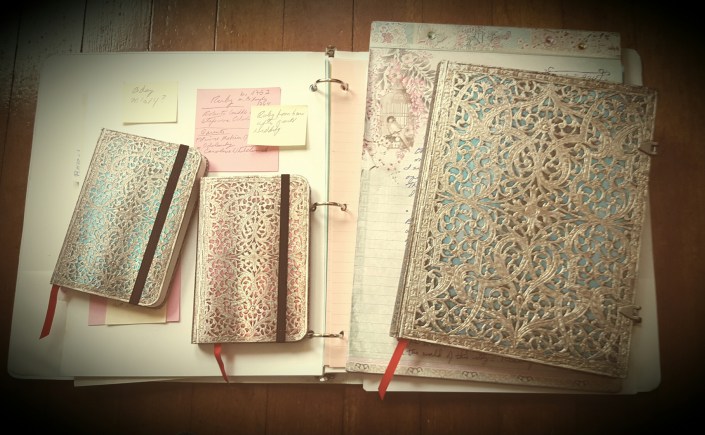
My first instinct was to apply a favorite bit of writing advice, and change my seat. In this case, that meant switching from words to images and photographing the notebooks and legal  pad I am currently using to work on this project. There were several pictures taken before the one I used, and no, you cannot see them. You cannot see the picture of my office desk that was fine, except for the jarring addition of two legs covered in light wash denim, because my computer tells me I don’t have permission to alter the picture I took with my own phone and emailed to my own account, so that I could crop it, but whatever, I will survive. You cannot see the beautifully arranged and edited shot of open notebook pages, which I really like, because that has text I’m not ready to share yet, and I am not opening my old laptop and doing the do-si-do of transferring the picture to jump drive, waiting for the old laptop to boot, blurring the text in Photoshop Elements, transferring that to jump drive and then uploading that. If I go through all that trouble to boot that machine, forget it, I’m playing Sims.

I am giving that serious thought right now, because I set aside all the resources I’d need to get the work I intended to do at the coffee house this afternoon done, and then left one hundred percent of them at home. D’oh. Including phone, for obligatory workspace picture. Double d’oh. Is it Friday yet? No? Phooey. I want Friday. I want Friday and a pizza and a bag of gummi bears as big as my head (the bag, that is, filled with regular size gummi bears, not one giant gummi, even if it is skull shaped.) A bottomless cup of Lapsang Souchong wouldn’t hurt, either. In short, I’m tired and grumpy. Best thing I can do at this point is to craw inside a good book and trust that I will un-grump in time. (Though the pizza really would help.)

I’m not sure how much I want to talk about Her Last First Kiss at this stage of the game. I’m not sure I’m ready to even “speak” my hero and heroine’s names here. That’s new for me. I’m a talker, and there is no surer way to kill a story than to not tell anybody anything. Not sure where the reticence is coming from here. Maybe they need placeholder names so that I can talk about them without talking about them. I may need to clear that with them first.

Both my hero and heroine have trust issues, and, as I often find true in my stories, there are a lot of identity issues for these two. Hero (will he let me call him Hero? He certainly doesn’t think he is one. He’s never done one heroic thing in his life. Really more the opposite. Not cowardly, exactly. He’s not afraid, in the usual sense of the word, but he does acknowledge that there isn’t a good reason for him to exist. He doesn’t matter. He’d like to matter. He’d like to belong.) and Heroine (Pfft. Heroine. Look at the romance writer, throwing around those fanciful terms. She’d think I would know by now, after the time I’ve already spent with her, that there aren’t any such things as heroes, of either gender. Heroes believe in things. Heroes have causes. All right, she has a cause, but it’s a moral obligation, not an ideal. There’s a difference.  She’s protecting her own. She doesn’t have any ideals. She wouldn’t know what to do with them if she did.)  collide in their first meeting, and the fallout is messy. It gets messier.

Hero and Heroine have, so  far, dragged me places I never thought I was going to go. The new opening, the one I raced home from my from last week’s meeting with N to furiously scribble with pink fountain pen, very firmly pulled one of my own personal triggers. Not the place I had planned to start a love story, but that is where the story starts. If this book has begun the way it means to go on, I am fastening my seatbelt. It’s going to be a bumpy ride. Which reminds me, I have a carriage accident scene to write.

Backing Up and Moving Ahead

“You do what you can for as long as you can, and when you finally can’t, you do the next best thing. You back up but you don’t give up.”
–Chuck Yeager


Another Monday, another blog entry. Not feeling it today, but discipline and practice are both important, and I find that putting order to chaos satisfies me, so here I am. Morning spent doing housework with help of Housemate. This often consists of her sitting there and letting me chatter at her, as it was today, with me sitting cross-legged on the floor, the box fan in front of me, as I took apart the covers both front and back and cleaned that sucker with grapefruit-scented all purpose cleaner and paper towels. Odds are we aren’t going to be needing that fan for a while, as furnace keeps us toasty warm, and it is January, after all. So, into the newly reorganized closet for our biggest fan. I promise I only do this to mechanical fans, not readers. No reverse Misery-ing here, and, besides, readers are good to have around during all seasons.

The great Christmas ornament harvest of 2016 went well this morning. Good crop, and we hope for an even better return next year. As much as I love the whole process of decorating for Christmas, and will inspect the placement of garland and ornaments (the fact that we use a pre-lit tree is probably best for all involved, lest I get nitpicky about light placement as well; I have in the past.) taking things down is a much quicker and more ruthless process. Down come the lights, coiled, tied, boxed. I pluck ornaments from the tree like ripened fruit, in a matter of seconds. It’s all over in a handful of minutes. This year’s crop is planted in the storage boxes, labeled, and can now germinate for next year. Maybe next year will be the year I finally go for a second tree, which would have black and white ornaments only. Supplemental tree, not replacing the traditional one; I have to have my tradition.

20160111_100740-1_resized

When I’m at a loss for what to blog about, my guiding phrases of “clean sweep” and “more layers” push me in the right direction. Taking down the Christmas décor and making better use of the closet space fits both of those criteria, as does yesterday’s library trip. Yesterday was a tough day, tired, emotionally drained and frazzled at the same time, and I strode through the library doors with one specific purpose in mind. I was going to grab an armful of romance novels.

I’ve written, recently, about how it’s been difficult for me to read a lot of more newly produced work (part of this, I am certain, is due to my reluctance to jump into the middle of a series of linked books; have to start at the beginning, for me, and there are a lot of series.) This time, I knew what I needed; romance. Historical romance. That’s my reading and my writing home. No matter what happens between Once Upon a Time and Happily Ever After, I know I am going to get that Happily Ever After, so pretty much anything is fair game in between those points. I did end up plucking a current release from the shelves, Cold-Hearted Rake, by Lisa Kleypas, which I started reading as soon as I got home.

12096457_1105577866148910_5999726958156898009_n

That’s the whole haul, for those who were curious. I’d gone with a vague hope I might find one of the Russian-related historicals on my list (and did, with Forever in Your Embrace) and fingers crossed for a Georgian (but not Regency) setting (When You Wish Upon a Duke delivers on that front) but, apart from that, nothing more specific than wanting a good grounding in my favorite genre. Carla Kelly always delivers on the emotional impact, so that was enough to put the book in my hand, and it had been a while since I’d read a good time travel, so The Last Cavalier fit that bill. If I could hit the snooze button on the calendar so I could snuggle beneath my fuzzy duck blankey and read them all, with endless cups of tea at hand, I think, at this point, I would.

Life, unfortunately, doesn’t work that way, but I can make sure I get some pages read every day, the same way I make time for my morning pages and have to at least touch one of the current fiction projects every day. As K.A. Mitchell, whose wonderful workshop on character relations this past Saturday gave me even more layers to slather on Her Last First Kiss, has said, open the file and change your seat. I have to open the file, or open the notebook. When I do, well, it’s right there. I have a pen in my hand, or the keyboard is right there, too (usually both, in most cases; that’s how my brain works best) and who would it hurt if I took a poke or two at things, hm?

Thanks to a talk with a new writing friend, who listened to me whinge about how hard it’s been to find where I should (note that should, there) including roundabout analogies and a diagram drawn on a napkin with rollerball ink, I am getting the chance to do both the clean sweep and more layers things at one with Her Last First Kiss. What, she asked, was the moment that changed my heroine’s life forever? What permanently took her off the path she always thought she was going to walk in life? Huh. Well. Had to think about that one, and then the answer came out all on its own. When her father left.

Sure, she was seven then, and I didn’t want to start that far back, but darned if the whole scene didn’t play itself out on my walk back home from that meeting. I sat down at my secretary desk, with notebook and fountain pen, and out flowed the whole thing. I didn’t have to yank any teeth. Didn’t have to force anything. Huh. I…remember how to do that. Don’t write a book. Tell the story. Remember back when I didn’t know all the rules, but blithely wrote down the movie in my head? Yeah, that.

Clean sweep. More layers. Easy enough when I don’t think about it.


A Handful of Dreams and a Blogful of Opinions

I’ve been reading a lot of older historical romances lately, mainly those first published in the 1990s. Many of these are standalone stories, in the truest sense of the word, not parts of any series, so anything can happen, to anybody, apart from the HEA we are guaranteed by the end of the book. The  hero’s charismatic best friend isn’t exempt from villain status, because no, we aren’t going to need him to be the hero of book two or there, because there is none. One hero, one heroine, one HEA, off into the sunset, done and done. That’s how my story brain naturally works, anyway, and I’d been craving the big, thick doorstoppers I used to devour (and still can, because keeper shelves and UBSs and e-books, yay publishing revolution) so I dove into this subgenre once more, with overwhelmingly positive results.

12118845_1053054018067962_7772132729402933453_n

One of my best (but not surprising) re-finds was Barbara Hazard. I’d re-devoured her Georgian historical, Call Back the Dream, and wanted to dive into the sequel (I know, I know, I was talking about standalones only a minute ago, but bear with me; this is going somewhere) immediately afterward. I thought I’d packed that in the same box with the original, but then it would have been in the same bookcase. It wasn’t. Instead, there was A Handful of Dreams, also excellent, and completely unrelated.

20160106_102511-1_resized

I didn’t remember too much about A Handful of Dreams, though I’d first read it when it was fairly new. I remembered the scene where child Sally catches a coin tossed to her by a British soldier on horseback, but didn’t remember if that soldier would turn out to be the hero or not. As I read on, I still wasn’t sure. I did remember, very clearly, the fictional Sally’s abusive first marriage, her return to her family of origin, and her placement as the companion of the daughter of a different soldier.

Let’s say that Sally and her employer’s daughter had different expectations of the relationship and leave it at that. I’m not sure if that might have been explored differently,  had the book been written today, and that’s something I will likely think about for some time. Sally’s employer decides it’s time for Sally to move on, and her situation, as it were, becomes a commodity.

A friend of the family, Harry, Lord Darlington, purchases the care of Sally, and his treatment of her didn’t -on either read- strike me as particularly heroic. He’s a cold father to his children from other relationships, including two marriages, even when Sally expresses her desire for the children to be part of the family. As a work of historical fiction, this works fine, and that’s how I read it this time around. There’s a friend of Harry’s, who also takes a liking to Sally, and there was a good portion of the book where I was thinking maybe I’d misremembered and he was the true hero.

Not going to give away spoilers, because there are two sorts of readers involved here; the ones that are going to track this book down o they can read it themselves, and those who will not, because old book, who cares, or they don’t read romance anyway. Either way, I finished this reread a couple of days ago, and, as much as I’d like to read another romance, my brain is stuck here. Lots of thinking.

Were I to publish this book today, I would class it as historical fiction rather than romance. Sally does find love, and that love is reciprocated. There’s even an acceptable heroic grovel on the part of the gentleman who fills that role, but, in the end, this is really her story and not theirs. I am okay with that. Romantic elements, yes, but this book is about Sally’s life, her struggle to find her place in the world, and the effect the cards she was dealt do have on what she can do.

Sally starts out Irish and poor, in the early nineteenth century. She’s also beautiful, exceptionally so, and that gets her noticed, not always for the right reasons. This is one of my favorite types of characters, where that beauty has its perils as well as its perks. There are those who don’t look below the surface, those who assume a certain set of facial features means a certain personality or mindset, when that couldn’t be farther from the case. Sally’s options are limited. She’s not educated, she doesn’t have a lot of power, but she is smart and she is strong, and she is a woman of her time. That’s important.

Some aspects felt  a little too neat to me, others a bit rushed, and. for a historical romance, there isn’t a lot of emphasis on the relationship that should be the center of the story. I’m not sure I would have chosen the same hero, were this my story to write, but it wasn’t. I’d love to talk to the author, but without contact information, that’s not likely, so some of these things are going to muddle around in my own mind for a while. Maybe some elements will transfer and transform in my own work, but for now, I’m still thinking

Paris Papers and Random Writerly Ramblings

The image above is not all of my Paris-themed stationery, but it was what I could readily reach, fueled by only part of my first cup of tea for the day and the knowledge that getting this post written was one thing I knew I could get off my to-do list. When I put them away after the picture, I realized I had a lot more than I thought I did. This may be about half, which makes me want to rearrange my unused notebook storage to make Paris-themed books its own category. This may be about half.

That surprises me. I haven’t written anything set in Paris, apart from maybe some long-ago fanfiction (and here I will get language nerdy; no, I do not write about location X or Y. I write historical romance that may be set in location X or Y, but I’ll leave the writing about the location to others, because nobody wants to read what I would turn out on that front.) so I’m not sure why I gravitate toward this theme so much in stationery matters, but as, we can see above, I do. As one of the aspects of my From Fan Fiction to Fantastic Fiction (new version, Play in Your Own Sandbox, Keep All The Toys) workshop is to examine why we like what we like, this may be something for me to try here.

Basically, stick the Eiffel Tower or Arc de Triomphe on a piece of stationery, and I want it. Fleur de lis also work, maps, French text (I don’t speak or read French, but I can figure some out if I’m not hurried) the streets of the city, the Seine, the general vibe of the place. Do not ask me to describe that (see above) because it’s something I’m not sure how to put into words. Interesting challenge for a writer, but there it is. I’m not as much about the facts and political histories of a setting, but the zeitgeist instead, the spirit of the times.

My best-best method of research is being there. Barring time travel, living history museums or reenactments are the closest I can get. I will never forget the reenactment of a pre-Revolutionary War British army regiment, held on the grounds of the John Jay house, some years back. Growing up in Westchester County, NY, the American Revolution was all around me (okay, the French were on the side of the rebels, so maybe I got some exposure to the French through that?) especially in the year of the Bicentennial, and it never left. So, when the date of a reenactment, at a venue that had been one of my big treats as a child, coincided with my birthday (or very close to, IIRC) Housemate decided that would be the perfect gift.

It absolutely was. I made a tour of the merchants’ booths, talked to re-enactors (best-best for me is when neither one of us breaks character) and wanted to show Housemate some of the grounds. There we were, meandering the dirt path, a sea of white tents to our left, a field filled with re-enactors and modern folk alike on our right, and the ground behind us trembled. A deep male voice bellowed for us to make way for the King’s men, so we jumped to the side of the path, and a river of redcoats marched past us, footbeats and hoofbeats vibrating into my very being.

That, for me, is what I want in a historical romance, whether writing or reading. I want the full immersion, not only who was on the throne or in office, but what my people would see, smell, hear, taste and feel in their daily lives. What people of however many centuries ago wanted are, at the heart, the same things we want today. My stories start, always, with the characters. Once I know who they are, then it’s time to figure out where and when they might have lived. It’s more a matter of following them around and climbing into their skins. Where do they go when they go home? If they’re late, who misses them? What does their voice sound like when they speak? These aren’t, most often, things I can dictate, but things I have to discover.

Which may, in the end, be what’s up with my collection of Paris stationery. The voices will come when they come, at the right time, and when they do, it will be the most natural thing in the world.

Writershead Revisited

“I should like to bury something precious in every place where I’ve been happy and then, when I’m old and ugly and miserable, I could come back and dig it up and remember.”
Evelyn Waugh, Brideshead Revisited

My favorite movie of all time is the original 1980 Brideshead Revisited. Okay, technically speaking, it’s a miniseries, as it ran on PBS and clocks in at a whopping twelve hours, but to me, it’s a movie, and so I am counting it as such.

If you’re a purist and insist on theatrical releases, my preferences are thus:

  • Comedy: Love Actually
  • Drama: Remains of the Day
  • Other: Saturday Night Fever
  • Obscure: Lords of Flatbush

People who know me in the really real world, am I forgetting anything? I have not seen the Emma Thompson theatrical version of Brideshead Revisited, nor do I plan to,  because I do not mess with perfection. Sorry, Emma, not even for you. I’ve read the novel by Evelyn Waugh (Hevelyn, for those in doubt about which Evelyn wrote this one) and will correct any who try to call the building known by non-devotees as “Castle Howard.” They are wrong. It’s Brideshead. I know. I’ve lived there, with Charles and Sebastian and Julia, and I have deep emotional scars from the first time I saw the graffiti on Charles’s mural and the empty :sorry, I need a minute: fountain :sniffle: with barbed :I can’t, I seriously can’t: wire. Sebastian drove that car around the bend of the road on that first school break, and BAM, I, as well as Charles fell deeply, irrevocably in love.

It’s the same feeling I had when I stole the then-new copy of The Kadin by Bertrice Small from my mother’s night table and read it under the bed in the guest bedroom during a power outage. I knew then and there that I’d found what I wanted to read and write for the rest of my life. The same way a lot of my SF/F reading/writing friends fell hard for Star Trek, Ray Bradbury and others, that’s how I fell for historical romance, and that’s what’s been, increasingly strongly, calling me back home.

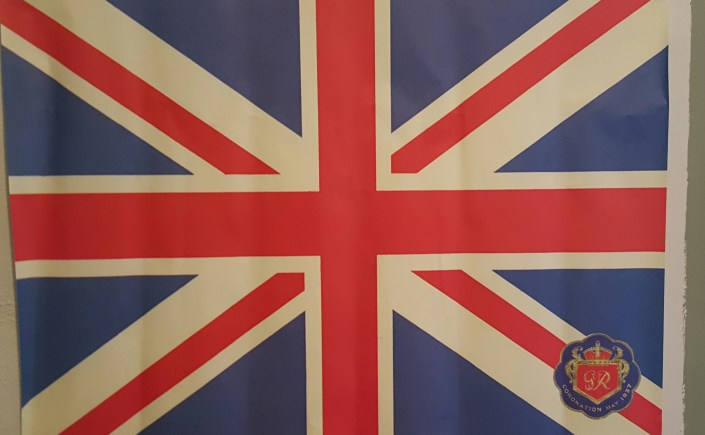
Today, I took the bulletin board off my office wall. If I haven’t been utilizing it in the three years and change I’ve had this office, that’s not where it belongs. Later, I’ll take the items off it, find them new homes, and figure out the board’s new purpose. There will be one, because I crazy love vintage office supplies. In its place, I put the Union Jack poster above, purchased at a local art store about two years ago. it’s been rolled in brown paper, waiting for “the right time.” Which would be when, exactly? When we could spring for a fancy frame? The right fancy frame? When life calms down? When (fill in the blank?) If there’s one thing loving historical romance and historical fiction has taught me, it’s to seize the moment. So, up it went, with blue tacky stuff holding it to the place where whoever painted the room a lovely moss green had obviously painted around the mirror that Real Life Romance Hero took down for me the day we moved in. Much as I like to work on my selfie game, I don’t want to stare at myself the whole time I’m writing.

Taken in a different room, but it would be pretty much this.

Taken in a different room, but it would be pretty much this.

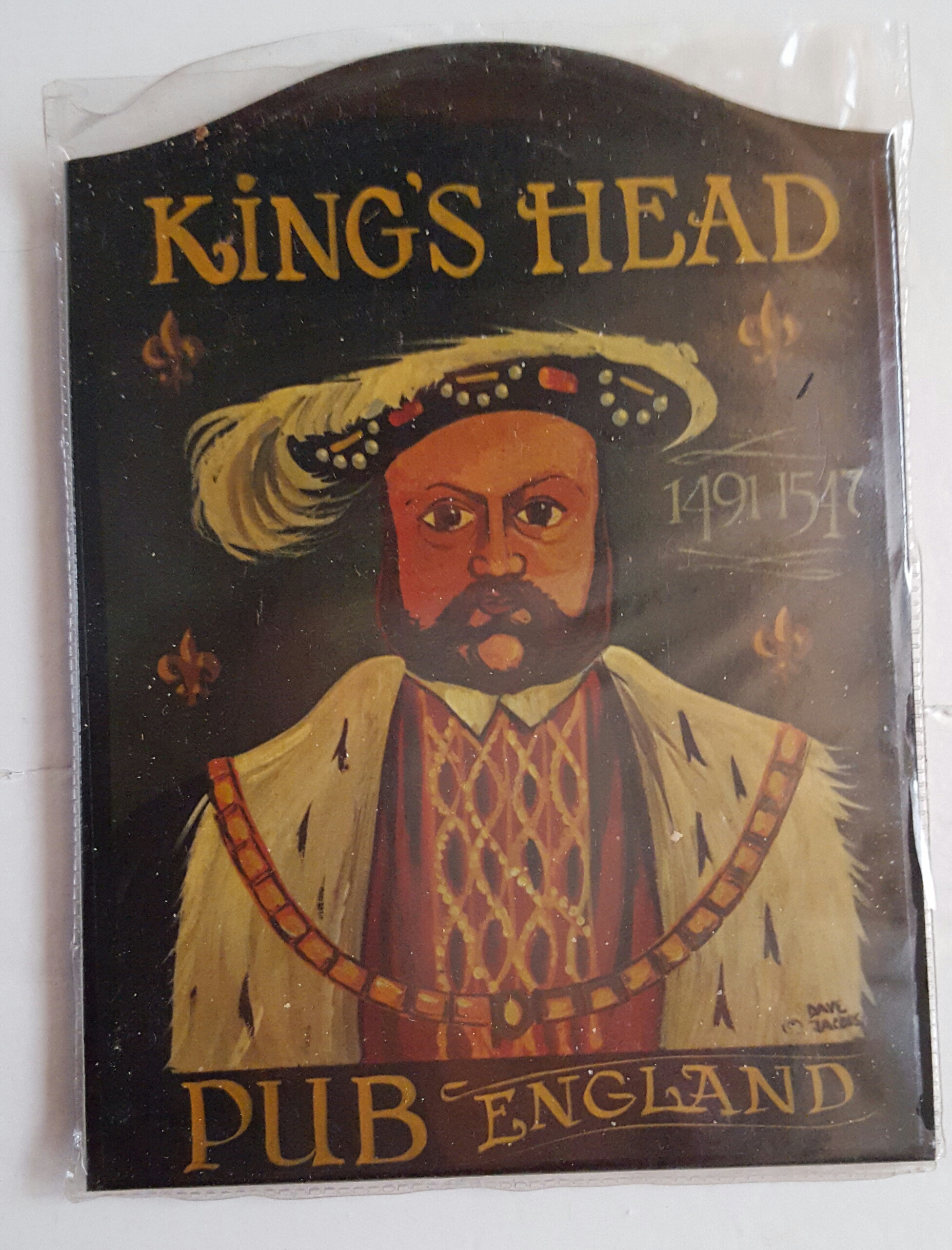
I also unearthed a pub sign that I honestly don’t remember when I acquired it, and had been waiting for, you guessed it, the right time and perfect place to put it up. Maybe the right kind of hook, whatever, whatever. Baloney. I still has blue sticky stuff, so I slapped some on the back and then affixed the sign to the door. My office may technically now be the King’s Head Pub, and I am fine with that. We even have a pub cat instead of a pub dog, and I am fine with that, too. The two Georgian era prints I kept from my dad’s house and had wanted since I was a wee little princess, do need to wait for command hooks to come home before they can go on the office wall, but when they do, up they go. The right time is now.

This means I'm allowed to have pub food at home, right?

This means I’m allowed to have pub food at home, right?

Doing things like this gets me excited, makes me want to dive headlong into the story world, climb inside the characters’ skins and see through their eyes. Writing longhand with a fountain pen, at least initial notes, is another way I find I can connect. Today, I also added another notebook to my shelf of the usual suspects on top of my desk’s hutch. It’s one of those story ideas I’ve been on and off with for years, and, as the flip side of the bulletin when story ideas and characters and settings and such have been in my head for long enough that they are old enough to vote, drink, marry or join the military without parental approval, they probably aren’t leaving, period. Better for me to get their rooms ready. That feels right.

Today, I met my Ravenwood editing goal a lot earlier in the day (for the day, not the whole project) because I wasn’t focused on word count or verb tense, but telling the story and living in that story’s world. This afternoon, I jump to Georgian England and Her Last First Kiss, and I’m excited about that, too. I don’t consider myself old, ugly or miserable, but dusting off things I love and displaying them proudly in the now, that’s a piece of the puzzle sliding into place. The road to The End, on both of these current projects, and others, has never seemed clearer.

Thursday Rambles

“Be willing to expose yourself to your readers. Plumb the depths of your own experiences and emotions in order to make your stories authentic. Don’t hold back.”

— Madeline Hunter

Wednesday’s post was going to be a special midweek update from Skye, but a domestic tornado chain touched down, here it is, Thursday, and Skye will be able to make her regular Feline Friday post tomorrow, so this one is all on me. Which would be lovely if I had any idea what I had planned to write here in the first place. Keeping the discipline of thrice-weekly blogging is one of my goals, so here I am, and my complete lack of focus means that I am going to babble and trust that some sense will come out of all of it at some point.

I will admit that, in a not that long ago romance writer’s conference, I had the great good fortune to be seated at the same table as Madeline Hunter at one of the meals, but did not get to talk to her. Despite my best attempts to peek at her name badge, I couldn’t get a good view, and the noise level was high, so shouting across a big round table wasn’t the most practical thing to do. Point is, I was at the same table with Madeline Hunter for an entire meal, and did not get to talk to her. This will haunt me to my grave. Either that or until my next opportunity, because these things do roll around again.

Granted, due to the lack of a clear name tag sighting, I didn’t know who the new arrival to our table was, and her only answer to a tablemate’s question of “what do you write?” (universal writer to writer icebreaker there) was “historical.” If I had known, I would have loved to talk with her. I still remember, long, long ago, when Madeline Hunter first came on the scene with well-received medieval romances, and feeling betrayed when she switched to Regency. I’m all for writers writing in different eras, and, in fact, I encourage that. I’d like to see more of it. What hit me hard at the time was the loss of a writer who used the medieval setting in all its grit and glory, leaving for more populated Regency assemblies.

There are multiple reasons a writer might switch time periods. Medievals have been declared dead multiple times since I started reading romance novels, let alone writing them. I don’t recall if it was that same conference, though it may well have been, where I pitched my own medieval, with a working title of Ravenwood, to a very interested agent, who said she loved my voice, quoted my own lines back to me, and assured me she would totally read this book for her own pleasure…but she couldn’t sell a medieval in the current market. Did I have a Regency?

I was working on one at the time, and told the agent that. She said great, send it when it was done, but don’t rush. She wanted the same level of polish as she could see in the medieval. Well, dear readers, I can say that I tried. I love the characters in that once upon a time Regency, love the conflict, love the resolution, but, as Critique Partner Vicki pointed out, I hate writing Regency. Georgian seems to be my natural default these days, so, when I do go back to that manuscript, everything will get bumped back a few decades, to fit within my natural reach. It’s going to take a while to get to that point, as I have the current novel and novella that need my attention, and I’ve blabbered on this subject before, so I won’t belabor the point.

Does this post even have a point? Does it need one? It’s written, that’s what, or mostly so, and I’ve had a few discussions, at various places on the interweb, about writing historical and how and why and all that. Defining what makes a particular period appeal to a particular reader or writer is far above my pay grade, so I’m not going to try (today) but here’s what I do know: I need to feel the era. To us, it’s history. To the characters, it’s life. Barring time travel (and I have a time travel waiting to burn off its own bad juju – this may be payback for all the jujubes I inhaled as a kid) the characters don’t know how the war is going to turn out. They don’t know they’re inching up on another ice age, or that the thingamahoozie is going to be invented two months hence, thus changing the world forever. They don’t know any of that.

What they do know is that they want the same things we do; home, health, shelter, food, companionship, purpose, love. All that good stuff. The way they get it, though, that’s where we find the differences, and what historical characters can and cannot do are influenced by any number of things. I find that endlessly fascinating. It’s easier for me to climb into a character’s skin and move around in their world if that world strikes a chord in me and plucks me like a stringed instrument so we can make beautiful music together. No doubt that can happen in any number of settings, and there are probably some I haven’t ever thought I’d employ that, someday, I will. For now, it’s Georgian, and, for today, that’s one blog entry down.

Order of the Golden Curtsy: Call Back the Dream, by Barbara Hazard.

Write what is wrong if it seems true to you and hang the critics of romance who would have it otherwise.
Judith Ivory

I have not read a lot of Judith Ivory. I intend to correct that. I’ve read some (and need to re-read that) but this quote jumped out at me, and it is extremely relevant to my interests at present. While it’s been some time since I’ve spent the majority of my writing time scrawling in endless notebooks about how I can’t write, want to write, need to write, but nothing is coming, oh my word, am I all done? Well, no, obviously not, because I would not have a writing blog if I were. I would not be filling out invoices for my work sold to other markets, and I would not be working on current novel, novella and other projects. At the time, though, it felt like it, and that’s a feeling I want to remember. Not relive, but remember, because it has a job to do.

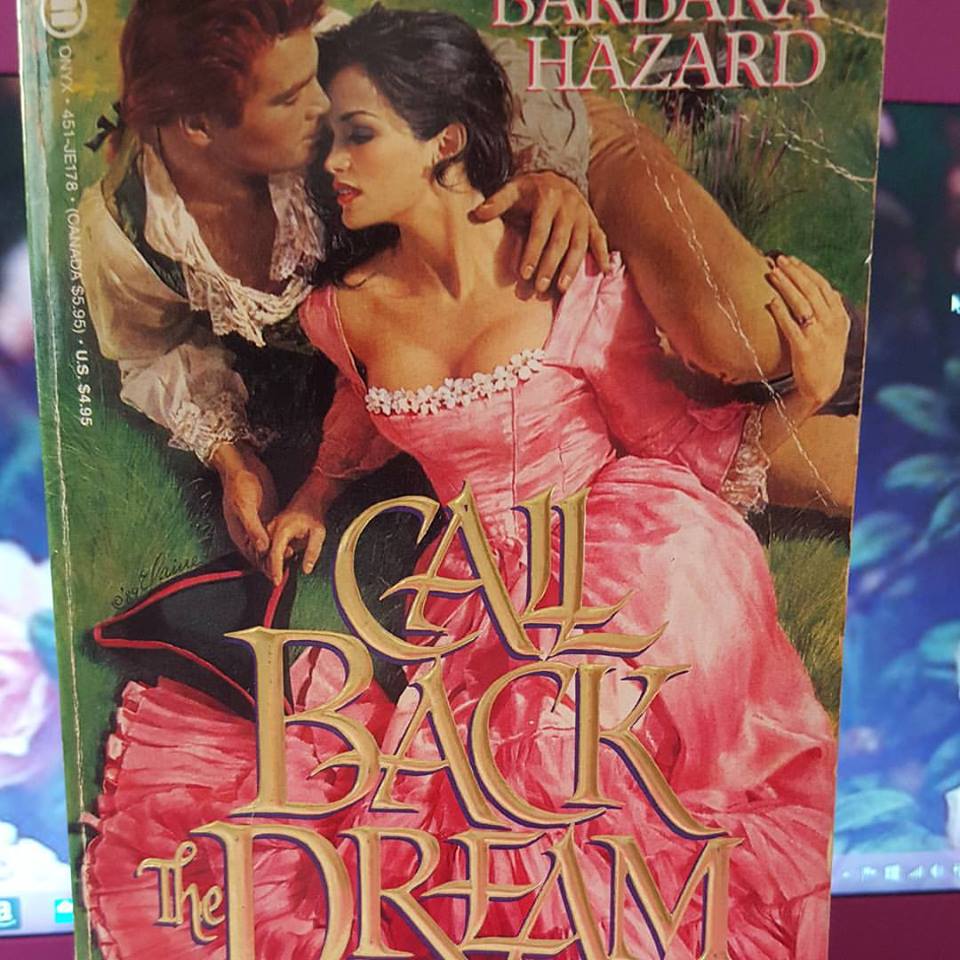
Earlier today, I finished rereading an old favorite historical romance, Call Back the Dream, by Barbara Hazard, which I’ve talked about some before, and likely will do again. This book is one of the special ones, that has stuck with me through decades of reading, held up exactly as I’d hoped it would. It reminds me why I love reading and writing historical romance, and makes me excited to read its companion book, which I have recently discovered somehow got separated from its parent and is in storage. :sulk: No matter, I’ll pick another read from the same bookcase, though I can’t say which right now. What I’m going for is the feel more than anything else, the big, thick bug-squasher historical romance steeped in the spirit of the times (Professor Facos, thank you for introducing me to zeitgeist, probably the greatest gift a professor could give a writer of historical romance.) – the characters think, believe and behave as people of their time, and that drives the plot.

Call Back the Dream by Barbara Hazard

Call Back the Dream
by Barbara Hazard

I. Love. This. Book. So. Hard. It. Hurts. I highly recommend it to anyone who wants to know what sort of books I prefer to read, and, ideally, write, and will definitely read it again. During this particular reread, a new thought occurred to me: this book might not have made it to mainstream publication today, and if it did, there would likely be differences. Granted, there are fashions in writing, especially in genre fiction, same as there are in clothes, makeup, hairstyles, etc. It’s also true that publishing does go in cycles, so maybe some of the things that may read as dated now to the very modern reader may be all the rage next year.

Long separations aren’t common in many historical romances published today, but that doesn’t mean it takes away from the romance. Alexander and Camille are separated for fifteen years in this story, by parents who don’t take kindly to mixing classes, and both do marry other people in the interim. Reasons for and outcomes of those marriages make sense in Georgian England, and neither spouse is demonized. I liked that. When Alexander’s first wife dies, there’s pressure to seek another wife, as soon as possible, because he’s not getting any younger, and the title can only be passed down to his direct male descendant. This. Is. A. Problem. Alexander didn’t want to marry anybody but Camille in the first place, but he did his duty, and is willing to do it again. Well, to a point, that is, which I am not going to blab about here, because the scene where he Does A Thing out of strong emotion still makes my skin prickle merely thinking about it. That’s what I want to put into my books, too.

This is not a sexy book. There’s one intimate encounter between Alexander and Camille, and that not spelled out explicitly, but the strength of their love and the bond between them does perfectly fine without going into physical detail. It’s not a inspirational book, though Camille is a vicar’s daughter, her faith affects her choices, and we see her making observances of same. Her first husband is agnostic, and though it’s not gone into depth there, either, their differing views provide for stimulating conversations between the couple. Sex and faith both influence the plot but don’t dominate, though the love Camille and Alexander share, and its obstacles, do. When I read these pages, I ache for these characters and what they need to go through to achieve their HEA. I want to make that.

I love that, when Camille and Alexander do find each other after all those years, it’s not quick or easy. One of them is still married, for one thing, there’s a child involved, and both parties have huge paradigm shifts regarding things they thought they knew beyond any doubt. There’s anger. There’s betrayal. There’s an offer nice people don’t make. There’s consideration of that offer, and consideration of what acceptance of that offer would mean to other people, on an intimate and grander scale. I want to suck this in and soak in it and breathe it and learn from it and make it mine.

There are some books that we read. There are some books from which we learn. There are some books in which we see ourselves, as we are or as we would like to become. Long ago, I had the idea of starting a feature, on my previous blog (or the one before that?) to ramble about my favorite-favorite historical romance novels, but I never did it. No idea why, but no time like the present, and so I induct Call Back the Dream by Barbara Hazard as the official first member of the Order of the Golden Curtsy. Time to show respect to a mistress of the genre.

Back to Old School Season

Last night, the power went out. Twice. The night was sweltering hot, the rest of the family had sequestered themselves in their rooms, hot and cranky, leaving only me out in the living room. My plan was to watch Ink Master (which I am not sure even recorded, but there’s always On Demand, right?) and write, but BAM, the big dark. The box fan went out. College kids (we live in what’s termed the student ghetto, as our neighborhood hosts multiple institutions of higher learning) whooped and hollered, and one fine citizen decided that was the perfect time to shoot off fireworks. Really? Why do you have fireworks in September, sir or madam? Waiting for exactly this sort of event? Can’t make this stuff up, and, being a writer, that’s kind of my job.

So, anyway, there I am, in the dark, faced with a giant shift in plans for the evening. I don’t have tattoos myself (and can’t, medically, as I have eczema, which does not play nicely with tattoo ink) but I find the art form fascinating, so tattoo shows are must-see television for me. Ink Master is my favorite. This season is masters vs. apprentices, which I think is an interesting concept, especially how each pair handles the competition. For my money, if I were the master and my apprentice surpassed me, I would consider that proof I had done my job well. The student should surpass the teacher, IMO, at some point. That’s how we improve.

Which is where we’re going with this, today. After batting around some email conversations with writer friends, I dragged the window seat cushion onto the floor, filled my travel mug with ice water and settled in beneath the living room window, to hug an ice pack and have a good think. I would have written this out if there had been any light to speak of, but there wasn’t, so I’ll get it down here.

The office overhaul has brought a few different things to mind, notably my reading habits of late. While I do have that lovely TBR shelf above, where my brain and heart keep going is over two shelves, to the recently unearthed classics in their new case. Valerie Sherwood, Laurie McBain, Anita Mills, Barbara Hazard…I have  missed those gals and the stories they told. Not all of them would appeal to the modern reader, but they have stuck with me over the years, and in some cases, decades. The question is, why? What grabs me that strongly, for that long? Good questions, and there’s only one way to find the answers. Study the masters. I’d say mistresses, as, with the exception of Jennifer Wilde (who was Tom E. Huff in his private life) these books were written mostly by women (though Laurie McBain relied on her father’s input, and Valerie Sherwood thanked her husband, Eddie, for his role) I’m reluctant to use the term “mistress” in this context. Whole different profession there.

There hasn’t been a lot of reading time lately, but, once I started my reread of Call Back the Dream, I noticed I was approaching a few things differently. Right before the lights went out, I’d sneak-read a chapter in the bathroom. Haven’t done that in ages, but I used to do that all the time, when I couldn’t wait to dive back into the world of long-ago lovers. There was what we’d call head hopping today (I’m not going to go into putting modern standards of writing onto writers who worked when conventions were different, as that was how things were done then, so shushies) but the details…wow. I felt like I was seated at that table in the vicarage, having dinner with the heroine’s family. Each sibling, both parents and even their lone servant were distinctly painted characters, and no, they do not all get their own book. Sometimes, supporting characters are just supporting characters, and that’s okay.

I’ve read this book before, and will read it again. There’s the delicious sense of anticipation, because I know what Camille is going to find in a certain spot by the stream, but she doesn’t know that, and neither she nor Alexander have any idea what that spot is going to mean to them, or how long it’s going to take before they can claim the HEA that they might have had that much sooner if a few things had been even the slightest bit different.

Different. That’s the word. I love the historical romance genre; that’s what I live and breathe, what I’ve read and written since I was but a wee princess myself. I love that there is something for everyone, and I love that I do have these books from the era of my reading career that fires my blood, in which I see myself and the stories I have to tell. That’s in both senses of the word; one, that I possess them, and two, that I need to release them into the wild. I want the bigger stories. I want the variety of historical settings and eras, and people who think, act, speak, believe and comport themselves as people of their time. Not so much textbook-strict accuracy but versimiilitude. Could it have happened? If so, bring it on. Even so, I’m not writing a textbook, and I’m not writing fictionalized biographies. I’m writing historical romance. The love story has to be as important as the world in which it takes place, and it has to be done in such a way that it could not have happened at any other place or time.

The best way for me to learn how to do this is to see how it’s been done, and them replicate it, in my own voice. Which means I’ll be reading through these keepers, balancing the classic romances with newer editions and learning from both, to make something entirely new. Teacher may be a strict one in this class I’m making for myself, but at least I’ll know attendance will be one hundred percent.

Post Labor Day Rambles and Georgian Unciorn Chow

Monday’s post on Tuesday does not count as late if Monday was a holiday. Not sure if a holiday counts as such if it’s as disgustingly hot as this one was, but I got to spend Sunday with my good friend, Mary W, and her hubby :waves hi: so that definitely gets holiday points.

In preparation for the visit (and because it had long since fallen into ‘high time’ territory) I hauled a mostly unused bookcase into my office and busted my special keepers out of the storage box where they’d been since the big move and got them out on display.

Shelfie!

Shelfie!

Getting these old favorites out of mothballs and out where they can see them gave me a jolt of energy. This is why I read and write romance. If some of these books look well-read, it’s because they are, studied as much as read for pleasure. Those Valerie Sherwood books? Saved my bum in a pre-Revolutionary history final in college, where I needed to detail the contributions of three ethnic groups other than the English, that were essential to the survival of the colonies on an economic level. First two that came to mind were easy; indigenous and African, one group here already, and the other not here by choice, but both contributed much. Then my mind skidded to a halt. Sure, I’d studied, but could I remember any of that? Nope, what my brain wanted to  hang onto was that scene in Bold Breathless Love, where the heroine escapes her abusive husband by ice boat on the Hudson Riv…waaaaait a minute. Creepy abusive husband dude was Dutch, and so was the ice boat, and ice skating, and those were pretty darned useful, because otherwise, there is zero river commerce during the winter months, and then how are we going to get goods from producer to consumer, hm? Ice, ice, baby. Bonus points for those who know the legal name of the gentleman who popularized that phrase is Robert Van Winkle.

There’s a lot to be said for getting in touch with one’s bookish roots, and it’s a practice I highly recommend. Though I haven’t been reading a lot of current historical romances lately, merely seeing these books on shelves made my reader heart go pitter-pat. I want to reread that one and that one and that one, and ooh, that one. The array of settings and eras here dazzled me then, and it still does. 19th century Russia? English Civil War and Restoration? Georgian England? Colonial America? Yes, yes, yes and yes. This is a shelf full of unicorn chow, and I couldn’t be happier to have it out in the open again.

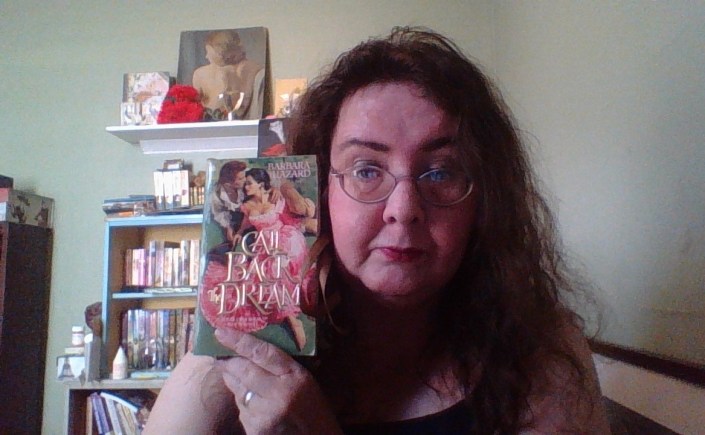
The book I’m holding in today’s picture is Call Back the Dream, by Barbara Hazard. It’s the first book I ever wrote a fan letter after reading, and I still remember being gobsmacked when Ms. Hazard actually sent back a personal reply. Not light reading, by any stretch of the imagination, and those brave enough to crack that gorgeous Elaine Duillo cover are going to need Kleenex and possibly counseling, because man oh man, the emotions here, and they are directly dependent on the historical world in which Camille and Alexander, the lovers depicted in said illustration live.

No rubbing of elbows with the movers and shakers of the time, but two star crossed lovers from different classes that society has decreed do not mix. Camille is the daughter of a vicar, Alexander the son of an earl, and those readers with some familiarity with the way things worked in the middle of the eighteenth century know this is not going to be an easy road. It’s not, and that’s what makes it a darned good story. Marrying other people? Well, duh. Secrets and lies? Um, yeah. Matters Need to Be Dealt With because those crazy kids and their radical ideas do not jibe with the Way Things Are Done. There’s breeding to consider, in both senses of the world, and the road to happily ever after takes Camille and Alexander fifteen freaking years to traverse. Yeah, baby.

Make no mistake, they make it to their mountaintop, but there are Ramifications, which Ms. Hazard further explores in the sequel, The Heart Remembers, which puts Camille and Alexander’s natural son, Jack, in the spotlight, after he finds out the way his family tree is really rooted, and he does not take it well. I’ll be rereading that one after I reread Call Back the Dream. I did write Ms. Hazard back and ask if there was going to  be a third book, to bring certain events full circle, and, though she allowed I was right about certain things, wasn’t sure if the book would be written. To my knowledge, it has not, and, believe Ms. Hazard is not currently writing, unless it is under a pseudonym. If so, I want to know what it is, because I will read those books.

These books get unicorn chow points because, double-digit years after first reading them, I remember, vividly, specific scenes. Camille’s first appearance, doing laundry on a hot and humid day, the books (Pamela, by Samuel Richardson) Alexander left for Camille to read in secret, The Fire. Those who have read this book know what I mean, and those who haven’t, you’re in for a treat.

That’s the kind of book I want to produce, so that’s the kind of book I need to make sure I’m taking in, as often as possible. Reading these books reminds me why I’m doing what I’m doing, and makes me want to do everything I can to earn my own books a space on that shelf. Ms. Hazard, wherever you are, I’m leaving a light on for you and setting a place at the table.