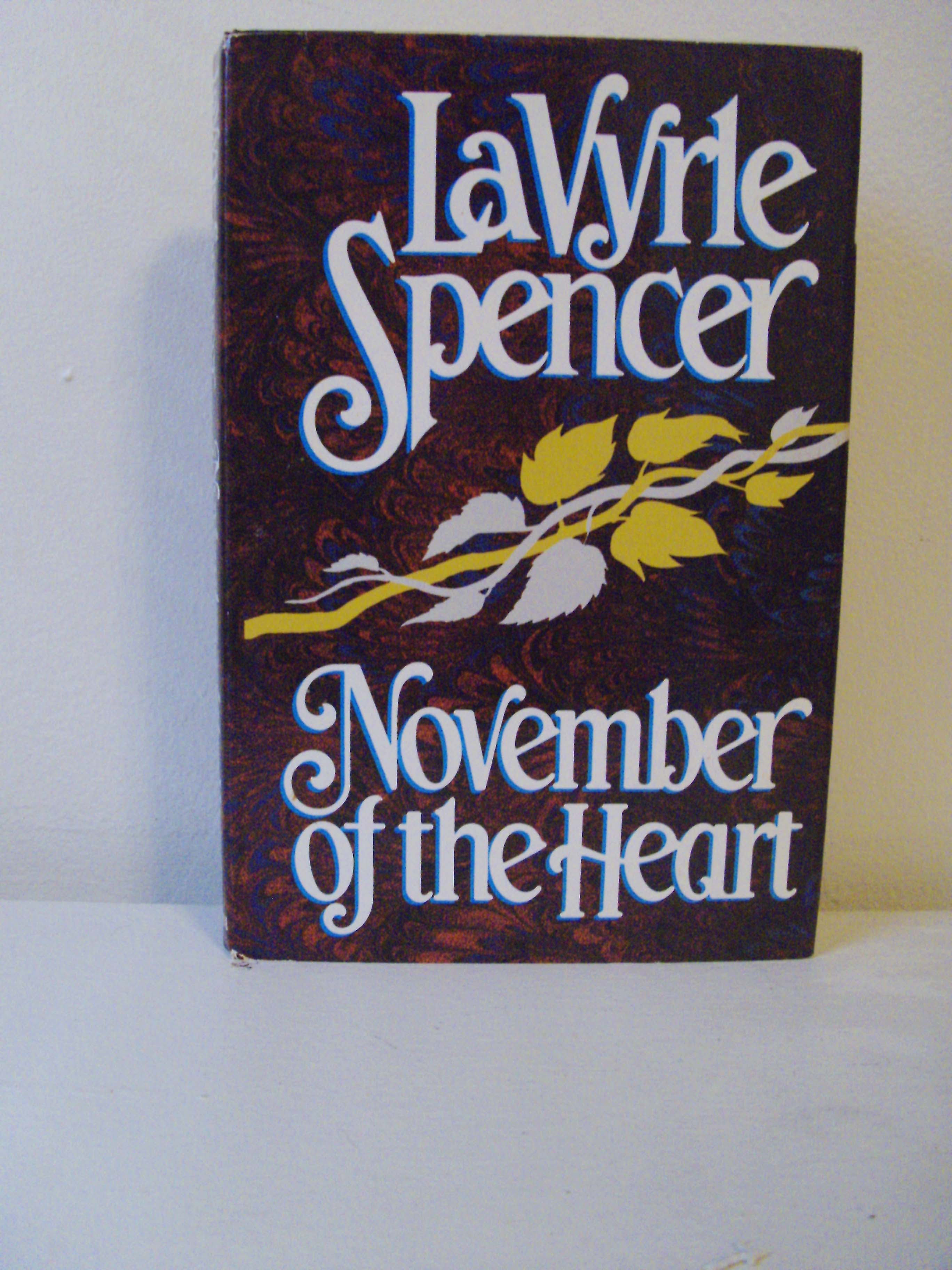
Throwback Thursday, Historical Romance Division: November of the Heart by LaVyrle Spencer

i1035 FW1.1

Out of all of LaVyrle Spencer’s books, and I have loved all of them that I’ve read, all of the historicals, and even dipped my toes into one contemporary, Separate Beds, November of the Heart is the one that sticks with me the most. That’s saying a lot. I have to confess, in the interest of full disclosure, that I have had more than one friend (two, at my best recollection) yell at me via email, because they didn’t know this book was going to have so many feelings. That’s why I love it.

One friend even said the title was “too sad” for her, but again, the title sold me right away. I love November, the month of coziness and deliciousness and giving thanks and  world full of color and scent and the holidays only a glimmer away. Turn of the century Minnesota is not an overplowed field in the historical romance world, and the all important annual regatta means everything to both the wealthy father of heroine Lorna and Jens, a boatbuilder pressed into service as a waiter. Slipping plans for a prize winning boat into one’s employer’s dessert is a recipie for disaster, but it also opens the door for a grand and glorious love that defies class barriers.

Lorna and Jens are star crossed lovers, Lorna drawn to Jens and his boat, their connection -it goes beyond attraction- gets tried by class, by time, by life, but when Jens and Lorna finally say the hell with everything that keeps them apart, I want to take a victory lap and toss confetti.  If LaVyrle Spencer ever wants to come out of retirement, I am leaving the porch light on for  her. If not, what she’s left us with is still magnificient.

Throwback Thursday, Historical Romance Division

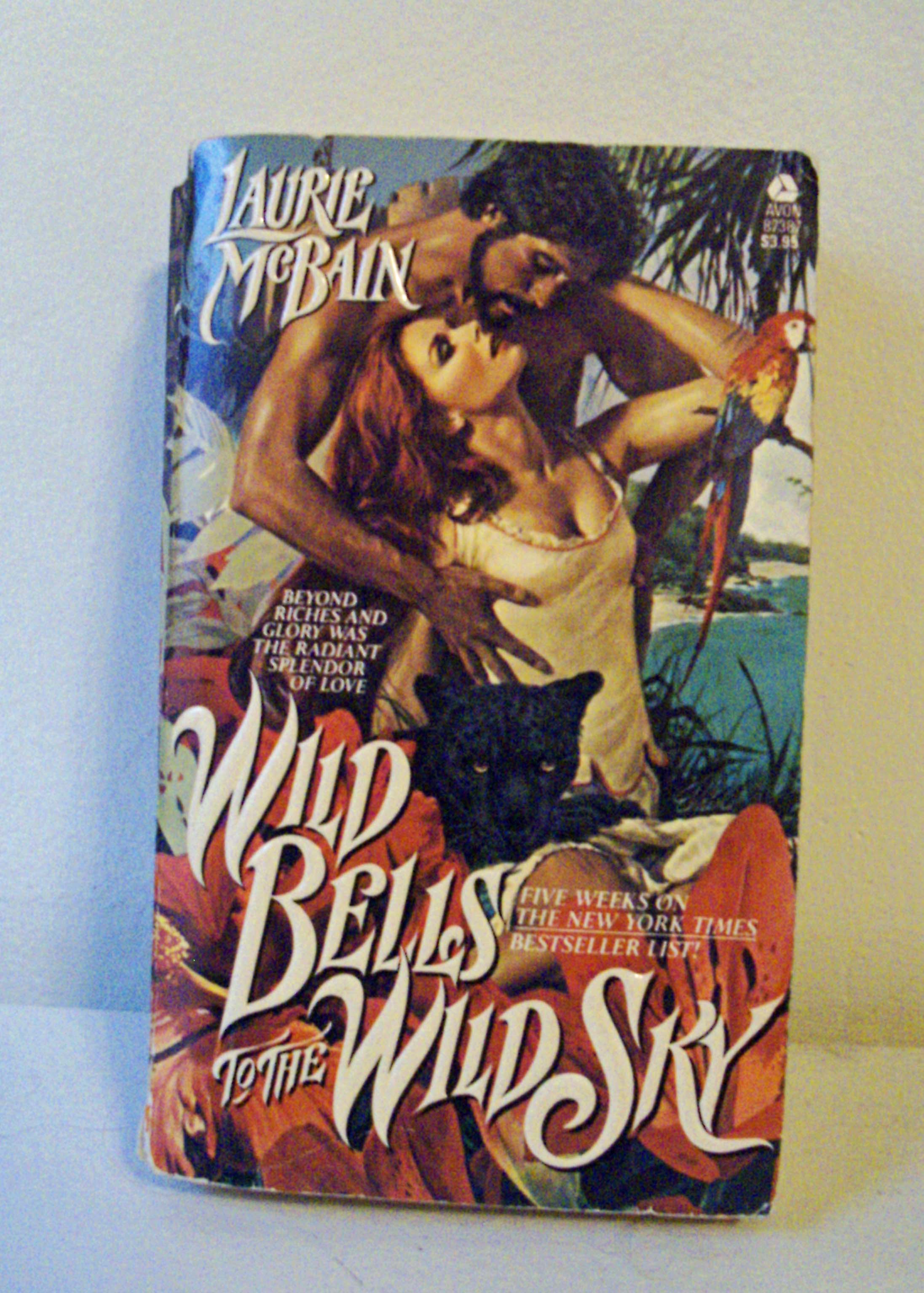
Wild Bells to the Wild Sky by Laurie McBain

Wild Bells to the Wild Sky by Laurie McBain

It’s that time again.  Wild Bells to the Wild Sky, by Laurie McBain, is one of those books. The all time favorites, the ones where I have only to hear the names of the hero and heroine -in this case, Lily Christian and Valentine Whitelaw, how perfect are those?- to immediately reimmerse myself in their romance and adventure. 

This book has huge servings of both. Set in the Elizabethan era, largely on a deserted island, Lily and her brother grow up wild and in seclusion. Lily, her mother, and a family friend are the sole survivors of a shipwreck, the sole inhabitants of the island…until mother and friend produce Lily’s brother, that is. Ahem. Then fever takes the parents, and Queen Elizabeth sends courtier Valentine Whitelaw in search of the missing party, and then things really get interesting. 

History, intrigue, romance, fabulous locations, a clever heroine and dashing hero, gorgeous descriptions, and one of my top five historical romance endings of all time make this book one I go back to time and again. 

Since we’re waxing nostalgic on Thursdays, here are a few recent things I’ve been up to: 

Guest Post at Savvy Authors: From a Certain Perspective, It’s All Fan Fiction: From Fan Fiction to Fantastic Fiction begins on September 1st, so I’m delighted to get to blabber about the useful tools we can find in the books, movies, tv and music we already love. Drop by and try a fun exercise to combine old favorites in new ways. 

Outlander “Sassenach” recap at Heroes and Heartbreakers: Cue incomprehensible squeeing, Jamie and Claire are now on the small screen, and I’ll be recapping each new episode as it airs. How cool is that, I get to watch Outlander and say I’m working. 

 1 Line Wednesday on Twitter, always a highlight of my week. 


What are you reading? 

Throwback Thursday: Historical Romance Edition

Inspired by Zeee at Buried Under Romance, my historical romance offering for Throwback Thursday: Lovesong by Valerie Sherwood

The year was 1985. The place was Montpelier, Vermont. The book was Lovesong by Valerie Sherwood, and my friend, Karen, had chased me across campus to physically put the book in my hand. When I asked her why she’d gone to all that trouble when we lived in the same dorm and she could have waited for me to come down the hall, she replied she wanted to be the one to give it to me, as it was going to be my new favorite book.

She was right. After many years and many books, the story of Carolina Lightfoot, the Tidewater planter’s daughter who became the fabled Silver Wench of the seas, and the dashing privateer, Kells, aka Rye Evistock, still remains a strong favorite. There were two more books, Windsong and Nightsong, about Carolina and Kells, and through this book, I found one of my all time favorite authors in Valerie Sherwood, aka Jeanne Hines, aka Rosamund Royal, and fell head over heels in love with the seventeenth century as well as the illustrations of cover artist Elaine Duillo. 

So, Karen, wherever you are, thanks. It was worth the chase. Seriously. 

Books in the mail

Today, three books came in the mail. In The Shadow of the Crown, The Divided Heart and Touched By Thorns, all by Susan Bowden, comprising her Radcliffe series, which I would more properly term a saga, as it covers several generations of the same family. 

Sagas like this are my favorite kind of series, following the lives and loves of a remarkable family through the generations -at least three- and the changing circumstances of history. We don’t see many of these in the romance genre these days, and I think that may be a mistake. Some readers will cite that they don’t want to see beloved characters grow old and die -which does happen in some sagas, especially those more in the realm of historical fiction- but then we also lose the chance to see those characters, and their love, grow through the different seasons of life. 

To see a hero and heroine I have followed through their courtship and early days become parents, not only to infants but older children, teens and young adults, eventually to become grandparents and watch the second and third generation embark on their own love affairs. Often enough, such second generation heroes and heroines only see their parents as their parents, and don’t take into account that the older generation does very much understand what it’s like to be young and in love. What’s more, they know what it’s like to be older and in love, to see that love last and grow even stronger. 

Once in a while, we’d see a couple have difficulties. There could be a separation, willingly or not, the loss of a child, change in social status, either upward or downward, or any other host of things. Difficult for some readers, yes, but also a part of life, and in the romance genre, we know that all will be well in the end, so it’s the perfect place to take some dramatic risks. If there’s a separation, there is a reunion, and if a couple stumbles, they find their stride once more. 

It’s not for everyone, and for those who require a specific setting, notably the ever-popular Regency, there isn’t time to sweep through the generations (perhaps why series featuring groups of friends or siblings prevail in this setting) but for settings with a broader scope -medieval comes to mind, or the early days of America, any revolution that changes the social and political landscape- it’s a rich field waiting to be mined, and for those who wonder how the children of a favorite hero and heroine turned out as adults, it’s a perfect fit. 

There’s at least one of these percolating in my mind, and another WIP has the love story of the heroine’s parents as a subplot, part of that playing paralell with her love story with the hero. Didn’t plan that particular story that way, but that’s the way it wants to happen, so who am I to get in its way? 

For now, though, the Radcliffes have the prime spot on my TBR shelf, and they are calling. How about you, readers and writers? What’s your take on multigenerational stories within romance? 


Saturday Afternoon Stories

Saturday mornings when I was but a wee princess, I would get up early, have blueberry yogurt for breakfast and settle in for a couple of hours of cartoons. In those days, that meant a lot of Hanna-Barbera, and the arrival of the live-action Land of the Lost meant TV time was done. Usually, my parents would have the day planned. A visit to the house of friends was always best, especially if those friends had girls my age, because then it was play time. This usually meant imaginative play, turning the shows we’d watched into adventures we lived. Prehistoric alternate universes, outer space, somehow transforming the expanse of grass between apartment complexes and tract houses into what would probably be termed a postapocalyptic wasteland in which we intrepid heroines must find a way to survive. Live action fairy tales.  Families with structures that seemed impossibly convoluted at the time, but in today’s society would likely not get so much as a blink. 

Sure, there were the occasional times when we’d have to engage in some directed activity. Being fair-skinned, near-sighted with laughable depth perception, many allergies and an impatience with most sporty pursuits, friend and family softball games were a special kind of torture, and I never got the appeal of kickball. It was okay, though, as I could use that time for my brain to free-float and come up with more ideas for further adventures. It never occurred to me in those days that I could write things down.  That came later, in school, but to this day, I can’t go past that stretch of grass without being transported back to those days, even if the family who lived in the house that bordered that grass has long since moved on and the new owners undertook an ill advised attempt to make a midcentury masterpiece into something more storybook. That’s another story in itself, and I don’t think it’s one of mine, so I’ll move along. 

At some point in my elementary school career, I got cut off in the children’s room in the public library. Fourth or fifth grade, I think, the librarian pointing out that I had settled into checking out the same books over and over, and went through them rapidly. Time to go into the adult section. I protested. I liked it where I was, and I checked out those books because they were good…but beyond Ant and Bee, and one collection of tall tales about a cowboy character, I can’t remember a single one of them. Adult section it was, but under protest. Wouldn’t it be better if there were more kid books? (I predated the YA revolution by ah, some time, I should point out here.) Where were the pictures? The adventure? The stories of things that happened long ago? 

As it would happen, all of those things started showing up in the bags of books my Aunt Lucy would bring on her visits to our family. Aunt Lucy was my mother’s sister, married to Uncle Pat (he who taught me to play poker the one and only time he was allowed to babysit me) always had a paper grocery bag full of books for my mother. These books had everything I wanted on the covers. People. Ships. Castles. Horses. Swirls or moody washes of color, and the books themselves were thick enough to get my insatiable reader heart pumping. I was allowed to look at the covers, but not read inside, and dutiful daughter that I was, I managed to resist. Until The Kadin, that was, but since my mother bought that from Caldor, instead of it coming from Aunt Lucy’s bag, Aunt Lucy was off the hook. 

I wanted that book. I lusted after that book, in my story-loving soul, and it didn’t matter that there would be s-e-x inside (seriously, my dad was big on the classics, and they’re full of the human condition in all its glory) – I needed that story. It wasn’t only the enticing blurb. It wasn’t only the lush shades of coral layered over a beautiful couple in exotic surrounds. My mother tried to fob me off by telling me the story was about a Scottish girl “in the olden days” who was betrayed into slavery and spent forty years in a harem, then went home because her daughter in law didn’t like her. A) my mom would have kicked butt in writing synopses, and B) SOLD. I. Had. To. Have. That. Book. I snagged it, I read it under a bed during a thunder storm (don’t recall if it was a Saturday or not) and I was not sorry when I got caught. I pilfered the next one, and after that, Mom bought me my own copy because I was going to read it anyway. By then I was old enough, and though cancer took her soon after that, I think she would have been a great ally in both my reading and writing (and yes, she would have been entitled to free books.) 

For a while, my dad and I frequented an indoor flea market on Saturday afternoons. My favorite stalls were always those with vintage comics (70s era Wonder Woman was my favorite, along with horror comics, and I now kick myself for not venturing into the romance comic bins) and used books. I came home with hefty hauls to see me through the rest of the week, stashed books in out of the way places – under the bathroom sink, in a guest room end table, etc- so I could get a dose whenever I wanted. The flea market eventually folded, I went off to college, and Saturday afternoon story hunting took the form of browsing my first used book store (UBS) and, because the time finally felt right, starting to write my own first historical romance, which now is safely tucked away in a storage unit where it can’t hurt anybody. 

Now it’s Saturday afternoon again, my Kindle is full, and I am preparing for a walk in the park. For part of the time, I’ll listen to recordings from RWA national conventions past, and for part of it, I will leave my brain to free float once again, characters swirling about, ready to race across the expanses of their own adventures. Camp NaNo is coming. 
How I Got Here

I love romance fiction. Crazy, stupid love it with a mad passion. I want to grab it with both hands and twirl it around in a field of daisies until we both fall to the ground, dizzy, giddy and breathless, the sky swirling above us as we lie on our backs, resting until we can do it all over again. 

Romance is a huge, huge umbrella. Historical, contemporary, time travel, paranormal, science fiction and fantasy romance, steampunk, romantic suspense, single title, category, series, stand-alone, inspirational, sweet, sensual, sexy, erotic romance (which is different from erotica,) long dormant subgenera like Traditional Regency and Gothic Romances, new genera like Young Adult and New Adult, and new forms that spring up seemingly at will. Hardcover, paperback, mass market, trade size, electronic, and no signs of stopping there. The only thing all romance fiction has in common is that the love relationship is center stage, and that it will end happily. How it gets there, however? Different every time. 

I get the twirl around in daisies feeling every time I visit the romance section of a brick and mortar bookstore or library, every time I get notice of an ebook release by a favorite or exciting new author, every time I power up my Kindle, and when I open a notebook or file to write a romance of my own. 

The first historical romance novel I ever read was The Kadin, by Bertrice Small, pilfered from my mother’s bedside table when I was eleven, but the warning signs were there long before that. I loved the happily ever afters in classic fairy tales, and devoured Andrew Lang’s fairy tale collections, each with a cover of a different color. Barbie and Ken, and for those of a certain age, Dawn and Gary as well. I was miffed that I was too young to have actually had Barbie’s friends, Midge and Alan, too, but then along came Cara and Brad, and all was well. Disney’s foxy version of Robin Hood and Maid Marian gave me a lifelong love of that couple and the musical, Camelot, saved a special part of my heart for a great love triangle. When I was five or six, my parents got me Jane and Johnny West, what we would  now call twelve inch action figures. Jane and Johnny were cowgirl and cowboy.  I made them act out Romeo and Juliet, but without the suicide. I was wired for romance even then, and it never wore off. 

I combined my love of romance with a love of favorite tv shows while writing for a former newsletter and zine run by E. Catherine Tobler. The story that became my first published novel, My Outcast Heart, set in my childhood hometown (Bedford, New York, which oozes Colonial history) began as a timed exercise in a writing group that included fellow authors M.P. Barker and Melva Michaelian. Since then, I have had stories set in sixteenth century Cornwall, turn of the twentieth century England and Italy, and the end of the English Civil War. I write about romance fiction and television for Heroes and Heartbreakers, and am currently flitting between Georgian and Regency England on two separate projects while finding a home for my postapocalyptic medieval novella. 

If you love romance, too, feel free to come twirl with me.