Typing With Wet Claws: The Kids Are All Right Edition

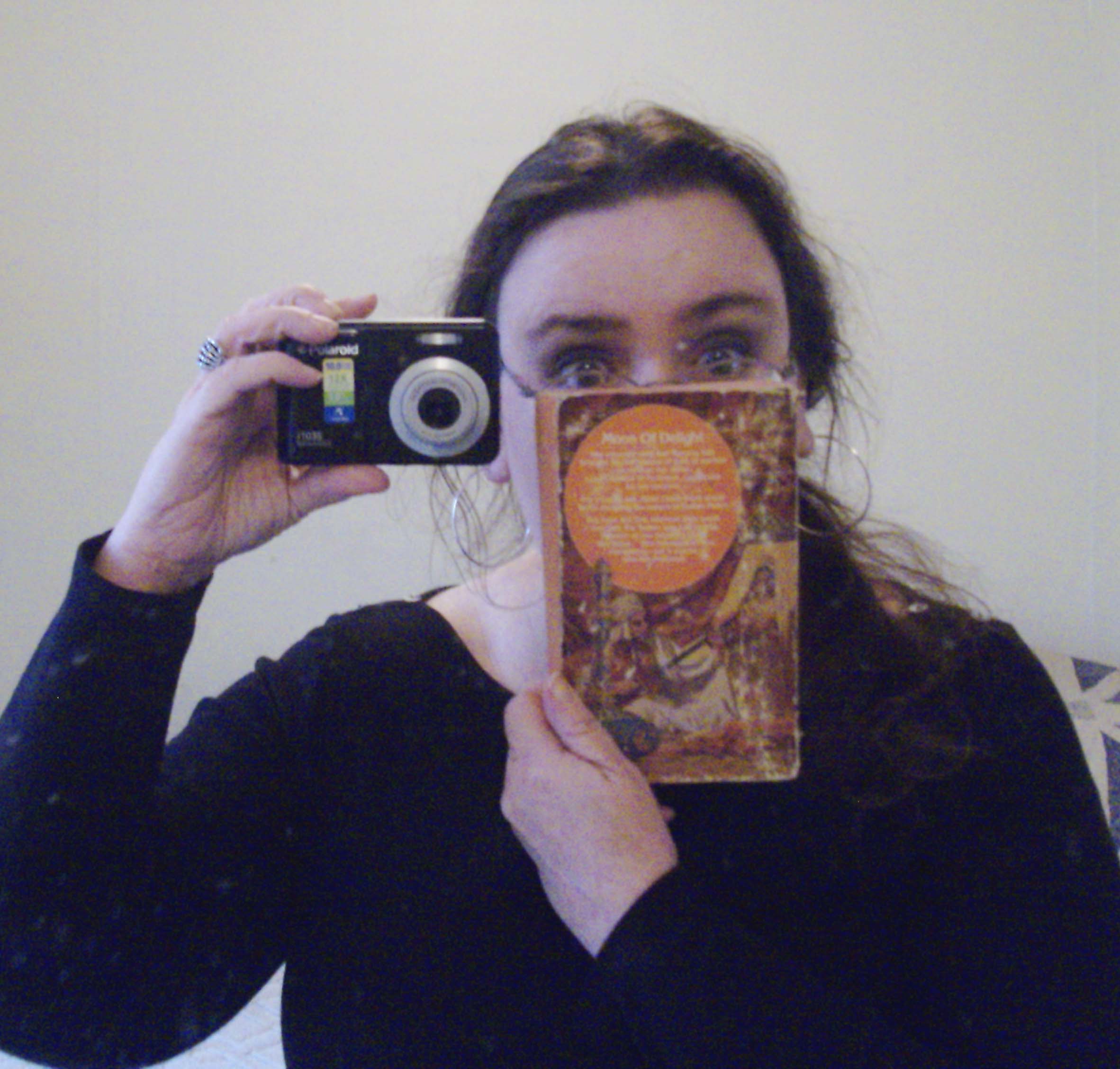
Hello, all. Skye here, for a special Thursday edition of Typing With Wet Claws. I am writing to you today from a sunbeam, where I am practicing my selfie game. Camera angle is everything, Anty says. I think she may be onto something.

Anyway, this has been a busy week for Anty. I will tell you more about that tomorrow, because then there will be more links. It is season finale time, so there are more people kissing on TV than usual, which means Anty gets to talk about all the TV kisses. She is also reading a lot, and working on both her novel and collaborating on a novella. Which means I may need to pitch in more with the blogs for a while. That is okay. I could use the practice.

Today, Anty is keeping her head down and eyes on her own paper. She has a post to write for Buried Under Romance, a novel timeline to create (she will tell you about that later) and there will be important kissy things on Big Bang Theory, so she will probably have to write about that later tonight. She is also reading her way through a big stack of books from the library. Here is the current read:

i1035 FW1.1

Reading now…

Anty has been reading a lot of young adult books lately, though her focus is still historical romance. She wasn’t sure at first why she was reading these books, this much and this fast, but they come in from the library and go out again, very quickly. She is still reading historical romance, as you can see from her currently reading list on Goodreads (are you Anty’s friend there? She likes to have friends there.) so it is not instead of her favorite genre, but along with it.

It took her a few books to catch on to what she’s reading for here. Anty loves a strong authorial voice (this means the way the human writes, not when a human reads a book aloud, although she does like to listen to books on audio, so sometimes, it is both) and there are some excellent ones in YA at the moment. Some of her favorites are: John Green, Rainbow Rowell, and Gayle Forman. Alongside the voice, the other thing she found that the books she likes have in common is the intense emotion involved when young humans first fall in love (with other humans, that is, not with kitties, although some of these books do have kitties in them.) These are both things she would like to see more of in historical romance as a whole.

Anty will do this from time to time, latch onto some seemingly random source of information and study the, um, word Anty says is not nice for kitties to type. We will say “stuffing” instead. She studies the stuffing out of it and then she has a new tool to put in her toolbox and tell her stories even better than before. Some of these sources come up after big life events, and Anty can trace this to last year, around this time. She took Fangirl, by Rainbow Rowell, out of the library and read it while in the waiting room of the people vet, and something clicked.

Authorial voice is difficult to explain for a human, so I, who am a kitty, am not even going to try. Basically, you will know it when you hear it. Or read it. If Elvis Presley, Luciano Pavarotti and Justin Beiber all sang the same song (not at the same time, please) it would not be neccessary to announce who was singing when. It is the same with writing. Each writer has a distinct way they tell their stories, a combination of everything they have ever heard, seen, read, done, etc. The really good ones cannot be imitated, but can inspire others to find what they recognize within that voice and let it fuel their own.

That is what Anty is looking for here. Strong voice, intense emotion and also how to use some Very Hard Things in life within an emotionally satisfactory love story. Not all of the love stories end happily in YA novels (but that is okay, because the humans are very young and have lots of time to find a mate that is right for them) but some of them do. Some even take more than one book to tell. Where She Went, for example, is the second installment of another book, If I StayThe first book was told from the female human’s point of view, and the second from the male’s, a few years later, after A Bad Thing Happened. This author has done the same thing before, in a different pair of books, and Anty finds this extremely interesting. Romance novels usually do have both points of view, but they are all in one book and take turns in different chapters. Having all of one point of view in one book and all of the other in another is new and interesting.

She is also listening to a lot of music by a band named Fun, which also gets into some intense emotions, so do not let their name make them sound fluffy. Right now, she is looking at me and tapping her foot, so I think that is all of my computer time for today. I will be back tomorrow with my regular post. In the meantime, you can see a list of some of the YA books she has liked here. If you know of any other books like this Anty might like, let her know in the comments.

See you Friday....

See you Friday….

Until then, I remain very truly yours,

Skye O’Malley Hart-Bowling
(the kitty, not the book)
Do What Works

Just write what you love. If you are passionate about your characters, your readers will feel that way too.
-Virginia Henley

This past week, I attended three different RWA chapter meetings. Tonight, I’m trying out a local writers’ group, and I submitted the first scene from Her Last First Kiss for critique. This group is not affiiliated with RWA, and is multigenre (slanted toward mainstream and literary, IIRC, but don’t quote me) so I have some reservations. I’ve had experiences both good and not so good with multigenre critique groups, but at the same time, want to keep an open mind and give things a fair shot.

The pluses are easy: this is a local group, meets at the local library (most of the time) which is a lovely walk from my house and I do like the members, from emails exchanged and the one meeting I was able to make a few months back. In-person critique and/or support groups can be like catnip for the extroverted writer. There really is some truth to the theory of hybrid vitality, and getting input from readers outside one’s genre of choice can provide insight that couldn’t come from anywhere else. Did I mention this group will be meeting in a library? Building full of books and movies gets an automatic point in its favor right there.

Then there’s the potential minuses. Not a romance group. In the past, this could have been a source of anxiety. Maybe I should try to tailor what I write to suit their needs. Writing is writing, right? Keep the peace, fit in, all of that stuff. Now…no. I write historical romance, I’m happy with it, I’m proud of it, and if it doesn’t fit with a particular group, then that’s probably not the group for me to bring my own work. I’ll critique pretty much anything, because I love stories, period, but knowing what to share with whom, that’s a learned skill.

There is always a chance, in a multigenre group, that somebody (count on at least one) has not read the genre a particular member writes. The good side of that? Honest reaction of a reader totally new to the genre. You get to be their first. Maybe they’ll find something new they might like, and so might you. Making assumptions about who reads what based on age or gender is usually a bad idea. When in doubt, ask. “So, what do you read?” is a classic reader/writer icebreaker, and a good way to test the waters. If it’s not a good fit, say so, in a polite and friendly manner, and move on along, no harm, no foul. Reach out to any individuals with whom you feel a connection and keep on doing you.

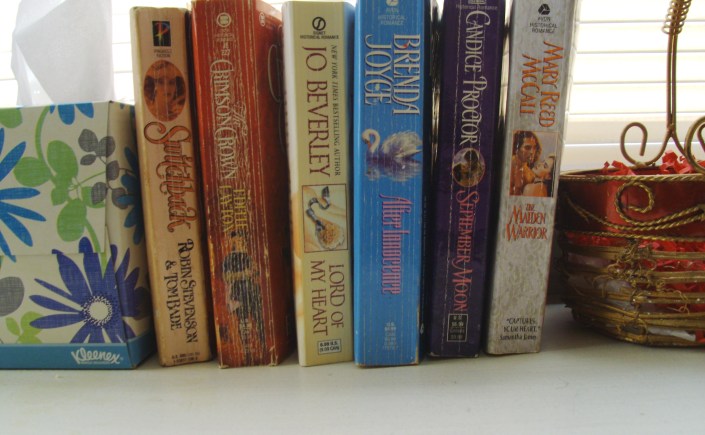
Which brings me to today’s picture. I have a lot of books. I mean, a lot of books. Most are in storage, but one box more than the boxes I’d tagged to make the move ended up getting on the truck, and into my office. Since I’m reorganizing said office in preparation for new-to-me desk, chair and computer (which will free my beloved secretary desk for longhand writing, which is what it was built for in the first place) I’m going through things that have sat for a while. I opened this box and hello, old friends. Where I’d been casting sidelong glances at a static TBR shelf of mostly new releases and telling them the reason they’ve been on that shelf for so long isn’t them, it’s me, the sight of these spines looking up at me from their cardboard cradle made my heart go pitty-pat.

Look at all those settings: 20th century time travel, Tudor England, Medieval England, Victorian England, Victorian-era Australia, Interregum England and Africa? (Not pictured because I’m currently reading it) Don’t see all of those that often these days, do we? All of these date from the mid 1980s at earliest to 2000 at latest, confirming that my current reading interests are, at present, very comfortably ensconced in books written/published in the 1990s, give or take a few years either way. After reading two brand-new releases (thumbs up on both of them) I’m ready for these. That’s what works now, and darned if I’m not plowing through the tale of a runaway bride in the midst of the English Civil War, and a hero who I’m pretty sure is going to wind up enslaved in Northern Africa, if I’m reading this right.

There is, of course, the voice of current marketing in my head, reminding me that we’re on page x and hero and heroine haven’t met yet, and that is not done. Grab the reader now, now, now, be fast, be clear, be…shush, voice. Mama’s reading. I’m engaged in the story; that’s enough. It’s a romance. They’ll be fine. That’s all I need to know, so that voice can be quiet now.

Remembering Bertrice Small, Part Two: As a Writer

Bertrice Small was the first professional writer I met in person, and long before I knew that writing stories of loves long ago even could be a job, but as soon as I figured it out, I knew that was what I wanted. I never had anything but support from this lovely lady, even when that support took the form of tough love.

The summer I was sixteen, I had the great good fortune to assist Bertrice Small’s assistant, which mostly consisted of answering fan mail, an experience I still cherish to this day.  This up close and personal view of what a working author actually does, besides the making up stories part only cemented my desire to pursue writing. I spent part of every weekday at the desk in the basement, so much that Bertrice joked that I was going to turn into a mushroom, spending all my time in the dark, underground. As I’m sun-sensitive, that was not a hardship, and I found the whole process fascinating. My “job” consisted of typing out responses to every piece of fan mail, already pre-sorted into one of three prepared responses. No email in those days, and so I had to physically type each reply from a template.  There were three of those: one for readers who read the latest book and liked it; one for readers who had read the book and did not like it (very few of those) ; and those who had read their first Bertrice book. There were special flags for letters that required a personal response beyond that, and those had to go back upstairs before I could stuff the envelopes and send them on their way.

I became a fan of her fan mail that summer. The stories in those letters proved beyond the shadow of a doubt the profound connection romance authors and their readers share. I still remember the letter from one reader who wanted to name her daughter Skye, but her husband vetoed the choice and they settled for another heroine-worthy name. Years later, I worked at a nursery school at college where two of the preschool students, sisters, were named Silver and Skye. Skye would have been old enough to have been born after that letter, so I always wondered if perhaps their mom was that reader. I never found out, but it’s possible.

That summer, I also had free run of Bertrice’s research library after hours (apart from the shelf that held what she needed for her current book) and it was kid in a candy store time. I had no idea what I was doing, so pulled books down at random and paged through them, hoping I’d catch the magic.  Knowing that these books I held in my hands had played a part in creating my favorite novels was a thrill and a half. The best part, though, was yet to come.

I had to write. That was a rule. At the end of the summer, Bertrice would read what I had written and give a fair and honest critique. I. Was. Terrified. I wrote what would be termed YA today, even though that wasn’t what I loved to read (big lesson there – “write what you love” is as important as “write what you know”) and there is no agent or editor pitch that will ever be as nerve-wracking or mean as much to me a sitting on that couch in her office. She pulled no punches, and I am glad she did not. She pointed out every plot hole. Every character blunder. Questioned my adjective choices. She told me to get a dictionary and learn how to spell. She told me to say “fuck” or don’t say “fuck” and not to be coy with allusions. She told me I needed to live if I was going to write (that one, I can safely say I have done) and told me I was going to be terrific one day. I left that meeting emotionally bruised and encouraged all at once. I wanted to write after that, even more, and I did.

I chucked the YA and started a historical romance. Heavily patterned after her own books, I will admit, to the point of pastiche, but here’s the thing. I was hungry to write that book. Starving for it. I raced home from first high school and then college classes to pound out new pages every single day. I lived and breathed that hero and heroine. Bertrice said I could call her anytime with writing questions, and I did. No, I could not give my Tudor era English hero a French first  name.  Yes, politics of the time were interesting. She answered a lot of questions about the industry and gave me a lot of homework. She never saw that manuscript, which now lives in a storage unit where it can’t hurt anybody, but being treated, not as a kid on a whim, but as a serious novelist myself, did more to sustain me than anything else during that writing.

Fast forward double digit years, and we were both at the Long Island Romance Writer’s Luncheon. Mentor and aunt at once, Madam Bertrice asked me which editors or agents I had wanted to meet at the event, and charged me to stay put. “I’ll go get them,” she said, and she did. “This is my niece,”
she said. “She’s going to pitch her book.” She told them she always thought my wanting to be a romance writer was a phase, but it obviously wasn’t, so she’d do what she could. The rest was up to me. She did it again at another luncheon, a year or so later. Both times, I got requests for full manuscripts. No sales from those encounters, but valuable input and experience.

I’m sad today that I won’t ever be able to hand her a paper copy of one of my books, but the fact is, my books, both past and future, exist in part because Bertrice Small was a wonderful writer, an encourager, a tough teacher and a lover of the great genre she helped to build.

Remembering Bertrice Small, pt 1: As a Reader

I’ve spent some time thinking about how I could encapsulate the influence Bertrice Small has had on me as a reader, writer and human being in general, into one post, and what I came up with was that I couldn’t, so I’m not going to try.  One post is going to be three.

i1035 FW1.1

I read my first Bertrice Small novel, which was also the first Bertrice Small novel, The Kadin, at the tender age of eleven, but I’d known about it long before. Bertrice’s husband, George, and my dad, had been in the army together, one of those friendships that was so close, it was a shock when I figured out they weren’t biologically related. So, it was normal to have grown up with mentions of “Aunt Sunny’s book.” A story fiend from day one, I remember asking a lot of questions about it, most of which were creatively evaded, and I remember being in the local Caldor with my mother, combing the paperback racks on one fateful day when The Kadin was a brand new release from a new author. Could I read it? No, my mom said, I was too young, but I wouldn’t be put off. Something about the cover called to me. I pestered and pestered and pestered her for at least a rough outline of the plot.

At last, my mom bowed to the inevitable and gave in. A sixteenth century Scottish girl got sold into slavery and spent forty years in a harem and then came home because her daughter in law didn’t like her. I remember the words rushing out of my mother’s mouth all in one go, and the way her eyes darted as if looking for a better answer. I also remember the insistent voice in the back of my head that whispered an insistent, “sold!” I stole the book from her nightstand shortly after that, knew, within the very first few pages, that I had found what I wanted to read and write for the rest of my life. Mom caught me reading The Kadin under the bed in the guest bedroom, by flashlight, during a thunderstorm that knocked out the power. She confiscated the book. I stole it back. I also wrote a book report on it. To her credit, my teacher, Mrs. Potter, did not contact my parents and gave me an A. She also took me aside and talked to me about becoming a writer myself someday. Good spotting, Mrs. P.

By the time the second book, Love Wild and Fair, a title which I was and am rapturously in love with, came out, I was still too young, but I did it again. Stole that book, saw exactly why Aunt Sunny was as in love with Bothwell as Catriona was, and I fell as hard for Scotland as I had for Ottoman Turkey in the previous book. It all filled my mind to overflowing. Not the sex scenes at that point, but the history, the drama, the descriptions and relationships, all lush and full and vivid as life. I got caught again, got a lecture from my mother again, got steered again toward more appropriate reading, which fell flat for the reasons above. I also got a stern talking to from Aunt Sunny herself.

By the time her third book, Adora, came out, I received my own autographed copy as a gift, along with a promotional poster. I have no idea where that poster is now (hopefully in storage, where it can be retrieved and displayed) but I still have my much-loved copy of the book, signed, this time, to me. I’ve acquired a few more signed copies since then, by the same and other authors, but none will ever match that thrill of seeing the very first book a favorite author signed with their very own hand.

I remember exactly where I was when I first read the opening pages of Skye O’Malley (the book, not the kitty) and not wanting to get out of the car to follow my father to the yard sale that was apparently more important than me diving into this book. My mother had passed away by that point, and she and Aunt Sunny had agreed, when Adora came out, that I was going to steal the book anyway, so I may as well have my own copies in the future, no matter my age. When I first met Skye, the fictional character, my life changed. Strong, smart, headstrong heroines, who could be adventurous, leaders, survivors, history-makers, beautiful inside and out, make mistakes -even huge ones- and still come out on top? Oh yes, please. Give me that. Teach me how to make that.

I soaked it up like a sponge, and was unspeakably thankful to have someone as knowledegable as the author herself to help me counter my father’s argument that romance was “all soft porn” with facts and definitions. Her recommendations of other amazing books in the genre – The Outlaw Hearts by Rebecca Brandewyne and The Spanish Rose by Shirlee Busbee stand out, and, boy, was she right. She recommended other authors I might like if I liked her: Cynthia Wright, Virginia Henley, Morgan Llewellyn, and a man named Jennifer (Wilde, aka Tom E. Huff.)

Bertrice Small opened a whole new world for me, one where love stories were worthy of history, and in some cases, sprang directly from it. For a kid who had honestly thought that the only options for me were hard science fiction and mystery, neither of which caught spark with me, no matter how hard I tried, it was a revelation. In historical romance, I found my reader heart set free, and I knew, deep down in the marrow of my bones, that this was what I was meant to write, as well. I will always, always be thankful to Bertrice Small for that.

NECRWA Recap, Part Two: The Workshops

This year, I attended six and a half workshops, moderated two, have a batch of handouts to preserve in binders and lots of useful tools to add to my writerly toolbox. 

Friday

Though Melva and I arrived at the conference mere minutes too late to attend Katy Regnery‘s workshop on boutique and small publishing, we were right on time for T.L. Costa’s “An Agent Wants to See Pages, Now What?”  Ms. Costa’s infectious energy whisked us through the essentials of polishing manuscripts, use of active voice and making white space our friend. She put us to work with a Cards Against Humanity-like exercise, randomly pairing unique characters and settings. to come up with openings to hook agents, editors and readers. My assignment was “seventy-six year old man with a broken hip” and “p*rn convention.”  My exercise may have included the phrase “lifetime achievement award.” 

Next up was my first ever time moderating a workshop in person (I’d been online workshop chair during my tenure at Charter Oak Romance Writers) I’d already heard Leigh Duncan’s Book It, Dan-O on a recording of last year’s national conference, and found it extremely helpful. I’m still a paper gal at  heart, so learning how to use a good old fashioned binder to organize my research and plotting was right up my alley. Leigh couldn’t have been more gracious, or put me more at ease. To access Leigh’s handouts at her website, click link above. I’m going to have to try some of these for my own notebooks. My only disappointment was that Leigh’s workshop was opposite Cathryn Parry‘s Rediscovering the Joys Of Writing, which I also heard on last year’s National recording. I have handwritten notes aplenty from my multiple listenings, and would love to catch Cathryn present it in person in the future. 

Saturday

Another favorite workshop started off the day, Patricia Grasso’s Plotting With Panache. I always get something new out of this workshop, which applies the estimable Ms. Grasso’s plotting techniques to two classic movies: Jaws and Disney’s Beauty and the Beast. Bonus points for handwritten handouts, including a blank plotting chart to try out this method on our own. I was thrilled to moderate this one, as Ms. Grasso has long been a favorite, and her workshops are not to be missed. Definitely need to get current on her backlist, as this workshop reminded me how much I enjoy her voice. 

My half workshop was the Ann DeFee half of “From Monty Python to Michelangelo,” by Linda Cardillo and Ann DeFee, but Melva proved her friendship by snagging me handouts for the whole thing. Though my pitch session didn’t allow me to hear Linda Cardillo’s approach, Ms. DeFee’s voice came through loud and clear as she gave helpful pointers for keeping comedy true to the authorial voice. Bonus points to both presenters for dressing as a team, in gorgeous jackets, identical in design and complementary in color. Now that’s commitment to team teaching. 

Terri Brisbin taught us how to be happy hookers…in the writing sense, that is. Standing room only for this one, though I did snag a seat when another attendee left for a pitch session, and Terri promised to send pdf files of all handouts to any who didn’t get the paper version. Along with Terri’s handouts on different plotting techniques and how to hook readers, she also gave us Deborah Hale’s adaptation of The Hero’s Journey to romance specific writing, titled The Lover’s Journey. There’s another workshop I’d love to attend, if Ms. Hale were to present it. I have a few Brisbins moving up the ladder on my TBR pile as well. 

Barbara Wallace spoke on Busting Through Writer’s Block, detailing different sorts of blocks, brainstorming ways around them, and would you believe there’s even a case for neuroscience having a hand in this? Surprisingly (or not,) there is. No easy cures, alas, but this workshop offers some useful tools in getting back in the writing groove, whether the cause is medical, situational or creative. 

Final workshop of the weekend had my ears perked, as former Harlequin Presents powerhouse Sandra Marton spoke on her transition to self-publishing and presented (pun unintended) the pros, cons and cautions of  taking the independent route, as well as some blunt talk about money along the way. In short, with great power comes great responsibility, but oh how sweet freedom can taste. Short-short version, self publishing isn’t for sissies, but can be a viable route for those willing to work hard. 

I wasn’t able to attend all the workshops, alas, so am still looking forward to Devon Ellington‘s workshop on building a series, Madeline Hunter‘s workshop on books that write themselves (wouldn’t that be handy?) and the other intriguing offerings at future events. 


NECRWA Recap, Part One

Back home now from NECRWA 2014, bags unpacked, laundry done, swag photographed (pictures to follow as I find a way to convince my camera and laptop to talk to each other) and mostly sorted, and I am full of tales to tell. Let’s start with the personal experience.

The ride to the conference, with dear friend and traveling buddy,Melva, went  smoothly, without our traditional getting-lost-when-almost there, and the funny feeling of not being encumbered by too many bags proved to be only that I have finally learned how to dress and pack for a conference. Room was comfy, buffet style meals meant that I was able to eat, even with my allergies, and the swag was plentiful.

This was my first year volunteering, and I ended up moderating two workshops, Leigh Duncan‘s Book It, Dan-O, which covers organization and plotting, and Plotting With Panache, by Patricia Grasso. I also had the chance to help set up before breakfast on Saturday, dropping books on chairs, which actually turned out to be fun, and with three of us working at the same time, went fast.

My pitch appointment was with Louise Fury of the Bent Agency. Though she said very lovely things about the sample pages I’d sent in, of my postapocalyptic medieval romance, Ravenwood, she did not ask to see the full ms. She did, however ask if I had anything else, and when I mentioned I am working on a Regency, she asked me to send that when it’s complete. That, I most certainly can do, and Louise was gracious enough to suggest some alternative routes for getting Ravenwood to readers, adding that is is a story she would totally read for pleasure.  So, while it wasn’t the outcome I’d hoped for with that ms, still very encouraging, and we even got to talk makeup for a bit.

Not bad at all, even if my slip did fall off on my way out of the room. Since I was due to moderate Patricia Grasso’s workshop, I picked up my undergarment, stuffed it in my bag and forged ahead. This was not my only mishap of the weekend, as I tore a nail down to the quick when I forgot to let go of the handle when opening my traveling companion’s hatchback as we loaded our luggage on Saturday afternoon. No permanent damage done, but I don’t want to repeat the experience, either.

The conference as a whole, though? Oh yes,  must do this again, and I’m already making plans with friends both old and new for next year. That’s one of the best parts of a conference; people I didn’t know existed on Thursday, by Monday, are now dear friends I couldn’t imagine living without. There’s the chance to introduce friends from my old life in CT to friends from my new life in NY, and finding they mix beautifully. There’s the excited squealing that only comes when two until-then strangers find they have the same all time favorite book and then stay up late into the night, excitedly chattering about the same. There’s checking up on those with whom one shared a pitch session waiting room, and bonding over both getting the same “medievals aren’t selling” line – and vowing to find a home for those books of our  hearts anyway.

Almost forgot (okay, I did, I’m adding this after I hit “publish”) getting the most definitive answer possible to “is Scrivener really for me?” – I won a copy in a basket raffle, courtesy of Jennifer Ackerman Kettell, complete with a copy of her Scrivener Absolute Beginner’s Guide, and an offer of personal tech support. Plus it came in a peacock themed box, with a peacock mug, which alone would have thrilled me, as I am very fond of peacocks.

Next up: the workshops.


Camp NaNo in my Rearview Mirror, NECRWA Ahead

Image

WordPress has stopped reminding me to make my weekly post. Part of me considers that a victory, because I am unique like that. Of course that’s when I actually do blog, go figure. Writing a blog is, at times, harder than writing a book. With a book, I know what story I’m telling, I know where the beginning, middle and end are, and I’m reasonably certain that there are people out there interested in reading it. With a blog, however, there aren’t as many guidelines/conventions. Why should someone take time out of their day to read my babbling? Not quite sure, but plunging ahead anyway.


 It’s May, Camp NaNo is now behind me, a new book started, and tomorrow, I head off to NECRWA’s annual conference. I don’t want to count how many years it’s been since I started going, but it’s always an amazing experience. Conferences are like Extrovert Christmas – a chance to see old friends, make new ones, and drink in all the energy of  hundreds of other people who love to do what I love to do. In my case, that’s reading and writing romance.

The free books and swag don’t hurt either, but the big draw for me is the people. It’s a chance to reconnect with former chapter sisters whom I haven’t seen, in some cases, since last year, or before I moved to NY. It’s a chance to hang out with current chapter sisters (maybe brothers, if either of the CRRWA’s gentlemen members are in attendance) and learn from people who are, professionally, where I’d like to be this time next year, or maybe a few years down the line. It’s a time to encourage new writers of romance, who are only starting out on this journey, or  may be new to the genre. It’s a chance to discover kindred souls around the dinner table, over dessert, in the elevator, waiting for a pitch appointment or while wandering the halls because I am liable to get lost at least once. I know me. 

This year, I’m coming off a successful Camp NaNo experience, and two recent Heroes and Heartbreakers posts on two romance authors who have influenced my own work and my love for the genre, Kate Rothwell, and Lynn Kurland. I’m working on a novel I love, and will be pitching Ravenwood, my postapocalyptic medieval romance. I still get nervous, even though I love pitching, but sitting in the holding area, with other writers going through the same mix of nerves and anticipation gives a boost of energy that is more than enough to quell the shakes. 

Saturday night, I’ll drag my exhuastified body home, laden with books and swag, a camera full of pictures (if i remember to take them) and lots of memories. Maybe even a request for a full ms, and possibly a new idea or two. Definitely enough for another entry, with or without WordPress’s reminder. 

Books in the mail

Today, three books came in the mail. In The Shadow of the Crown, The Divided Heart and Touched By Thorns, all by Susan Bowden, comprising her Radcliffe series, which I would more properly term a saga, as it covers several generations of the same family. 

Sagas like this are my favorite kind of series, following the lives and loves of a remarkable family through the generations -at least three- and the changing circumstances of history. We don’t see many of these in the romance genre these days, and I think that may be a mistake. Some readers will cite that they don’t want to see beloved characters grow old and die -which does happen in some sagas, especially those more in the realm of historical fiction- but then we also lose the chance to see those characters, and their love, grow through the different seasons of life. 

To see a hero and heroine I have followed through their courtship and early days become parents, not only to infants but older children, teens and young adults, eventually to become grandparents and watch the second and third generation embark on their own love affairs. Often enough, such second generation heroes and heroines only see their parents as their parents, and don’t take into account that the older generation does very much understand what it’s like to be young and in love. What’s more, they know what it’s like to be older and in love, to see that love last and grow even stronger. 

Once in a while, we’d see a couple have difficulties. There could be a separation, willingly or not, the loss of a child, change in social status, either upward or downward, or any other host of things. Difficult for some readers, yes, but also a part of life, and in the romance genre, we know that all will be well in the end, so it’s the perfect place to take some dramatic risks. If there’s a separation, there is a reunion, and if a couple stumbles, they find their stride once more. 

It’s not for everyone, and for those who require a specific setting, notably the ever-popular Regency, there isn’t time to sweep through the generations (perhaps why series featuring groups of friends or siblings prevail in this setting) but for settings with a broader scope -medieval comes to mind, or the early days of America, any revolution that changes the social and political landscape- it’s a rich field waiting to be mined, and for those who wonder how the children of a favorite hero and heroine turned out as adults, it’s a perfect fit. 

There’s at least one of these percolating in my mind, and another WIP has the love story of the heroine’s parents as a subplot, part of that playing paralell with her love story with the hero. Didn’t plan that particular story that way, but that’s the way it wants to happen, so who am I to get in its way? 

For now, though, the Radcliffes have the prime spot on my TBR shelf, and they are calling. How about you, readers and writers? What’s your take on multigenerational stories within romance?