The Room Where It Happens (well, kind of)

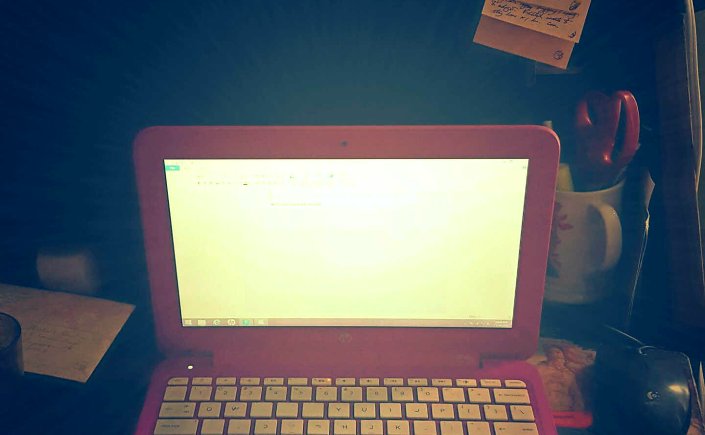
In light of current events, the setup of a romance writer’s office may not amount to a hill of beans, but romance writing, well, that’s a whole other story. Pun intended. This morning, after giving it a valiant effort, I have finally come to a few decisions:


  1. Working in my office, rather than the living room is a must, especially when other family members are around.
  2. My laptop is incompatible with my secretary desk, unless I can trade my body for that of an especially limber contortionist. I am rather fond of the body I currently inhabit, that is not going to happen.
  3. Old desktop is incompatible with the internet, and, given the fact that my office is at the opposite end of the house to the modem, it is possible that a new desktop might have the same problem.
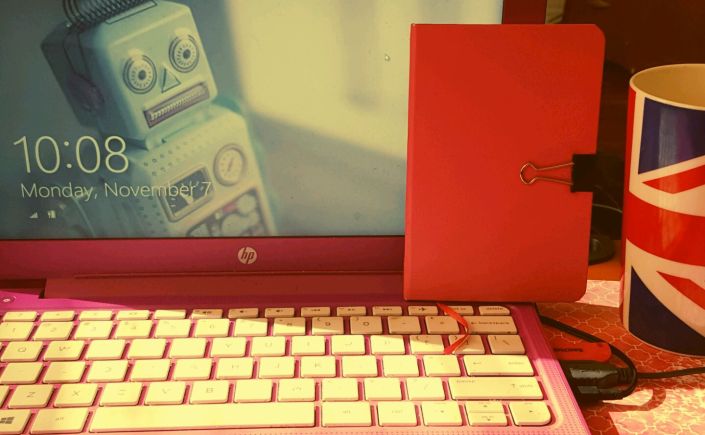
  4. Word still works perfectly fine on old desktop, which means I do have a computer on which I can write, and the secretary desk is still good for writing longhand, which is my favorite. I have my phone for Spotify, so music is going to be there, even if internet isn’t.
  5. All of which points me in the direction of writing happens in the office, internet happens outside of it. I can live with that.

Pause here to retrieve phone that plummeted to the carpet, because I contorted wrong. Phone is undamaged, my nerves slightly behind that. I wanted to be so much further than I am right now. Further in my career, further in life, further in a lot of things. I’m not. I’m here, and here is where I can take the next step towards my goals. I love this blog, I seriously do, and I love blogging for Heroes and Heartbreakers and Buried Under Romance, and other venues, but the girl who snuck her mom’s copy of The Kadin under the bed in the guest bedroom is politely clearing her throat and tilting her head toward the virtual bookshelf with four titles that have my name on them. She says they are lonely and want some friends.

I am with her on that one. I am her, so that’s pretty much a given, only I am the version of her with life experience, a better knowledge of what constitutes emotional storytelling, and has read a whole lot more historical romances than cracking the cover on that very first one. I’ve seen things. The switch from epic sagas to lighter fare as a norm, the prevalence of one era over all others, rather than a wide spectrum, the shift to series rather than standalones, and it’s easy, almost too easy, to feel like some sort of dinosaur/unicorn hybrid when core story and current market aren’t exactly seeing eye to eye.

Those things may be facts, but here’s another one: I’m a romance writer. That’s what I do. That’s what I am. Even if I were to have some sort of gaurantee that I would never, ever, sell another book, never, ever make another cent from the writing of said books, I would still write them. I can’t turn this stuff off. I’ve tried. I was miserable, so, obviously, that’s not the solution.

What the solution is, is to show up every day, and, at the end of it, for there to be more of the book on page or in file than there was when I got out of bed. That’s it. Standard left foot, right foot kind of thing, and, before I know it, bloop, there it will be, The End. The Hypercritical Gremlins have been quiet as of late, partially because of the triple layer of duct tape over their mouths (it is tremendously satisfying to apply such) and partly because the events of the past week have reminded me that we need romance fiction now, more than ever.

We need the happily ever afters. We need the hope. We need the community. We need the assurance that, if we stick together and put others above ourselves, we can make a difference. I’ve never been one to want my HEA’s at the level of woodland creatures doing the housework, and the now-united lovers never, ever having any more problems throughout their entire lives. On the contrary, I want them to face everything that life has to throw at them, be it wars, natuaral disasters, family drama, the ravages of time, whatever, together. No matter what. As long as they’ve got each other, they’re going to call that good.

So am I. Right now, I’ve got two lovers in Georgian England, Hero and Heroine, completely convinced that they have no choices, no paths open to them but the ones they currently walk…And Then. And then, on one rain-soaked evening, their worlds collide, and the impact of the crash propels them both in a new direction. With the Beach Ball, Melva and I have a woman who’s angry at having what she does best taken away from her, and a man who offers an alternative that is both intiguing and completley out of her wheelhouse.

Feeling off center can be a good thing sometimes, a chance to recalibrate balance, reassess what’s most important. Change direction when needed, and full speed ahead. All I know for sure is that I’m doing what I’m meant to do, telling these stories, and the right way to tell them is the one that gets me to the end. As long as that happens, anything goes.


Origin Stories

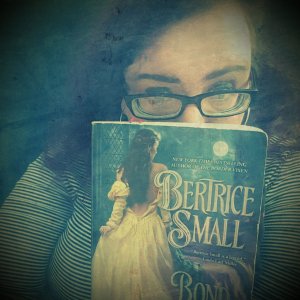
This weekend, I missed National Fountain Pen Day, and squeaked in under the wire on #FallBackInTime. The first holiday is rather self-explanatory, and we’ll get to that one, but I want to work backwards today. #FallBackInTime comes each year at the day we set our clocks back, and readers and writers of historical romance are invited to post pictures of themselves with a favorite historical romance novel and add a comment about why we love the genre. This year caught me by surprise.

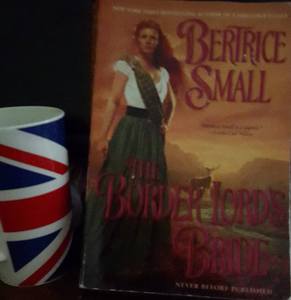
Part of that is because it was a hectic weekend, and part of it was because I was in a crappy mood from said hectic weekend, and had to have go-out-and-do-stuff therapy on Sunday afternoon. I got home, feeling much better, but bone-tired, and checked my phone. Those are a lot of hashtags from my fellow historical romance people. What’s up with that. Oh. #FallBackInTime. Umm… :looks around, weary body at war with desire to participate: I grabbed the nearest book (Kindles are kind of tricky for shots like this) and snapped a selfie.  This is not, for those interested in such things, my favorite historical romance novel; I’ve only recently started reading it (and stay tuned for highlights of my rant on lack of reading time in recent weeks) but Bertrice Small is the first genre historical romance writer I ever read, and the one who got me into this beautiful mess in the first place.

bowlingfallbackintime

I read and write historical romance because falling in love is always an adventure.

One of the things I like most about talking with SF/F writers is that most of them have a specific origin story; that a-ha moment when they first connected with Asimov, Bradbury or LeGuin. That never happened to me, at least not with those authors, but I know that moment. I found parts of myself in Small, Sherwood, and Woodiwiss. Though galaxies far, far away never called my name (on occasion, one would aim a friendly wave from a polite distance) the long ago part, that had a big, sparkly sign with my name on it, jumped up and down and waved its arms to beckon me over.

Those centuries far in the past felt like home right from the start, and they still are. When I wrote fan fiction inspired by SF/F franchises, even those stories were pretty much historical romances with blinky props. Even with the modern setting of the Beach Ball, which I am co-writing with Melva Michaelian, it’s set in the world of historical romance publishing. Historical romance isn’t as much a what-I-do as a part of who-I-am. For those who think the genre is only about wallpaper history or girls in prom dresses, or that it’s all about the sex, I say oh no, no, no, no, no, no. In historical romance, the woman always wins. The woman gets to tell  her story. She gets the guy, yes, but more than that, she gets the right guy. One who respects her and cherishes her and considers her wants and needs as important as his own. Shoot, she gets a guy who likes her. He’s not all she gets, either. She gets what she’d have wanted even if he didn’t exist. She gets a say in her own future. She gets to use her talents, speak her mind, win the war.

When I was eleven years old, I stole my mom’s copy of The Kadin, by Bertrice Small, set in sixteenth-century Scotland and the Ottoman empire, and read it under the brass bed in the guest bedroom. Right away, I knew I’d found what I wanted to read and write for the rest of my life. So far, so good.  I may have been on the young side to get the romance part, but I’d always loved the fairy tales with romance in them best, so I figure I was hardwired for that stuff. The world of the story blossomed around me, and watching the heroine, Janet (later renamed Cyra) grow and change and fall in love, that lit a fire within me. I wanted to learn how to write stories like that when I grew up; still working on that one, but I like to think I’m making progress.

Trends in publishing are ever-changing, and romance is a huge, huge umbrella. Big, sweeping historicals with bold heroines and epic timelines are still my favorites, though there are countless other variations, but historical romance is my home. If I received or discovered any super power under that brass bed, when I fell into the voice and the history and the time and the place and the characters and the story, it was the ability to come as close as mere mortals can to traveling in time. It’s been said that we are each the result of a thousand loves, and that holds true for historical romance novels as well. Each love story is a moment in time, when two people find a part of themselves in each other; who they are, who they want to be, who they always were, but never had the courage to declare. When a family, whether it remains only those two people, or becomes the start of a dynasty that spans centuries, takes its first breath. Play it all out against the pageant of history, and I’ve found my happy place.

Why read and write historical romance? For me, it’s only natural. I kind of like that product of a thousand loves thing. Let’s go with that.

Fiction From the Vault – Perfect English

I don’t know where the idea for “Perfect English” came to me, but I am 99% certain it was due to a prompt in a once-upon-a-time writing group. It isn’t strictly flash, as it’s over one thousand words, and not strictly a short story, as it’s fewer than two and a half thousand; it is what it is. I probably still have the original notebook somewhere in storage, but, without that, can only place the time of writing as “sometime in the 1990s.” Or early millennium. At any rate, in another life. It may or may not have been one of the handful of short stories that made the rounds of some small press magazines, or it may have sat on my hard drive and never gone anywhere. I honestly don’t remember.

What I do remember is Bradley, who showed up in my mind fully formed, and the nameless-until-I-noticed-I’d-never-named-her heroine. I still don’t know that she really “has” a name, and picked Jennifer because it was common for a woman of her age (early to mid 20s) at the time of the writing. I don’t have any plans to revisit Bradley and Jennifer, because they’re fine. They’re together, they’re happy, they’re HEA-ing fine without me, and he’s still doing the thing with the shirts. Not bad for a timed exercise.  So, as promised, here we go, for the first time in mumblemumble years, “Perfect English.”

Perfect English

Bradley Ballantine was something a woman had to experience for herself.  Tall.  Black.  Given to lounging about the living rooms of casual acquaintances on rainy afternoons in bare feet, faded jeans and spanking white sleeveless undershirts. Always white.  Always new.  Nobody ever saw him do laundry, and nobody ever asked him what he did with the old ones.

Continue reading

Midweek Rambles

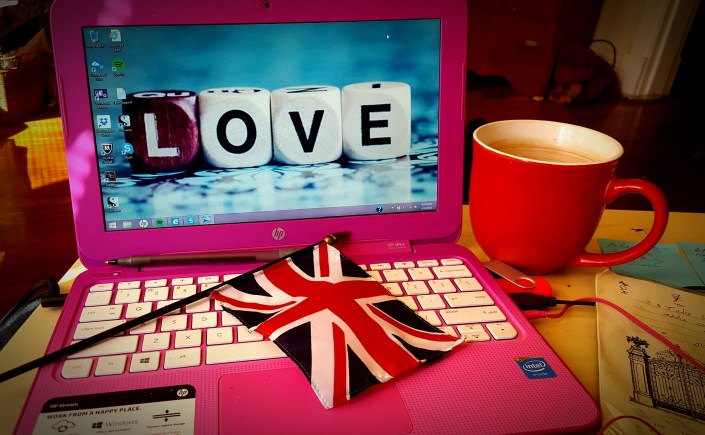
Rainy Wednesday here, and the fact that I’m only now getting to the first blog entry of the week should be an indicator of how things have been going. The new addition to my workspace is Hedwig, (thanks, Kara!) who has shot up to mascot status in short order. Lift his head off, and he’s a flash drive. He will soon be filled with novel stuffs.

No idea what I want to write about here, so I’m going to wing it. One of the most vivid rainy day memories I have carried for a long time reaches all the way back to fifth grade. We’d recently moved from Bedford Village to Pound Ridge, and I had a playdate with Elizabeth A, to keep us both occupied and our mothers sane for the rain-soaked afternoon. I remember I had a corduroy pantsuit (it was the seventies; don’t judge me, and yes, my mom picked out my outfit) that day, red with a flower print all over it. The legs were too long, so the hems of the trousers (I preferred skirts even back then, but mom said, sooo…)were damp the rest of the day.

We spent the afternoon in Elizabeth’s room. I remember Barbies and some imaginative play, some discussion of the new TV show we both liked, Wonder Woman, probably my first fandom, though I didn’t know what fandom was at the time. Elizabeth had a Chow dog, who had particular tastes in what interactions he would allow with what humans, but he always liked me. I don’t remember his name, or the name of Elizabeth’s older brother. I don’t remember many particulars of that day, but I remember the day itself, and the memory is a good one. Elizabeth A, wherever you are, I hope you do, too.

On this rainy day, years later, there’s imaginative play still. Now, I call it writing, and it’s work as much as it is play, which suits me fine. No red corduroy pantsuit, thankfully, and I’m writing this from my favorite coffee house instead of a friend’s bedroom, but the day has some of the same feel to it. Not that I know exactly what the connection is, but some things become a part of us, and come to the fore when they will.

Today is also the first anniversary of the passing of Bertrice Small, still a favorite author and my entrée into the world of historical romance. I’d wanted, as many Small fans, to dive into some rereading when we got the sad news, and, at the moment, I’d tried, but I couldn’t make the connection. Not a good feeling, but, at times, the best thing we can do is let the feelings do their jobs. I don’t know when I got it in my head that I would intentionally step back from reading an author whose work had been that important to me, or when the idea arose that I would resume on the first anniversary of her passing. Maybe it’s a form of literary mourning? I’m not going to question that one.

Once I knew I wanted to resume on a certain date, everything fit. I would pick up one of her books on that date, and I would read it, but which one? With forty-nine titles from which to choose (well, less than that, as the Lara books are in storage, and I don’t own the Channel titles) the options were too many. N’s advice, “make a decision,” came to me then, and I did. I decided I wouldn’t decide. I turned to my Lionesses at my Facebook group, The Lion and Thistle, and placed my choice in their capable hands.

1917649_1136272486412781_6670506870823280307_n

this is the one

Some of the suggestions, I’d expected. Skye O’Malley (the book, not the kitty) is my favorite, and The Kadin was the first historical romance I ever read.  I know those books, can quote them in places, so re-reading them would be as much remembering as experiencing the story. The other choices offered, Deceived, and The Border Lord’s Bride, I haven’t read as much. Since my copy of Deceived seems to have gone walkabout (will be reaching out to the library system and/or used bookstores soon) my choice became clear. I hadn’t remembered, until I plucked my copy from my special Small bookcase, that this was the second story in the Border Chronicles, not the first, but since it’s an extremely loose connection, I’m letting that go. I can read the prior title, A Dangerous Love, later, if I want. I did put my choice in others’ hands, after all.


As with that long-ago rainy afternoon, I remember the book more in general than in specific, and it’s a different experience. The last time I read this book, it was 2007.  A few things have happened since then. My critical mind is along for the ride, and has some issues with tell-y passages and instances of passive voice, but the voice itself, that’s as familiar as I remember, a welcome back to the things that drew me to historical romance in the first place. It’s also made me schedule reading time in my day, something I’d wanted to do, but put off actually doing, but if I want to make time to read all that I want and need to read, there has to be time where that’s all that I’m doing. This is different from pleasure-only reading; it’s also research.

20160224_125312_resized

library haul; must organize


In a way, that’s my equivalent of the art student camped out in front of the master’s painting, sketchbook in hand or canvas on easel. What did the master do? How did they do it? That thing that was never recorded, what was it? Can I do it, too? What does it look like when I do their thing, my way? Reading time, writing time, headphones in, laptop on, paper and pen at the ready. Let’s do this.

Backing Up and Moving Ahead

“You do what you can for as long as you can, and when you finally can’t, you do the next best thing. You back up but you don’t give up.”
–Chuck Yeager


Another Monday, another blog entry. Not feeling it today, but discipline and practice are both important, and I find that putting order to chaos satisfies me, so here I am. Morning spent doing housework with help of Housemate. This often consists of her sitting there and letting me chatter at her, as it was today, with me sitting cross-legged on the floor, the box fan in front of me, as I took apart the covers both front and back and cleaned that sucker with grapefruit-scented all purpose cleaner and paper towels. Odds are we aren’t going to be needing that fan for a while, as furnace keeps us toasty warm, and it is January, after all. So, into the newly reorganized closet for our biggest fan. I promise I only do this to mechanical fans, not readers. No reverse Misery-ing here, and, besides, readers are good to have around during all seasons.

The great Christmas ornament harvest of 2016 went well this morning. Good crop, and we hope for an even better return next year. As much as I love the whole process of decorating for Christmas, and will inspect the placement of garland and ornaments (the fact that we use a pre-lit tree is probably best for all involved, lest I get nitpicky about light placement as well; I have in the past.) taking things down is a much quicker and more ruthless process. Down come the lights, coiled, tied, boxed. I pluck ornaments from the tree like ripened fruit, in a matter of seconds. It’s all over in a handful of minutes. This year’s crop is planted in the storage boxes, labeled, and can now germinate for next year. Maybe next year will be the year I finally go for a second tree, which would have black and white ornaments only. Supplemental tree, not replacing the traditional one; I have to have my tradition.

20160111_100740-1_resized

When I’m at a loss for what to blog about, my guiding phrases of “clean sweep” and “more layers” push me in the right direction. Taking down the Christmas décor and making better use of the closet space fits both of those criteria, as does yesterday’s library trip. Yesterday was a tough day, tired, emotionally drained and frazzled at the same time, and I strode through the library doors with one specific purpose in mind. I was going to grab an armful of romance novels.

I’ve written, recently, about how it’s been difficult for me to read a lot of more newly produced work (part of this, I am certain, is due to my reluctance to jump into the middle of a series of linked books; have to start at the beginning, for me, and there are a lot of series.) This time, I knew what I needed; romance. Historical romance. That’s my reading and my writing home. No matter what happens between Once Upon a Time and Happily Ever After, I know I am going to get that Happily Ever After, so pretty much anything is fair game in between those points. I did end up plucking a current release from the shelves, Cold-Hearted Rake, by Lisa Kleypas, which I started reading as soon as I got home.

12096457_1105577866148910_5999726958156898009_n

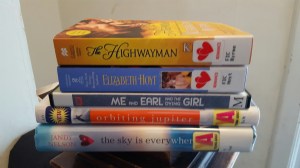
That’s the whole haul, for those who were curious. I’d gone with a vague hope I might find one of the Russian-related historicals on my list (and did, with Forever in Your Embrace) and fingers crossed for a Georgian (but not Regency) setting (When You Wish Upon a Duke delivers on that front) but, apart from that, nothing more specific than wanting a good grounding in my favorite genre. Carla Kelly always delivers on the emotional impact, so that was enough to put the book in my hand, and it had been a while since I’d read a good time travel, so The Last Cavalier fit that bill. If I could hit the snooze button on the calendar so I could snuggle beneath my fuzzy duck blankey and read them all, with endless cups of tea at hand, I think, at this point, I would.

Life, unfortunately, doesn’t work that way, but I can make sure I get some pages read every day, the same way I make time for my morning pages and have to at least touch one of the current fiction projects every day. As K.A. Mitchell, whose wonderful workshop on character relations this past Saturday gave me even more layers to slather on Her Last First Kiss, has said, open the file and change your seat. I have to open the file, or open the notebook. When I do, well, it’s right there. I have a pen in my hand, or the keyboard is right there, too (usually both, in most cases; that’s how my brain works best) and who would it hurt if I took a poke or two at things, hm?

Thanks to a talk with a new writing friend, who listened to me whinge about how hard it’s been to find where I should (note that should, there) including roundabout analogies and a diagram drawn on a napkin with rollerball ink, I am getting the chance to do both the clean sweep and more layers things at one with Her Last First Kiss. What, she asked, was the moment that changed my heroine’s life forever? What permanently took her off the path she always thought she was going to walk in life? Huh. Well. Had to think about that one, and then the answer came out all on its own. When her father left.

Sure, she was seven then, and I didn’t want to start that far back, but darned if the whole scene didn’t play itself out on my walk back home from that meeting. I sat down at my secretary desk, with notebook and fountain pen, and out flowed the whole thing. I didn’t have to yank any teeth. Didn’t have to force anything. Huh. I…remember how to do that. Don’t write a book. Tell the story. Remember back when I didn’t know all the rules, but blithely wrote down the movie in my head? Yeah, that.

Clean sweep. More layers. Easy enough when I don’t think about it.


A Handful of Dreams and a Blogful of Opinions

I’ve been reading a lot of older historical romances lately, mainly those first published in the 1990s. Many of these are standalone stories, in the truest sense of the word, not parts of any series, so anything can happen, to anybody, apart from the HEA we are guaranteed by the end of the book. The  hero’s charismatic best friend isn’t exempt from villain status, because no, we aren’t going to need him to be the hero of book two or there, because there is none. One hero, one heroine, one HEA, off into the sunset, done and done. That’s how my story brain naturally works, anyway, and I’d been craving the big, thick doorstoppers I used to devour (and still can, because keeper shelves and UBSs and e-books, yay publishing revolution) so I dove into this subgenre once more, with overwhelmingly positive results.

12118845_1053054018067962_7772132729402933453_n

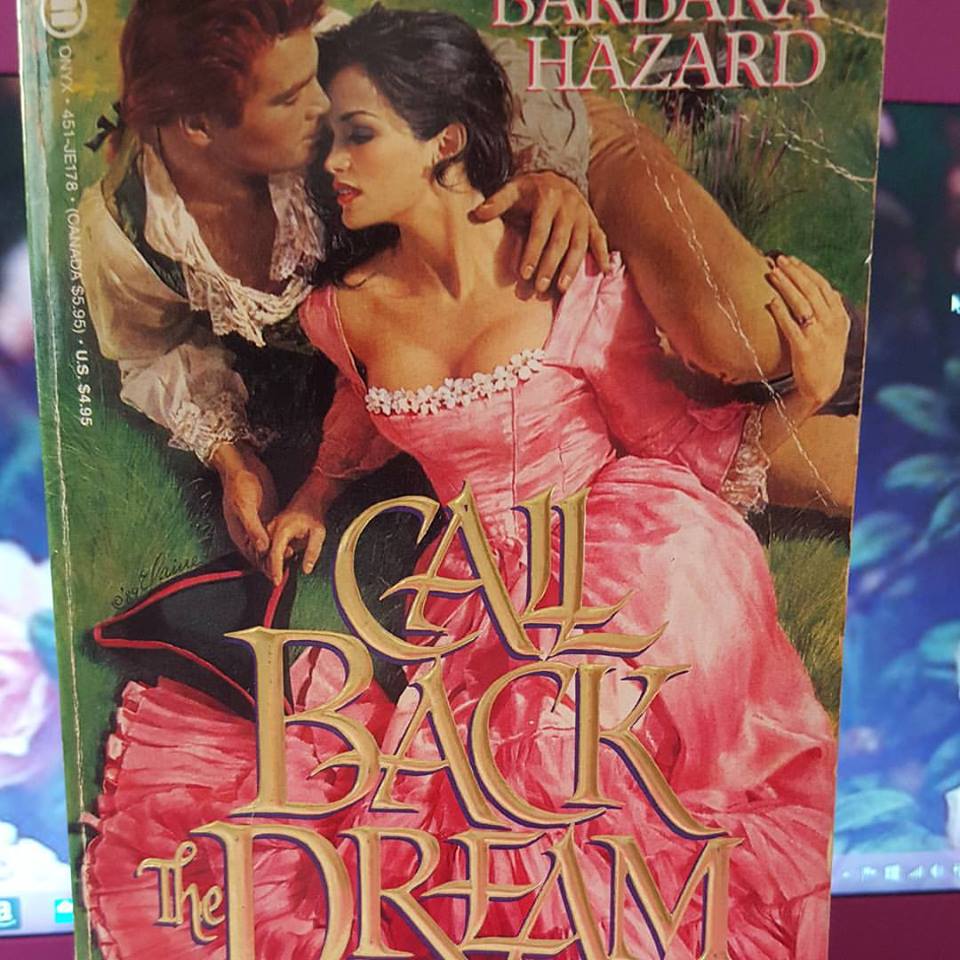
One of my best (but not surprising) re-finds was Barbara Hazard. I’d re-devoured her Georgian historical, Call Back the Dream, and wanted to dive into the sequel (I know, I know, I was talking about standalones only a minute ago, but bear with me; this is going somewhere) immediately afterward. I thought I’d packed that in the same box with the original, but then it would have been in the same bookcase. It wasn’t. Instead, there was A Handful of Dreams, also excellent, and completely unrelated.

20160106_102511-1_resized

I didn’t remember too much about A Handful of Dreams, though I’d first read it when it was fairly new. I remembered the scene where child Sally catches a coin tossed to her by a British soldier on horseback, but didn’t remember if that soldier would turn out to be the hero or not. As I read on, I still wasn’t sure. I did remember, very clearly, the fictional Sally’s abusive first marriage, her return to her family of origin, and her placement as the companion of the daughter of a different soldier.

Let’s say that Sally and her employer’s daughter had different expectations of the relationship and leave it at that. I’m not sure if that might have been explored differently,  had the book been written today, and that’s something I will likely think about for some time. Sally’s employer decides it’s time for Sally to move on, and her situation, as it were, becomes a commodity.

A friend of the family, Harry, Lord Darlington, purchases the care of Sally, and his treatment of her didn’t -on either read- strike me as particularly heroic. He’s a cold father to his children from other relationships, including two marriages, even when Sally expresses her desire for the children to be part of the family. As a work of historical fiction, this works fine, and that’s how I read it this time around. There’s a friend of Harry’s, who also takes a liking to Sally, and there was a good portion of the book where I was thinking maybe I’d misremembered and he was the true hero.

Not going to give away spoilers, because there are two sorts of readers involved here; the ones that are going to track this book down o they can read it themselves, and those who will not, because old book, who cares, or they don’t read romance anyway. Either way, I finished this reread a couple of days ago, and, as much as I’d like to read another romance, my brain is stuck here. Lots of thinking.

Were I to publish this book today, I would class it as historical fiction rather than romance. Sally does find love, and that love is reciprocated. There’s even an acceptable heroic grovel on the part of the gentleman who fills that role, but, in the end, this is really her story and not theirs. I am okay with that. Romantic elements, yes, but this book is about Sally’s life, her struggle to find her place in the world, and the effect the cards she was dealt do have on what she can do.

Sally starts out Irish and poor, in the early nineteenth century. She’s also beautiful, exceptionally so, and that gets her noticed, not always for the right reasons. This is one of my favorite types of characters, where that beauty has its perils as well as its perks. There are those who don’t look below the surface, those who assume a certain set of facial features means a certain personality or mindset, when that couldn’t be farther from the case. Sally’s options are limited. She’s not educated, she doesn’t have a lot of power, but she is smart and she is strong, and she is a woman of her time. That’s important.

Some aspects felt  a little too neat to me, others a bit rushed, and. for a historical romance, there isn’t a lot of emphasis on the relationship that should be the center of the story. I’m not sure I would have chosen the same hero, were this my story to write, but it wasn’t. I’d love to talk to the author, but without contact information, that’s not likely, so some of these things are going to muddle around in my own mind for a while. Maybe some elements will transfer and transform in my own work, but for now, I’m still thinking

Happily Ever After, Epically Speaking

First and foremost, Happy Anniversary to Real Life Romance hero. Not our wedding anniversary, which is a different date, but the anniversary of the day we fell in love. We are mushy enough to remember the exact day (having it happen on a national holiday probably helped) and mark the occasion. I will not give the number of years, but I can say it was in another century, in a far off land called Santa Barbara. We were two college students, majoring in things that have nothing to do with what either of us are doing for work at present. Go figure.

This year, we marked the occasion with lunch at home, dragged out of the freezer and microwaved, because it’s the day before grocery day, and we both had stuff to do. Also because one of us cut the amount of bread in the household down to one slice while the other was off doing laundry. In a completely unrelated piece of news, a grilled peanut butter sandwich is apparently delicious but super melty to the point of liquefied peanut butter. I will not say which of us did what, because a good marriage always has some secrets, but it did end up with us dipping things in Malibu sauce (1/2 mustard, 1/2 mayonnaise, whisk together; excellent on chicken) at the kitchen counter and discussing what we thought life was going to be like cough cough years ago.

College majors, once of crucial importance, turned out not to be so much, in the end, for us. RLRH is now in the restaurant industry, and I make up stories, blabber about books, and tell people who kissed on TV. Living in NY state? We’d hoped. Now we’re doing it, in a beautiful apartment in a wonderful neighborhood we never want to leave. We share that apartment with Housemate, who knows all our dirty laundry and loves us anyway (or none of us can afford the blackmail; that’s also a plausible explanation.) Though I studied early childhood education, I did not take the degree, nor have I worked in that field since my last nannying gig in college. A few years in retail, many more in family caregiving, but the writing has always been there, even during the dark years when not much was actually coming. I did not expect those years.

RLRH and I went over a few things we would have never expected, if Present Us had been able to talk to Cough Cough Years Ago Us. Health issues, financial crises, deaths of parents and other loved ones, watching friends become parents, career derailments and changes of direction, changes of interests, the eclectic bunch of friends we’ve accumulated, a kitty who does not climb, jump or cuddle (but she does blog, so that makes up for a lot,) and other things we never would have thought of. We’d cut out on a school activity (not a class) that day, long ago, and threw off the person who’d gone out to look for us, because those two people on the athletic field looked like us, but he and I were not a couple, so that couldn’t have been, person kept on looking. We eventually returned to the event, knowing, from the time we’d spent soaking in the other’s company, that something was different, and always would be.

I’ve always known romance was my writing home. That was true back then, and it’s even more true now, maybe because I’ve lived the ups and downs of what life has to offer, with RLRH at my side. A lot of romances are courtship stories, maybe even the majority, and that’s fine. Falling in love is romantic, that’s for sure. Everything is new and shiny and overwhelming, and nothing has been like this before, and maybe, maybe…. RLRH and I threw around a lot of “did you ever think we’d…” questions to each other. Some were answered with “yes,” some with “no,” some with incredulous laughter, and, my favorite, a soft “I’d hoped,” from him.

That’s the other level of romance, and one I like to include in my books whenever possible. A lot of the current romances take place over a short period of time, so focusing on the courtship makes sense. That other level, though, the love that has been tried, broken, mended, grown stronger, as broken bones do, that’s also worth celebrating. Those stories also need to be told. That’s one of the reasons I’m studying some of the older historical romances these days, the ones with a bigger scope and taking place over a longer period of time. For me, the very best historical romances, the ones that linger with me years and decades later, are epics. Sagas. Romances worthy of historic record. Those make my blood sing, so that’s where my focus is going these days.

I once described an early work, which I still find satisfactory these many years later, as feeling like I was dancing in a room that was too small. That’s the best way I can put it, even now. I had a sense of restraint then, a keen concern about what I was “supposed” to do. Levels of historical accuracy (I go for verisimilitude now)  and sensuality and which periods are desirable and which are not. Word count is  a big bugaboo for me, useful in marketing and editing, but needs to be firmly locked away during the drafting process. I need to tell the story the way I tell the story and then we’ll focus on the form and all that during the next pass through.

Am I where I thought I was going to be all those years ago? Mostly, no. Am I where I need to be? Probably. Am I where I actually am? Most definitely. One of the questions RLRH and I asked each other was, did we think we were going to be this happy? Life isn’t perfect. It’s not ever going to be, and of course we have some what ifs, but we also have each other, and that’s what this happily ever after thing is all about, in life and in fiction. Onward we go….

Thursday Rambles

“Be willing to expose yourself to your readers. Plumb the depths of your own experiences and emotions in order to make your stories authentic. Don’t hold back.”

— Madeline Hunter

Wednesday’s post was going to be a special midweek update from Skye, but a domestic tornado chain touched down, here it is, Thursday, and Skye will be able to make her regular Feline Friday post tomorrow, so this one is all on me. Which would be lovely if I had any idea what I had planned to write here in the first place. Keeping the discipline of thrice-weekly blogging is one of my goals, so here I am, and my complete lack of focus means that I am going to babble and trust that some sense will come out of all of it at some point.

I will admit that, in a not that long ago romance writer’s conference, I had the great good fortune to be seated at the same table as Madeline Hunter at one of the meals, but did not get to talk to her. Despite my best attempts to peek at her name badge, I couldn’t get a good view, and the noise level was high, so shouting across a big round table wasn’t the most practical thing to do. Point is, I was at the same table with Madeline Hunter for an entire meal, and did not get to talk to her. This will haunt me to my grave. Either that or until my next opportunity, because these things do roll around again.

Granted, due to the lack of a clear name tag sighting, I didn’t know who the new arrival to our table was, and her only answer to a tablemate’s question of “what do you write?” (universal writer to writer icebreaker there) was “historical.” If I had known, I would have loved to talk with her. I still remember, long, long ago, when Madeline Hunter first came on the scene with well-received medieval romances, and feeling betrayed when she switched to Regency. I’m all for writers writing in different eras, and, in fact, I encourage that. I’d like to see more of it. What hit me hard at the time was the loss of a writer who used the medieval setting in all its grit and glory, leaving for more populated Regency assemblies.

There are multiple reasons a writer might switch time periods. Medievals have been declared dead multiple times since I started reading romance novels, let alone writing them. I don’t recall if it was that same conference, though it may well have been, where I pitched my own medieval, with a working title of Ravenwood, to a very interested agent, who said she loved my voice, quoted my own lines back to me, and assured me she would totally read this book for her own pleasure…but she couldn’t sell a medieval in the current market. Did I have a Regency?

I was working on one at the time, and told the agent that. She said great, send it when it was done, but don’t rush. She wanted the same level of polish as she could see in the medieval. Well, dear readers, I can say that I tried. I love the characters in that once upon a time Regency, love the conflict, love the resolution, but, as Critique Partner Vicki pointed out, I hate writing Regency. Georgian seems to be my natural default these days, so, when I do go back to that manuscript, everything will get bumped back a few decades, to fit within my natural reach. It’s going to take a while to get to that point, as I have the current novel and novella that need my attention, and I’ve blabbered on this subject before, so I won’t belabor the point.

Does this post even have a point? Does it need one? It’s written, that’s what, or mostly so, and I’ve had a few discussions, at various places on the interweb, about writing historical and how and why and all that. Defining what makes a particular period appeal to a particular reader or writer is far above my pay grade, so I’m not going to try (today) but here’s what I do know: I need to feel the era. To us, it’s history. To the characters, it’s life. Barring time travel (and I have a time travel waiting to burn off its own bad juju – this may be payback for all the jujubes I inhaled as a kid) the characters don’t know how the war is going to turn out. They don’t know they’re inching up on another ice age, or that the thingamahoozie is going to be invented two months hence, thus changing the world forever. They don’t know any of that.

What they do know is that they want the same things we do; home, health, shelter, food, companionship, purpose, love. All that good stuff. The way they get it, though, that’s where we find the differences, and what historical characters can and cannot do are influenced by any number of things. I find that endlessly fascinating. It’s easier for me to climb into a character’s skin and move around in their world if that world strikes a chord in me and plucks me like a stringed instrument so we can make beautiful music together. No doubt that can happen in any number of settings, and there are probably some I haven’t ever thought I’d employ that, someday, I will. For now, it’s Georgian, and, for today, that’s one blog entry down.

Order of the Golden Curtsy: Call Back the Dream, by Barbara Hazard.

Write what is wrong if it seems true to you and hang the critics of romance who would have it otherwise.
Judith Ivory

I have not read a lot of Judith Ivory. I intend to correct that. I’ve read some (and need to re-read that) but this quote jumped out at me, and it is extremely relevant to my interests at present. While it’s been some time since I’ve spent the majority of my writing time scrawling in endless notebooks about how I can’t write, want to write, need to write, but nothing is coming, oh my word, am I all done? Well, no, obviously not, because I would not have a writing blog if I were. I would not be filling out invoices for my work sold to other markets, and I would not be working on current novel, novella and other projects. At the time, though, it felt like it, and that’s a feeling I want to remember. Not relive, but remember, because it has a job to do.

Earlier today, I finished rereading an old favorite historical romance, Call Back the Dream, by Barbara Hazard, which I’ve talked about some before, and likely will do again. This book is one of the special ones, that has stuck with me through decades of reading, held up exactly as I’d hoped it would. It reminds me why I love reading and writing historical romance, and makes me excited to read its companion book, which I have recently discovered somehow got separated from its parent and is in storage. :sulk: No matter, I’ll pick another read from the same bookcase, though I can’t say which right now. What I’m going for is the feel more than anything else, the big, thick bug-squasher historical romance steeped in the spirit of the times (Professor Facos, thank you for introducing me to zeitgeist, probably the greatest gift a professor could give a writer of historical romance.) – the characters think, believe and behave as people of their time, and that drives the plot.

Call Back the Dream by Barbara Hazard

Call Back the Dream
by Barbara Hazard

I. Love. This. Book. So. Hard. It. Hurts. I highly recommend it to anyone who wants to know what sort of books I prefer to read, and, ideally, write, and will definitely read it again. During this particular reread, a new thought occurred to me: this book might not have made it to mainstream publication today, and if it did, there would likely be differences. Granted, there are fashions in writing, especially in genre fiction, same as there are in clothes, makeup, hairstyles, etc. It’s also true that publishing does go in cycles, so maybe some of the things that may read as dated now to the very modern reader may be all the rage next year.

Long separations aren’t common in many historical romances published today, but that doesn’t mean it takes away from the romance. Alexander and Camille are separated for fifteen years in this story, by parents who don’t take kindly to mixing classes, and both do marry other people in the interim. Reasons for and outcomes of those marriages make sense in Georgian England, and neither spouse is demonized. I liked that. When Alexander’s first wife dies, there’s pressure to seek another wife, as soon as possible, because he’s not getting any younger, and the title can only be passed down to his direct male descendant. This. Is. A. Problem. Alexander didn’t want to marry anybody but Camille in the first place, but he did his duty, and is willing to do it again. Well, to a point, that is, which I am not going to blab about here, because the scene where he Does A Thing out of strong emotion still makes my skin prickle merely thinking about it. That’s what I want to put into my books, too.

This is not a sexy book. There’s one intimate encounter between Alexander and Camille, and that not spelled out explicitly, but the strength of their love and the bond between them does perfectly fine without going into physical detail. It’s not a inspirational book, though Camille is a vicar’s daughter, her faith affects her choices, and we see her making observances of same. Her first husband is agnostic, and though it’s not gone into depth there, either, their differing views provide for stimulating conversations between the couple. Sex and faith both influence the plot but don’t dominate, though the love Camille and Alexander share, and its obstacles, do. When I read these pages, I ache for these characters and what they need to go through to achieve their HEA. I want to make that.

I love that, when Camille and Alexander do find each other after all those years, it’s not quick or easy. One of them is still married, for one thing, there’s a child involved, and both parties have huge paradigm shifts regarding things they thought they knew beyond any doubt. There’s anger. There’s betrayal. There’s an offer nice people don’t make. There’s consideration of that offer, and consideration of what acceptance of that offer would mean to other people, on an intimate and grander scale. I want to suck this in and soak in it and breathe it and learn from it and make it mine.

There are some books that we read. There are some books from which we learn. There are some books in which we see ourselves, as we are or as we would like to become. Long ago, I had the idea of starting a feature, on my previous blog (or the one before that?) to ramble about my favorite-favorite historical romance novels, but I never did it. No idea why, but no time like the present, and so I induct Call Back the Dream by Barbara Hazard as the official first member of the Order of the Golden Curtsy. Time to show respect to a mistress of the genre.

Back to Old School Season

Last night, the power went out. Twice. The night was sweltering hot, the rest of the family had sequestered themselves in their rooms, hot and cranky, leaving only me out in the living room. My plan was to watch Ink Master (which I am not sure even recorded, but there’s always On Demand, right?) and write, but BAM, the big dark. The box fan went out. College kids (we live in what’s termed the student ghetto, as our neighborhood hosts multiple institutions of higher learning) whooped and hollered, and one fine citizen decided that was the perfect time to shoot off fireworks. Really? Why do you have fireworks in September, sir or madam? Waiting for exactly this sort of event? Can’t make this stuff up, and, being a writer, that’s kind of my job.

So, anyway, there I am, in the dark, faced with a giant shift in plans for the evening. I don’t have tattoos myself (and can’t, medically, as I have eczema, which does not play nicely with tattoo ink) but I find the art form fascinating, so tattoo shows are must-see television for me. Ink Master is my favorite. This season is masters vs. apprentices, which I think is an interesting concept, especially how each pair handles the competition. For my money, if I were the master and my apprentice surpassed me, I would consider that proof I had done my job well. The student should surpass the teacher, IMO, at some point. That’s how we improve.

Which is where we’re going with this, today. After batting around some email conversations with writer friends, I dragged the window seat cushion onto the floor, filled my travel mug with ice water and settled in beneath the living room window, to hug an ice pack and have a good think. I would have written this out if there had been any light to speak of, but there wasn’t, so I’ll get it down here.

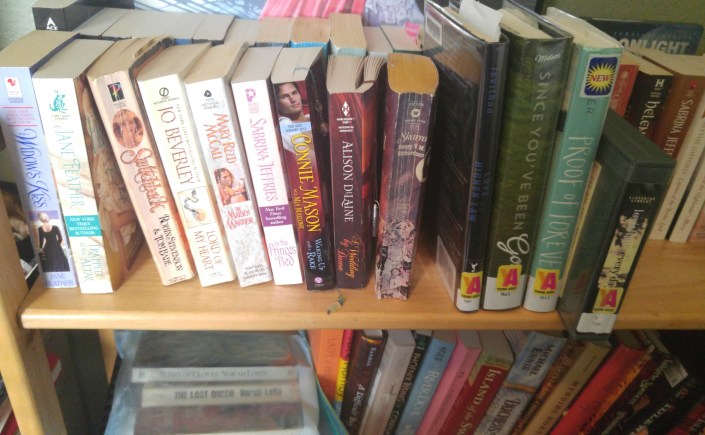
The office overhaul has brought a few different things to mind, notably my reading habits of late. While I do have that lovely TBR shelf above, where my brain and heart keep going is over two shelves, to the recently unearthed classics in their new case. Valerie Sherwood, Laurie McBain, Anita Mills, Barbara Hazard…I have  missed those gals and the stories they told. Not all of them would appeal to the modern reader, but they have stuck with me over the years, and in some cases, decades. The question is, why? What grabs me that strongly, for that long? Good questions, and there’s only one way to find the answers. Study the masters. I’d say mistresses, as, with the exception of Jennifer Wilde (who was Tom E. Huff in his private life) these books were written mostly by women (though Laurie McBain relied on her father’s input, and Valerie Sherwood thanked her husband, Eddie, for his role) I’m reluctant to use the term “mistress” in this context. Whole different profession there.

There hasn’t been a lot of reading time lately, but, once I started my reread of Call Back the Dream, I noticed I was approaching a few things differently. Right before the lights went out, I’d sneak-read a chapter in the bathroom. Haven’t done that in ages, but I used to do that all the time, when I couldn’t wait to dive back into the world of long-ago lovers. There was what we’d call head hopping today (I’m not going to go into putting modern standards of writing onto writers who worked when conventions were different, as that was how things were done then, so shushies) but the details…wow. I felt like I was seated at that table in the vicarage, having dinner with the heroine’s family. Each sibling, both parents and even their lone servant were distinctly painted characters, and no, they do not all get their own book. Sometimes, supporting characters are just supporting characters, and that’s okay.

I’ve read this book before, and will read it again. There’s the delicious sense of anticipation, because I know what Camille is going to find in a certain spot by the stream, but she doesn’t know that, and neither she nor Alexander have any idea what that spot is going to mean to them, or how long it’s going to take before they can claim the HEA that they might have had that much sooner if a few things had been even the slightest bit different.

Different. That’s the word. I love the historical romance genre; that’s what I live and breathe, what I’ve read and written since I was but a wee princess myself. I love that there is something for everyone, and I love that I do have these books from the era of my reading career that fires my blood, in which I see myself and the stories I have to tell. That’s in both senses of the word; one, that I possess them, and two, that I need to release them into the wild. I want the bigger stories. I want the variety of historical settings and eras, and people who think, act, speak, believe and comport themselves as people of their time. Not so much textbook-strict accuracy but versimiilitude. Could it have happened? If so, bring it on. Even so, I’m not writing a textbook, and I’m not writing fictionalized biographies. I’m writing historical romance. The love story has to be as important as the world in which it takes place, and it has to be done in such a way that it could not have happened at any other place or time.

The best way for me to learn how to do this is to see how it’s been done, and them replicate it, in my own voice. Which means I’ll be reading through these keepers, balancing the classic romances with newer editions and learning from both, to make something entirely new. Teacher may be a strict one in this class I’m making for myself, but at least I’ll know attendance will be one hundred percent.