Five Quick Questions With E. Catherine Tobler

I said I wasn’t done with E. Catherine Tobler‘s Watermark, and the madness continues as E. joins us for a quick chat about her latest release and more…
ecatherinetobler

1) How did Watermark come to be?

I wanted to set a story somewhat local to me and loved the idea of the Rocky Mountains. What could I do in a small mountain town, I wondered. I began to look at my favorite mountain towns, and then came across mountain lakes, of which Colorado has many. They’re all so beautiful on the surface, but what might lurk beneath? This turned my mind to Loch Ness, and thus to water monsters. This led me to kelpies, and that’s when Pip was discovered. But why would a kelpie be in a Colorado mountain lake? This was the mystery to solve.

2) Pip and Finn’s story will leave readers hungry for more…and flat out hungry. What role does food play in this story?

Food plays an important role in Watermark. There is a long-standing legend that bread is protection against fairies, but I twisted that a little in this book, saying that bread is actually what helps anchor fairies in the human world. Naturally, this meant that one of our fae needed to be a baker! Food also plays a part in rituals for our fairies, as they can entice their own kind with it. There is also the notion that if a human eats fairy food, they’ll be trapped in the fairy world, losing their interest in anything but that world. Food is both attractive and repellent over the course of the book, as fairies themselves are.


3) How would you describe urban fantasy to those who have yet to dip their toes in the water of this genre?

Urban fantasy is often defined by the “urban” part, in that it takes place in a city, and that city becomes as much a character as the walking and talking characters are. I wanted my cities to be worlds, the human world and the fairy world, both at odds with each other, but each containing something the other needed. My actual city is fictional; Peak, Colorado was, however, absolutely based on Estes Park, Colorado, that beautiful small mountain town that exists quite well outside tourist seasons, and probably has an entirely secret life no one knows about.

4) Appearances aren’t everything, and in this story, there’s a lot beneath most every surface. What one tip would you give writers interested in going deeper with their characters?

To definitely remember that surface largely doesn’t matter. Certainly our first impressions of characters will be tied to what we see, but that doesn’t have to be physical appearance. “She was beautiful” are the three words I am most tired of seeing when a writer launches into a description of their female characters. You can show that beauty in another way; what is beautiful about her beyond her looks, too. “Her fingers were as a tangle of yarn over the markings when she studied star charts.” That’s beauty without saying it’s beauty.

5) What’s next?

All the things! This fall, I am starting a new book, because apparently that’s what I do in the fall (just about the time of Nanowrimo, hmm). I have new stories out, too: readers can find “Pithing Needle” in the October issue of Clarkesworld, and “Honey in the Lion” in Betwix #5 . And I’m still dreaming all the Egypt dreams, too.

Watermark-Cover

Want a chance at winning a copy of your very own? There’s still time.

Excerpt from Watermark by E. Catherine Tobler

I’m a historical romance gal, always have been, always will be, but that doesn’t mean I’m not going to sniff out a great romance nestled in a story of another genre. In this case, urban fantasy. E. Catherine Tobler has a history of beckoning me out of my comfort zone, and her latest, Watermark, the story of Pip, a kelpie sent to the world of humans, is no exception. Pip, in human form, finds there’s more to both human and fae than she first suspects, and there’s the small matter of Finn, a delicious, tattooed baker who is, like much in this entrancing novel, much more than he appears on the surface.
Watermark-Cover

Intrigued? Try this tasty sample..

Who was he to me? The question rested on my tongue. I did not ask it.

We traced our way through the woods as we had come, Finn holding my hand all the while. Fingers were not so curious to me as toes, but now I understood why. Our hooves left twin trails of prints through the long grasses, prints that were slowly erased in our wake. Wouldn’t a horse be captivated by toes? Wouldn’t a…

“Púca,” he said.

“Can you read my mind then?” The idea wasn’t nearly as unsettling as I expected it to be.

“I’ve a gift for that,” Finn said with care, “but you… You were always different for me, aye?”

He said “aye” the way the king had, slanted with an accent I didn’t recognize—yet it made me ache with familiarity. That was a sound from home. And the idea that I had always been different for him made me stop in my tracks.

“It’s like looking at a lake,” he said. “Most people, I see only what they wish me to, or my own reflection. Some let me below the surface.”

“And me?”

Finn gathered my hands into his. “Earth cups water, prevents it from spilling every which way. Water soaks into earth, letting life grow.”

My nose wrinkled again. This, like Berengaria and Conaire, was nearly too private. It was like looking at something I should not see, even if it involved me.

“Water freezes and earth quakes. Water can flood, smothering ground. Likewise ground can suck entire lakes away.”

Finn’s head tipped in a nod, mane shivering. “Aye, they do. Balance, as Conaire spoke of.”

“You said I was always different, Finn.” I stumbled over his name, knowing the way I knew my own pulse that it was not his true name. The queen and king had not even used that name for him, as if they also knew.

“Faeries do not dream,” he said, “but I think I am. I have a memory of a girl who was not a girl. She watched me through the woods. And I was me, but not me. I was a magical thing she wanted to catch.”

I clasped my hands together, but did not remove them from Finn’s hold. Unlike my own story of the lake and the young girl, I could see none of what he spoke of, but sensed something. A memory?

“She looked for a long while, but I could not tell you how long. She came to the woods every day, hopeful. In the beginning her hands were empty. Eventually, she came with treats. Sugar, cheese, apples.”

He fell silent, and I watched him. Could he see it all so clear within his mind? And then—
“I could show you.”

I only nodded once.

Finn’s hands closed hard around mine, and the wood around us vanished. I drew in a breath even while I had no lungs, no form. I was a small ball held together by Finn’s hands. Around us emerged another wood, not the wood of my lake; these woods were his, I understood. The trees were the color of melancholy, and he was the color of sunlight on snow.

He moved through the trees as a creature I could not name. Not a horse, something beyond a horse, something that glowed and beckoned and there. A girl, with hair as of night, and an apple, green like Yule boughs, and only when she learned to sit did he come.

“Did she catch you?” I whispered.

I watched as the unearthly beast bowed his head, lips claiming the apple, brushing the woman’s palm. My own palm knew that touch, wet velvet.

“Oh yes,” Finn said. “She did.”

~*~

Hungry for more? An interview with E. Catherine Tobler is on the way. In the meantime, explore some Fairy Places and find out how you can get a chance to win a copy of Watermark for your very own.

From Fan Fiction to Fantastic Fiction

FanficFantasticFic

It’s now officially September, and once again, time for From Fan Fiction to Fantastic Fiction over at Savvy Authors. I’ve always loved back to school season, even when I’ve been out of school for quite some time. Discounted school/office supplies (notebooks, notebooks, notebooks) are always welcome, but if I’m teaching my favorite online workshop, it’s even more appropriate. Even though it’s only the first of the month, and temperatures here in Upstate NY are going to be flirting with 90 for the next few days, I cannot tell my brain it is not yet fall, my most productive season, so when the chance to teach aligns with Back to School, I’m a happy camper…er, teacher.

It’s kind of funny calling myself a teacher. In another life, I did study early childhood education in college, but the most important thing I learned from those studies was that I didn’t want to pursue that profession. Nope, writing was going to be it for me, and really, I should have seen the signs. The way I couldn’t wait to run home from class and bang out a few pages of an “epic” historical romance novel on my electric typewriter. Dating myself here, I know, but that was state of the art back when the dinosaurs roamed. Diana R, wherever you are, I will always remember standing in the grocery store parking lot in Montpelier, VT, and feeling warmed down to my frozen toes when you told me how badly you wanted to visit the fictional European country in said manuscript (which now resides in a storage unit, where it cannot hurt anybody.)

That first novel was written before I even knew what fan fiction was, but in retrospect, the influences were clear to see. The story structure came from a favorite author whose epic historicals still hit the bestseller lists today. The hero was inspired, physically, by an actor on a show I wouldn’t miss for love or money, and the heroine had her start as a character I thought would be an interesting match for his character. Everybody got transported into a very vague version (alliteration intentional) of Tudor England (and fictional European country) and I threw absolutely everything I loved onto those pages. Angst, pathos, intrigue, star crossed lovers, and a love that would not bow, no matter what life threw at it.

Not much has changed in that last aspect, because writing those early stories, both fannish and not, taught me a lot about what elements go into a story that is mine, not anybody else’s. Tropes, types, and techniques are all useful tools, but the heart of the story comes from the writer’s loves. People, places, things, scents, sights, sounds, music, favorite books, movies, TV, even the whole shipping culture is a natural breeding ground for great romance stories. Sharing this journey with others always fills me with an extra dose of enthusiasm to put ink on paper and tell another tale.

Seats are still available, so hop on over to Savvy Authors and settle in; I’d love to see you there.

http://ce.savvyauthors.com/index.cfm?fuseaction=Calendar.eventDetail&eventId=1938

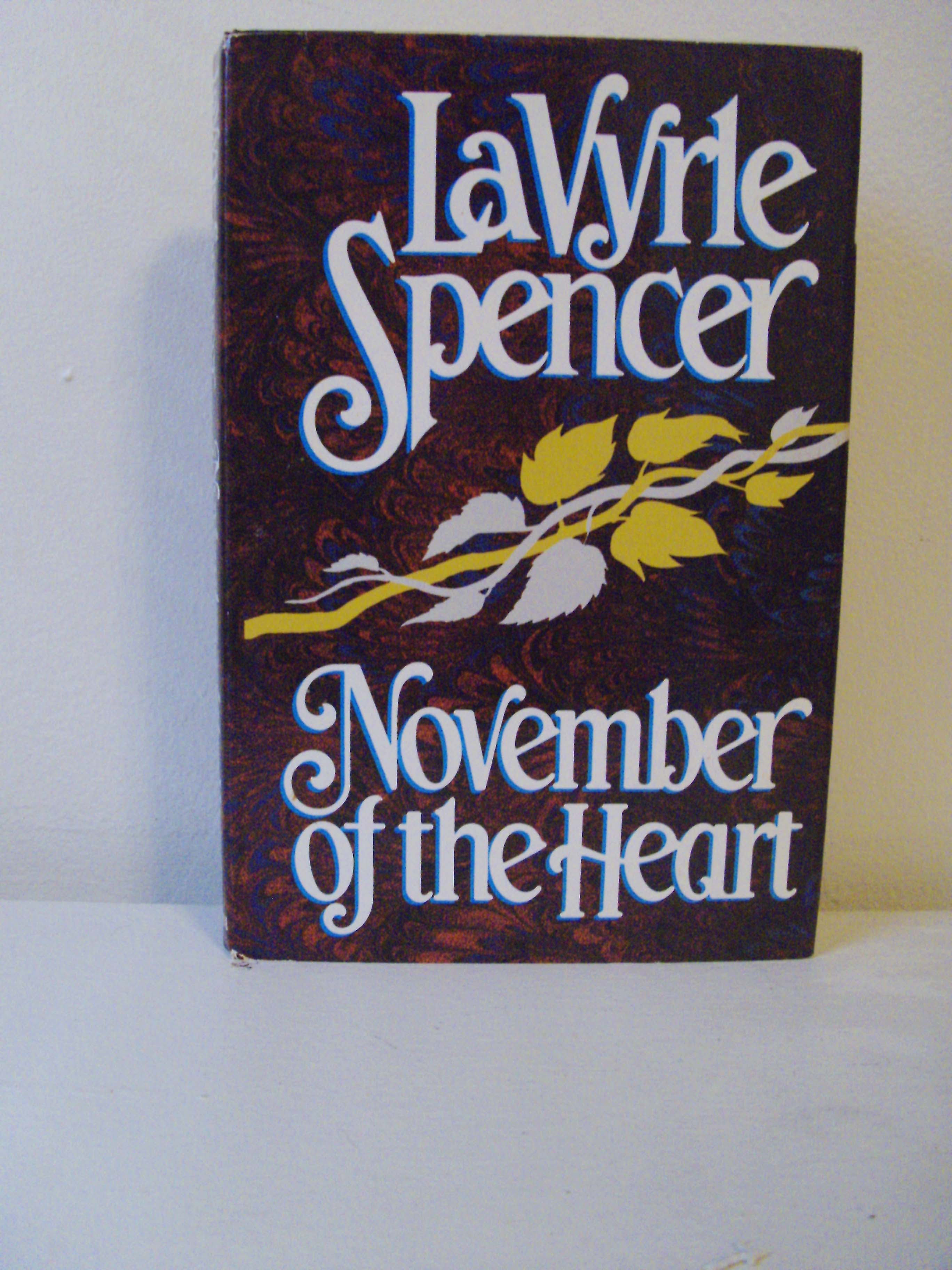
Throwback Thursday, Historical Romance Division: November of the Heart by LaVyrle Spencer

i1035 FW1.1

Out of all of LaVyrle Spencer’s books, and I have loved all of them that I’ve read, all of the historicals, and even dipped my toes into one contemporary, Separate Beds, November of the Heart is the one that sticks with me the most. That’s saying a lot. I have to confess, in the interest of full disclosure, that I have had more than one friend (two, at my best recollection) yell at me via email, because they didn’t know this book was going to have so many feelings. That’s why I love it.

One friend even said the title was “too sad” for her, but again, the title sold me right away. I love November, the month of coziness and deliciousness and giving thanks and  world full of color and scent and the holidays only a glimmer away. Turn of the century Minnesota is not an overplowed field in the historical romance world, and the all important annual regatta means everything to both the wealthy father of heroine Lorna and Jens, a boatbuilder pressed into service as a waiter. Slipping plans for a prize winning boat into one’s employer’s dessert is a recipie for disaster, but it also opens the door for a grand and glorious love that defies class barriers.

Lorna and Jens are star crossed lovers, Lorna drawn to Jens and his boat, their connection -it goes beyond attraction- gets tried by class, by time, by life, but when Jens and Lorna finally say the hell with everything that keeps them apart, I want to take a victory lap and toss confetti.  If LaVyrle Spencer ever wants to come out of retirement, I am leaving the porch light on for  her. If not, what she’s left us with is still magnificient.

Throwback Thursday, Historical Romance Division

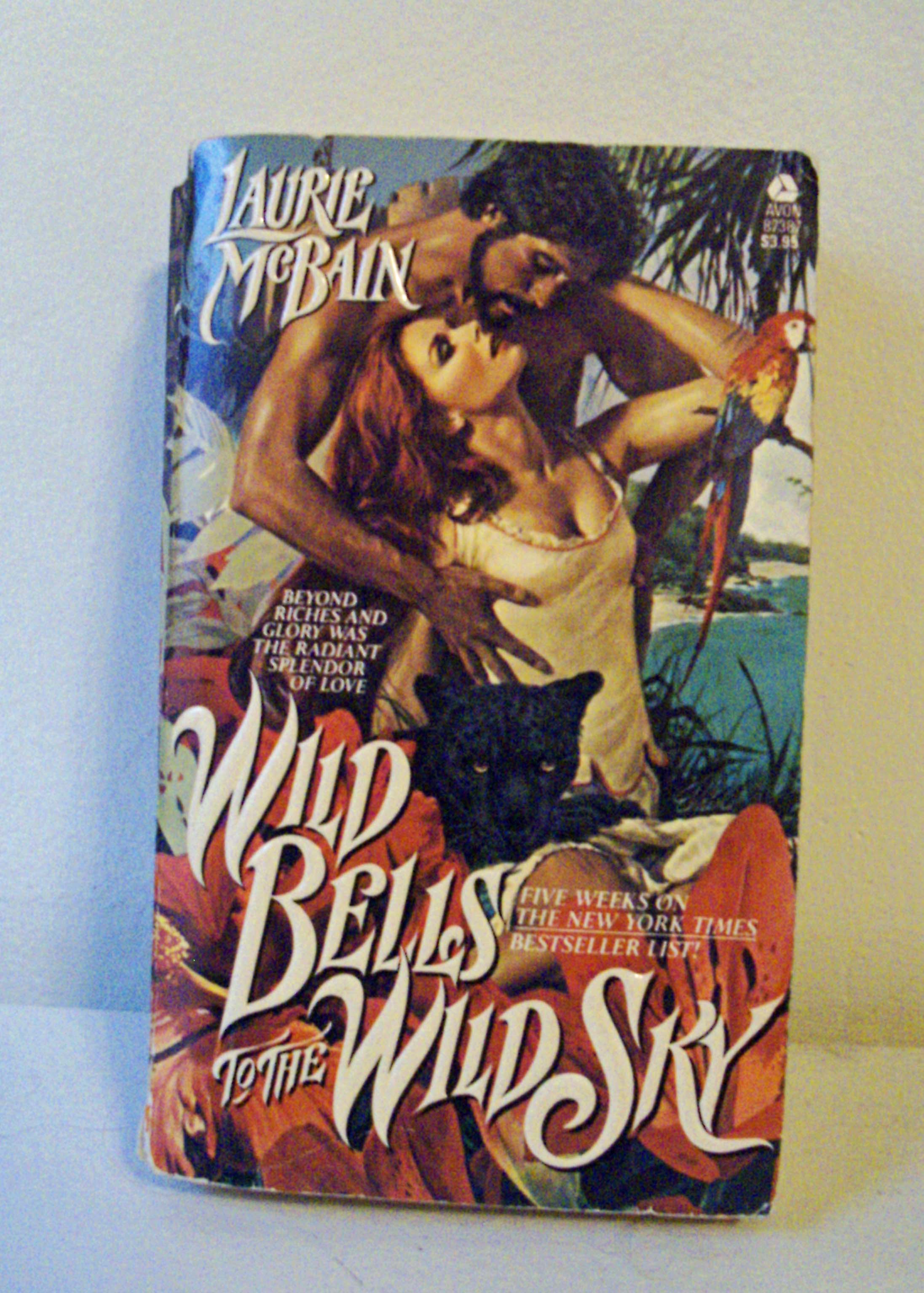
Wild Bells to the Wild Sky by Laurie McBain

Wild Bells to the Wild Sky by Laurie McBain

It’s that time again.  Wild Bells to the Wild Sky, by Laurie McBain, is one of those books. The all time favorites, the ones where I have only to hear the names of the hero and heroine -in this case, Lily Christian and Valentine Whitelaw, how perfect are those?- to immediately reimmerse myself in their romance and adventure. 

This book has huge servings of both. Set in the Elizabethan era, largely on a deserted island, Lily and her brother grow up wild and in seclusion. Lily, her mother, and a family friend are the sole survivors of a shipwreck, the sole inhabitants of the island…until mother and friend produce Lily’s brother, that is. Ahem. Then fever takes the parents, and Queen Elizabeth sends courtier Valentine Whitelaw in search of the missing party, and then things really get interesting. 

History, intrigue, romance, fabulous locations, a clever heroine and dashing hero, gorgeous descriptions, and one of my top five historical romance endings of all time make this book one I go back to time and again. 

Since we’re waxing nostalgic on Thursdays, here are a few recent things I’ve been up to: 

Guest Post at Savvy Authors: From a Certain Perspective, It’s All Fan Fiction: From Fan Fiction to Fantastic Fiction begins on September 1st, so I’m delighted to get to blabber about the useful tools we can find in the books, movies, tv and music we already love. Drop by and try a fun exercise to combine old favorites in new ways. 

Outlander “Sassenach” recap at Heroes and Heartbreakers: Cue incomprehensible squeeing, Jamie and Claire are now on the small screen, and I’ll be recapping each new episode as it airs. How cool is that, I get to watch Outlander and say I’m working. 

 1 Line Wednesday on Twitter, always a highlight of my week. 


What are you reading? 

Ten Questions With E. Catherine Tobler

 ecatherinetobler10 Questions With E. Catherine Tobler

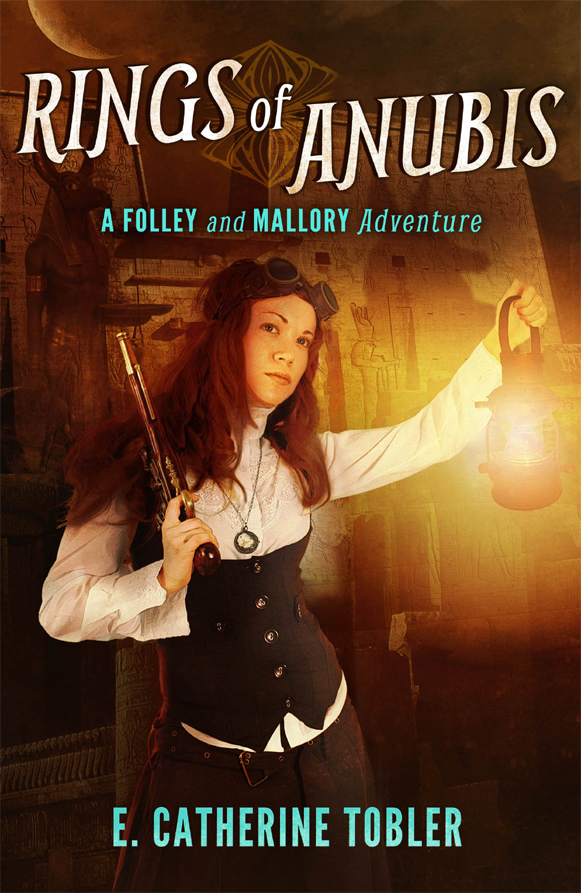
 I first met E. Catherine Tobler in another life, or so it seems. We bonded,via paper letters, in a prior century, over a love of Star Trek: The Next Generation, Highlander, historical romance, and writing. Both at the time aspiring novelists, we encouraged, supported, and critiqued each other, and if we haven’t scared each other off by now, we probably aren’t going to, which is a good thing, because I love her work, especially today’s new release, Rings of Anubis, which Kirkus reviews dubs “deliciously fun.” 

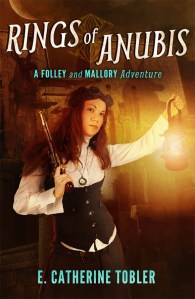
Rings of Anubis combines several great tastes that taste great together: history, romance, intrigue, fantasy, adventure, steampunk, mythology, faith, addiction, recovery, a wounded hero and determined heroine with a past of her own. I am delighted and honored to have read this in manuscript form, and now the rest of the world gets to come along for the ride because this fantastic tale is now available in a bookstore near you. Pull up a comfy chair, pour your beverage of choice and let’s play a round of Ten Questions with the author who made this amazing tale possible. 

  • When did you first know you were a writer?

There was no moment on the mountaintop where sunlight broke rainbow-bright through clouds and I was spinning about, saying “Yeeees.” I can remember experimenting with short fiction for the first time in high school (though I wrote a novelette in middle school–“The Metal Zone,” which involved my bestie getting sucked into The Metal Zone, aka The Twilight Zone, where she met a hot guy, ha!)

But, in high school, I was behind in my history class, and got assigned a story for extra credit, which I dearly needed. I wrote a short story that completely freaked the teacher out and I appreciated that reaction to something I’d created. I sent one of my early attempts to Marion Zimmer Bradley’s Fantasy, and that entire process–printing the manuscript, mailing it, waiting for a reply–certainly had me feeling like something of a writer.
 

anubis_paper

  • How did Rings of Anubis first come to be?

In the beginning, it started as a highly misguided distant future piece, wherein Eleanor and Virgil traveled from a Blade Runner-like world to ancient Egypt. Balancing the distant future with the distant past ended up being something I was not a) skilled at or b) just not ready for. I examined the parts I really loved and wanted to keep and then looked at how I could make them work; turns out, the late 19th century was a perfect fit, given technologies I wanted to play with, archaeological discoveries that had and had not happened, and well, airships. I wanted things that fly.

  • What are the best and worst pieces of writing advice you’ve ever heard?

For me, “write every day” was disastrous advice. It’s not how my creative brain is wired; I have a brain that fills itself up, explodes on the page, and then needs refilling before it’s ready to explode again. Writing just doesn’t happen every day if I’m refilling–through research, brainstorming, artwork. Once I stopped trying to hit X pages or words a day, I was a much happier and productive writer.

I think the best advice is still out there and will contain the phrase “eat gelato.”

  • Why are romance and speculative fiction two great tastes that taste great together?

Who doesn’t love a mash up? It’s fun to take two seemingly unrelated things and press them together until you have something entirely new.

  • How would you define steampunk to someone who has never heard of the term?

Is there such a person left in the world? (There’s a story in that.) We should meet and have a fantastic tea! Simply put, steampunk is a genre within SFF that features steam-powered machinery. Think H.G. Wells, Mary Shelley, Jules Verne. Wild, Wild West, Metropolis.

  • Let’s talk about Virgil and Eleanor for a moment, a couple that is very dear to me. What makes them perfect for each other, and what’s the biggest obstacle standing in their way?

I’d say Eleanor and Virgil are very much not perfect for each other. They’re both stubborn and independent and selfish. They discover they’re each the means to an end–but also something more in the long run; Eleanor is exploring something her father has asked her to leave behind while Virgil is trying to unravel the puzzle of his late wife. I’d say the biggest obstacle is the pyramids at Giza (one of which they get to climb), but it’s probably Anubis, who embodies the unknown, trust, and the need to be exactly who (or what) they are.

  • Then there’s Cleo and Auberon. Will we be seeing more of this fascinating secondary couple’s love story?

As you know, Bob, I have written another book set in this universe, which involves Cleo and Auberon. It goes into Cleo’s history, she of the mechanical arms, and pushes Eleanor and Virgil against some boundaries they first discovered in Rings of Anubis. Like RoA, the book moves in a couple of different directions at once, and this time includes a correspondence between Cleo and Auberon, helping to tell the past and future of their relationship.

  • Though Rings of Anubis is your first published novel, (or novels, for those who read the e-release as Gold & Glass and Silver & Steam) you’ve also written short stories and novellas, and been nominated for a Sturgeon Award. What are some similarities and differences in writing short and long fiction?

Obviously a bigger canvas gives you more space to expand characters and plots; sometimes you want that, sometimes you don’t, so learning how to tell how much room your story wants is an important trick in any writer’s bag. I’ve seen countless stories in Shimmer submissions where a writer tries to pack a novel into a two-thousand word short. Some stories need to breathe; others like being tied up like a guest star in Fifty Shades.

  • What is the most important thing you’ve learned about your own writing from editing Shimmer magazine?


Whatever story you’re telling, it starts on page one. No matter how long the work, a good deal of the overall story is right on page one. Page one needs to pull your reader in, needs to anchor them in the adventure you’re about to take them on. Start at the beginning, don’t introduce your people or conflict on page thirty (or page three for a shorter work).

  • Finally, what can readers look forward to next? Is that some faery sparkle I see in the distance?

September will indeed bring Watermark from Masque Books, a story set in the fictional Colorado town Peak. We meet young fairy Pip, who has been expelled from her homeland for Reasons She Can’t Quite Remember. (Funny, me writing an amnesia story, as it’s a trope I don’t tend to enjoy!)

Short fiction on the horizon includes my first story in Lightspeed Magazine, “A Box, a Pocket, a Spaceman.” A novella set in my traveling circus universe will be out next summer…but I’m not sure if I can say where yet! Suspense!

Thanks, E, and do drop in again in September to talk Watermark. Fans of inventive urban fantasy with romance, baked goods, and a touch of faery magic won’t want to miss this one. How about you, dear readers? Do you like a thread of fantasy mixed with your romance? What’s your favorite flavor? 
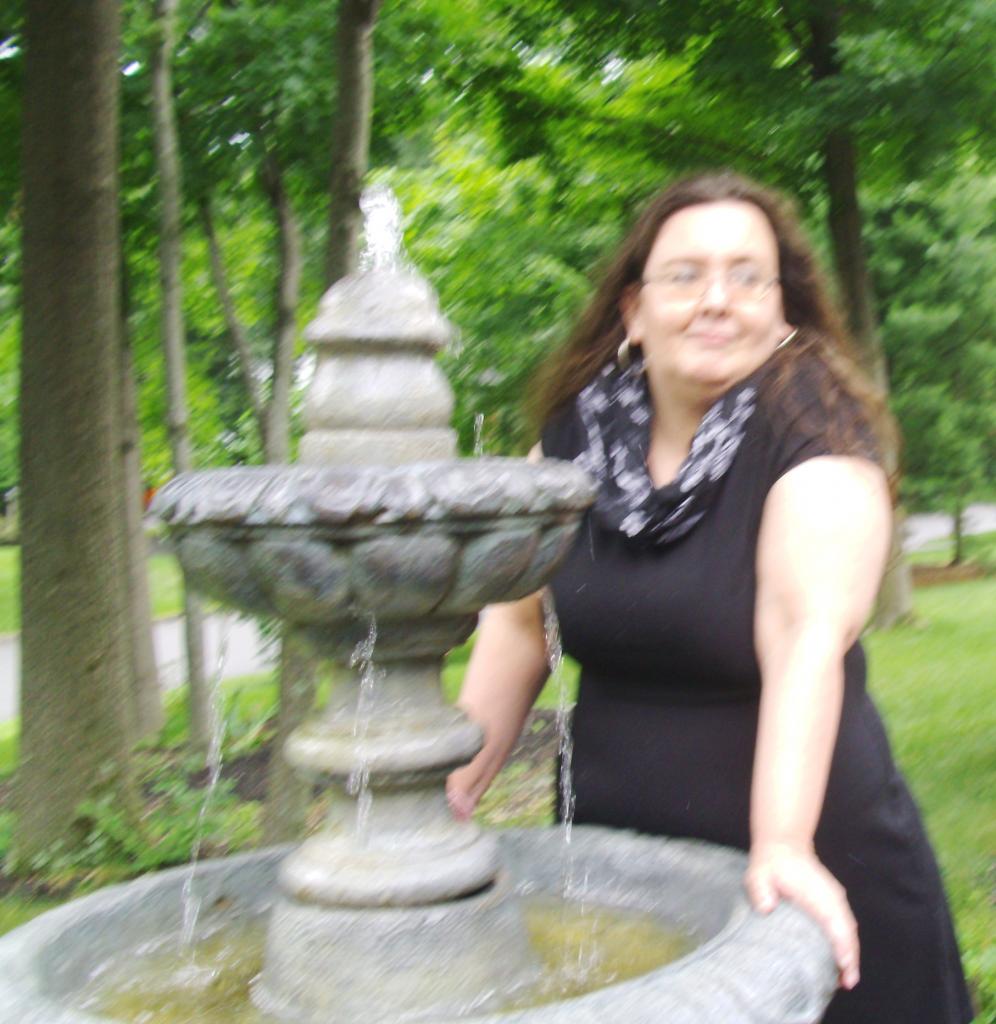
So. This is me.

authorphoto

It’s been rare, in recent years, for me to like any picture of myself. Which is okay; it’s been a funky few years, filled with changes, some welcome, others very much not. Life will do that, and when life does do that, it affects the writing life as well. Maybe I’m not cut out for this, we think. Maybe all of that writing stuff is behind me and taking care of family/doing the day job is where it’s at from here on out. We’ve all had thoughts like that, I’m guessing, from time to time. It makes for a disconnect of sorts, between the worlds in our heads and the world that everybody else can see. Tricky, to say the least. 

This doesn’t apply only to the face in the mirror, but the words on the page as well. It’s a weird place to be, yourself but not yourself. Things should work, but they don’t and it isn’t that the voices in our heads aren’t talking, because they are, but they somehow found a secret language they don’t feel like teaching us for the foreseeable future. It’s the same as looking in the mirror, understanding that yes, that’s what others see, but it’s not us. It’s not real. The problem is, getting the real of the insides of our heads out into the everybody-else-can-see-it world. 

For the physical, this is easy. Take better care of self, learn a new updo, swap out clothes of displeasing colors for those that make us happy. Try a bright/dark lipstick, play with accessories, dress the body you’ve got instead of a past or future one, learn what makes you feel and look good now. For the writing, there’s no foolproof plan. I wish there were. The closest I’ve been able to come is “read, read, read, and write, write, write.” There’s still a part of my brain, equipped with a bullhorn, screaming, “no, you can’t talk about this. You’re not successful enough. You’re not allowed.” This voice needs to be quiet, because this voice is wrong. This voice is looking in the wrong mirror. 

Yesterday, I spent some time with Sue Ann Porter and another friend, in Sue Ann’s beautiful front garden. I needed an author photo for my upcoming From Fanfiction to Fantastic Fiction workshop at Savvy Authors, and I didn’t have one. Well, I did, but it’s old enough to get married or join the military without parental permission. That wasn’t going to do. To quote a sweatshirt marketed at drill sergeants, “sweat dries, blood clots, bones heal; suck it up, buttercup.” I popped my camera in my bag and surveyed the perimeter. 

Fountain, good. I like fountains. Sue Ann and I roped another friend into being my stand-in so I could check the composition, then we took pictures. This picture, I like. This is me. This is a woman who writes romance and writes about romance. This picture can be attached to the work I am doing now, because when I look in this mirror and on these pages, what i see fits. 


Throwback Thursday: Historical Romance Edition

Inspired by Zeee at Buried Under Romance, my historical romance offering for Throwback Thursday: Lovesong by Valerie Sherwood

The year was 1985. The place was Montpelier, Vermont. The book was Lovesong by Valerie Sherwood, and my friend, Karen, had chased me across campus to physically put the book in my hand. When I asked her why she’d gone to all that trouble when we lived in the same dorm and she could have waited for me to come down the hall, she replied she wanted to be the one to give it to me, as it was going to be my new favorite book.

She was right. After many years and many books, the story of Carolina Lightfoot, the Tidewater planter’s daughter who became the fabled Silver Wench of the seas, and the dashing privateer, Kells, aka Rye Evistock, still remains a strong favorite. There were two more books, Windsong and Nightsong, about Carolina and Kells, and through this book, I found one of my all time favorite authors in Valerie Sherwood, aka Jeanne Hines, aka Rosamund Royal, and fell head over heels in love with the seventeenth century as well as the illustrations of cover artist Elaine Duillo. 

So, Karen, wherever you are, thanks. It was worth the chase. Seriously. 

Current Notebooks (general edition)

general use notebooks

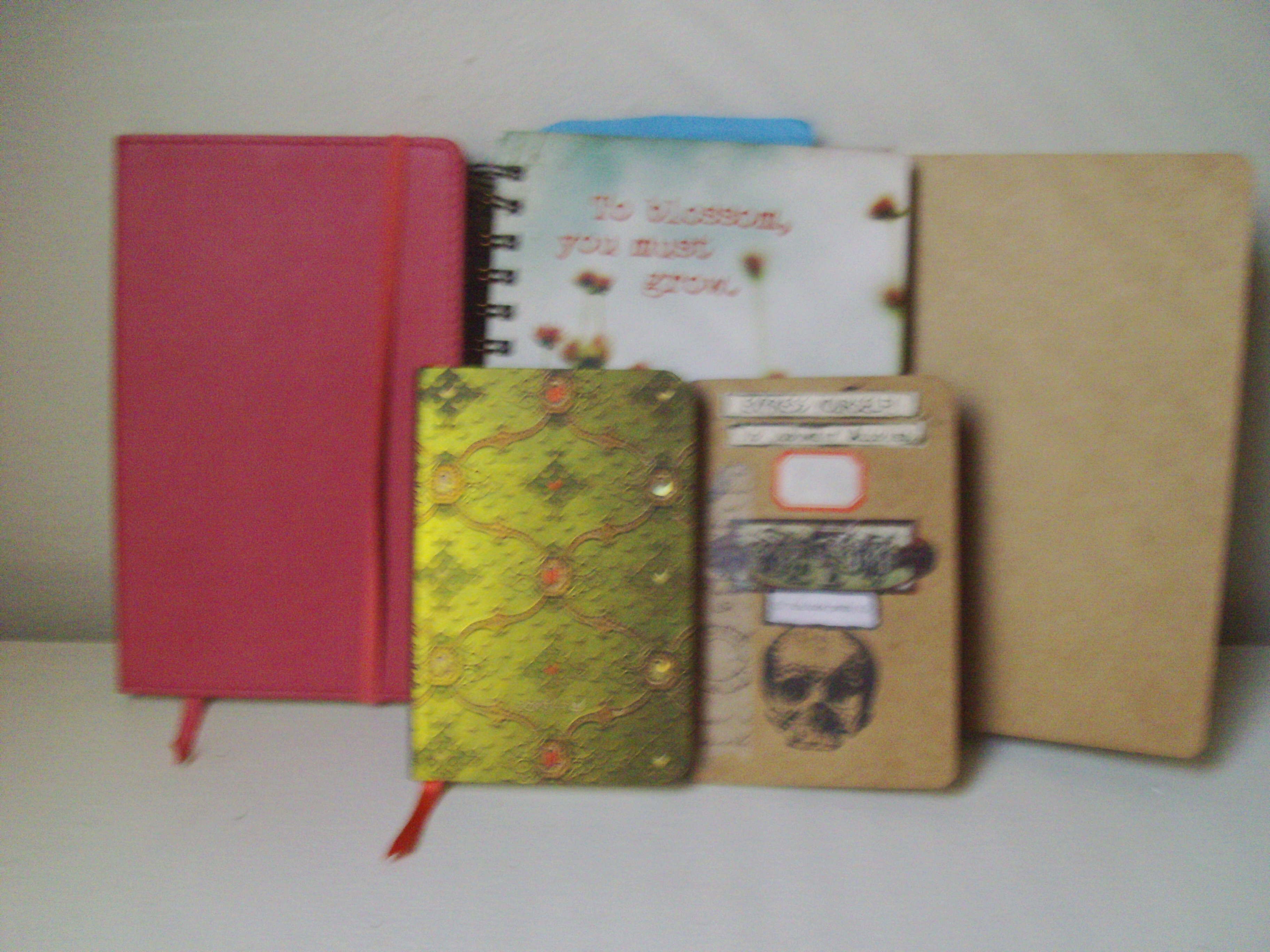
I use a lot of notebooks. A lot. That’s not counting sticky notes or legal pads. Most of the time, I don’t know how many I have in active use as some go through resting periods between uses, but here’s a peek at the current bunch of notebooks for everyday use.

The pink book, with gridded paper, is by Markings, my all purpose notebook, which lives in my purse and gets pretty much everything. Freewriting to get my brain started/cleared in the morning, to-do lists, notes to self and snippets of story to transcribe later. Since everything goes in there, I use colored pens, highlighters and bullet points to keep different subjects separate. There’s a pocket in the back that holds reciepts, interesting ephemera I find in the wild and sticky notes.

“To Blossom You Must Grow” book is by GreenDesignWorks, has white lined paper (I prefer cream, but I love the cover art.) This is dedicated to a fpurely for play writing project and area of study. Every writing session gets a different color of ink, so that even if I forget to date an entry, I can figure it out.

Kraft Moleskine also has gridded paper, and is my overflow book, in case I don’t want to carry the bigger book with me. I definitely plan to try a gridded hardcover Moleskine at some point, but I like the cahier format very much. The cover is only plain because I haven’t altered it yet.

Small green planner is by PaperBlanks, which I like a lot more than I thought I would. I’m still getting the hang of using this particular planner but I do want to try a PaperBlanks notebook in the near future.

Small kraft Moleskine with altered cover is theoretically my pocket notebook, though lately I’ve found the smaller size to feel too cramped. It has lined pages, and serves the same purpose as my larger kraft Moleskine, but on a smaller level.

These books are the workhorses, the ones that catch my brain droppings and keep me company in line, at the laundromat, waiting for friends etc. I’ve found that the more I use notebooks, the more I want to write, period. Maybe there’s something elemental in the touch of pen to paper, but it connects my brain to the page, and I count that a good thing.